




How Video Game Difficulty Works: Easy, Normal, Hard and More
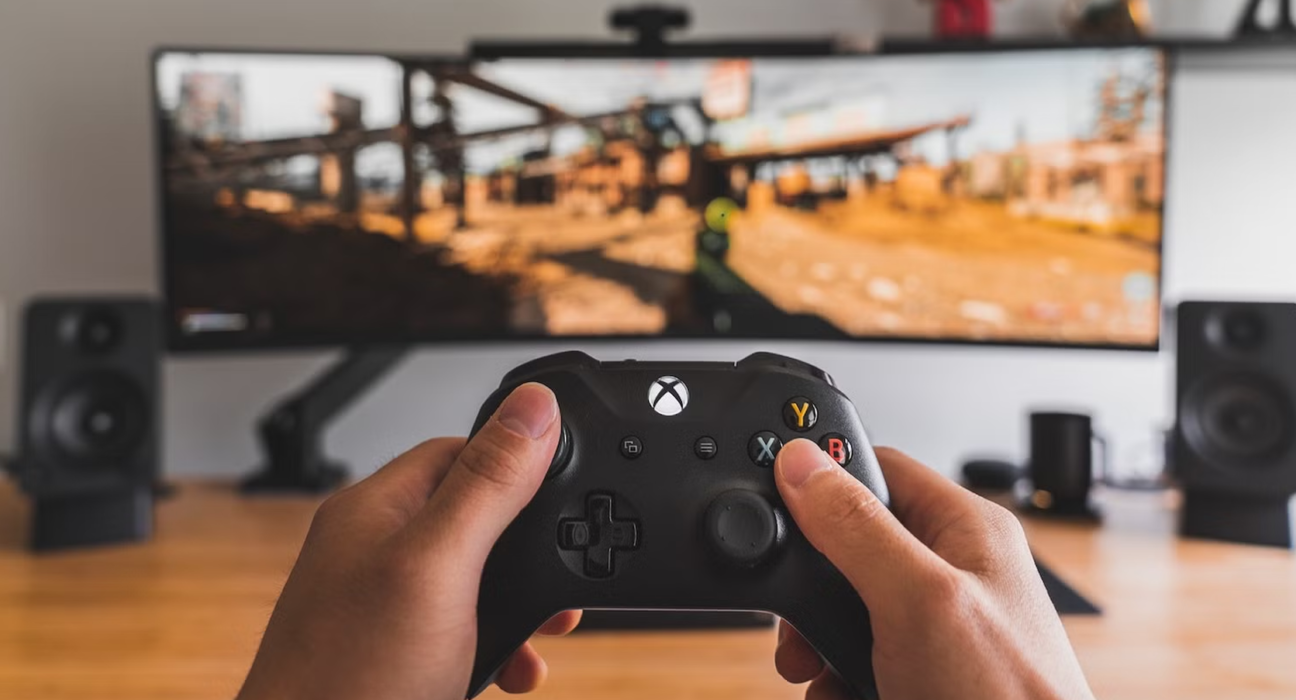
Difficulty is one of the most important parts of a video game.
It can determine how challenging an experience feels, how much time players spend learning a game, and how satisfying it feels to overcome difficult situations.
Some games offer simple options such as Easy, Normal, and Hard.
Others use complex systems that automatically adjust the challenge depending on how the player performs.
But what actually changes when you select a higher difficulty?
And why can two games with the same difficulty setting feel completely different?
Let’s take a closer look.
What Is Video Game Difficulty?
Video game difficulty refers to how challenging a game is for the player.
Developers can control difficulty in many ways.
For example, a game might change:
- Enemy health
- Enemy damage
- Number of enemies
- Available resources
- Time limits
- Puzzle complexity
- Player health
- Aim accuracy
- Checkpoint frequency
- Environmental hazards
Difficulty is therefore much more than simply making enemies stronger.
Why Do Games Have Difficulty Levels?
Players have different skill levels and different reasons for playing.
Some people want to experience the story without facing demanding gameplay.
Others enjoy mastering difficult mechanics.
Difficulty settings allow the same game to serve different types of players.
For example:
Easy
Designed to reduce frustration and allow players to progress more comfortably.
Normal
Usually intended to provide the experience the developers consider balanced.
Hard
Increases the consequences of mistakes and requires greater understanding of the game’s mechanics.
Very Hard or Extreme
Designed primarily for experienced players who want a significant challenge.
Not every game follows this exact structure.
What Changes on Higher Difficulty?
The exact changes depend on the game.
A higher difficulty may increase enemy damage, reduce player resources, or make opponents more aggressive.
For example:
| Game Element | Lower Difficulty | Higher Difficulty |
|---|---|---|
| Enemy health | Lower | Higher |
| Enemy damage | Lower | Higher |
| Player resources | More generous | More limited |
| Enemy behavior | Less aggressive | More aggressive |
| Checkpoints | More frequent | Less frequent |
| Time limits | More forgiving | Stricter |
Good difficulty design does not simply make everything stronger.
It creates a different challenge.
Enemy Health Is Not the Only Factor
Increasing enemy health is one of the simplest ways to increase difficulty.
However, it is not always the best approach.
Imagine an enemy that normally requires five attacks to defeat.
If hard mode makes it require 30 attacks, the game may become slower rather than more challenging.
Players may simply repeat the same action for longer.
Better difficulty design can instead change how players need to approach the situation.
Enemy Intelligence Can Affect Difficulty
Some games make enemies more dangerous by changing their behavior.
At higher difficulty levels, enemies may:
- Detect players more quickly
- Coordinate attacks
- Take better positions
- Use different weapons
- React more quickly
- Pursue players more aggressively
This can make the game feel more challenging without simply giving enemies enormous amounts of health.
Resource Management Can Increase Difficulty
Resources are another powerful difficulty tool.
A game may limit:
- Ammunition
- Health items
- Currency
- Equipment
- Special abilities
- Crafting materials
When resources become limited, players have to make more decisions.
Should you use an item now or save it for later?
Should you fight an enemy or avoid it?
These decisions can create meaningful difficulty.
What Is Permadeath?
Some games use a system known as permadeath, short for permanent death.
When a character dies, the player may lose significant progress or have to restart a section of the game.
Permadeath can dramatically increase tension because mistakes become more costly.
However, it can also make games less accessible to players who prefer a more forgiving experience.
What Are Checkpoints?
Checkpoints determine where a player resumes after failing.
Frequent checkpoints make failure less costly.
Infrequent checkpoints increase the consequences of mistakes.
Checkpoint placement is therefore an important part of difficulty design.
A difficult section can become frustrating if the player has to repeat a long sequence every time they fail.
Difficulty Can Come From Time Pressure
Not every difficult situation involves combat.
Games can increase difficulty through time limits.
Examples include:
- Racing against a clock
- Completing objectives before time runs out
- Escaping a dangerous area
- Solving a puzzle quickly
- Managing limited turns
Time pressure can change how players think and react.
Puzzle Difficulty Works Differently
Increasing puzzle difficulty is more complicated than increasing enemy health.
Developers might:
- Remove clues
- Add additional steps
- Introduce more complex rules
- Reduce available information
- Combine multiple mechanics
However, poorly designed puzzles can become frustrating rather than rewarding.
The player should ideally understand why they failed and have enough information to improve.
What Is Adaptive Difficulty?
Some games adjust their challenge based on player performance.
This is known as adaptive difficulty or dynamic difficulty.
For example, if a player repeatedly fails a section, the game might subtly make future encounters easier.
If the player performs extremely well, the game might increase the challenge.
The goal is to maintain an appropriate level of tension.
Why Don’t All Games Use Adaptive Difficulty?
Adaptive difficulty can create problems if it is poorly implemented.
Players may feel that the game is secretly changing the rules.
It can also reduce the satisfaction of mastering a difficult challenge.
Some players want to know that success came entirely from improving their own skills.
For these players, a fixed difficulty system may be preferable.
What Is Dynamic Difficulty Adjustment?
Dynamic difficulty adjustment is a system in which the game changes difficulty during gameplay.
It might modify:
- Enemy behavior
- Spawn rates
- Resources
- Damage
- Assistance
- Available opportunities
The changes can be obvious or subtle.
Some games use these systems openly, while others hide them behind the game’s normal mechanics.
Difficulty vs Skill
Difficulty and skill are closely connected but not identical.
A difficult game may require:
- Fast reactions
- Strategic thinking
- Pattern recognition
- Memory
- Precision
- Resource management
- Patience
Different games emphasize different skills.
A player who struggles with one game may be highly skilled at another because the required abilities are different.
Why Do Some Games Feel Harder Than Others?
Two games can have similar difficulty settings but feel completely different.
This can happen because of:
- Control systems
- Camera design
- Enemy behavior
- Checkpoint placement
- Learning curve
- Player feedback
- Game speed
- Penalty for failure
A well-designed difficult game can feel challenging but fair.
A poorly designed game can feel frustrating even when it is technically easier.
What Makes a Game Feel Fair?
Players generally accept difficulty more easily when they understand why they failed.
A difficult encounter can feel fair when:
- Enemy attacks are readable
- Controls are responsive
- Rules are consistent
- Mistakes have understandable consequences
- Players have opportunities to improve
- Checkpoints are reasonably placed
Fairness is often more important than simply reducing difficulty.
What Is the Learning Curve?
The learning curve describes how quickly a player needs to understand and master a game’s systems.
A well-designed game may begin with relatively simple mechanics and gradually introduce more complexity.
For example:
Basic movement → Combat → Advanced abilities → Combined mechanics → Complex encounters
This allows players to develop skills before facing more demanding situations.
Why Do Boss Fights Feel Difficult?
Boss battles often combine several mechanics at once.
A boss may require players to:
- Recognize attack patterns
- Manage resources
- Move precisely
- Identify weaknesses
- React quickly
- Adapt strategies
A good boss fight often teaches the player something through each failed attempt.
The goal is not simply to make the boss powerful.
It is to create an encounter that rewards learning.
Difficulty Can Be About Knowledge
Some games are difficult because players need to understand their systems.
For example, a player may struggle because they do not know:
- Which equipment works best
- How an ability interacts with another
- When to attack
- Which enemy should be prioritized
- How the environment can be used
Once the player understands the system, the same challenge may become significantly easier.
Difficulty in Multiplayer Games
Multiplayer games introduce another form of difficulty.
Instead of fighting computer-controlled opponents, players may compete against other people.
Human opponents can adapt in unpredictable ways.
Difficulty can therefore depend on:
- Player skill
- Team coordination
- Strategy
- Communication
- Reaction time
- Knowledge of the game
Competitive games often use matchmaking systems to place players against opponents with similar skill levels.
What Is Skill-Based Matchmaking?
Skill-based matchmaking attempts to create relatively balanced multiplayer matches by considering player performance or skill indicators.
The exact systems differ between games.
The goal is generally to avoid matches where one team or player is dramatically stronger than the other.
Good matchmaking can make multiplayer experiences more competitive and enjoyable.
Why Do Players Enjoy Difficult Games?
For many players, difficulty creates a stronger sense of achievement.
Overcoming a challenging section can provide:
- Satisfaction
- Confidence
- Mastery
- Progress
- A sense of accomplishment
The emotional reward often comes from knowing that the player improved enough to overcome something that previously seemed impossible.
Should You Always Play on Hard?
No.
There is no universally correct difficulty.
Choose based on the experience you want.
Choose Easy If:
- You mainly want the story.
- You are new to the genre.
- You want a relaxed experience.
- You do not enjoy repeated failures.
Choose Normal If:
- You want a balanced experience.
- You are familiar with the genre.
- You want both challenge and progression.
Choose Hard If:
- You enjoy mastering mechanics.
- You want greater consequences.
- You are experienced with the game type.
- You enjoy overcoming difficult encounters.
The best difficulty is the one that makes the game enjoyable for you.
Final Thoughts
Video game difficulty is much more sophisticated than simply making enemies stronger.
Developers can control enemy behavior, resources, checkpoints, time limits, puzzles, damage, artificial intelligence, and many other systems to shape the player’s experience.
The best difficulty design creates challenges that feel meaningful, understandable, and fair.
Whether you prefer a relaxed story-focused experience or a demanding test of skill, difficulty settings exist to let different players enjoy games in different ways.
Ultimately, there is no “correct” difficulty.
The right difficulty is the one that makes you want to keep playing.