How to Compare Products Online: A Complete Buying Guide
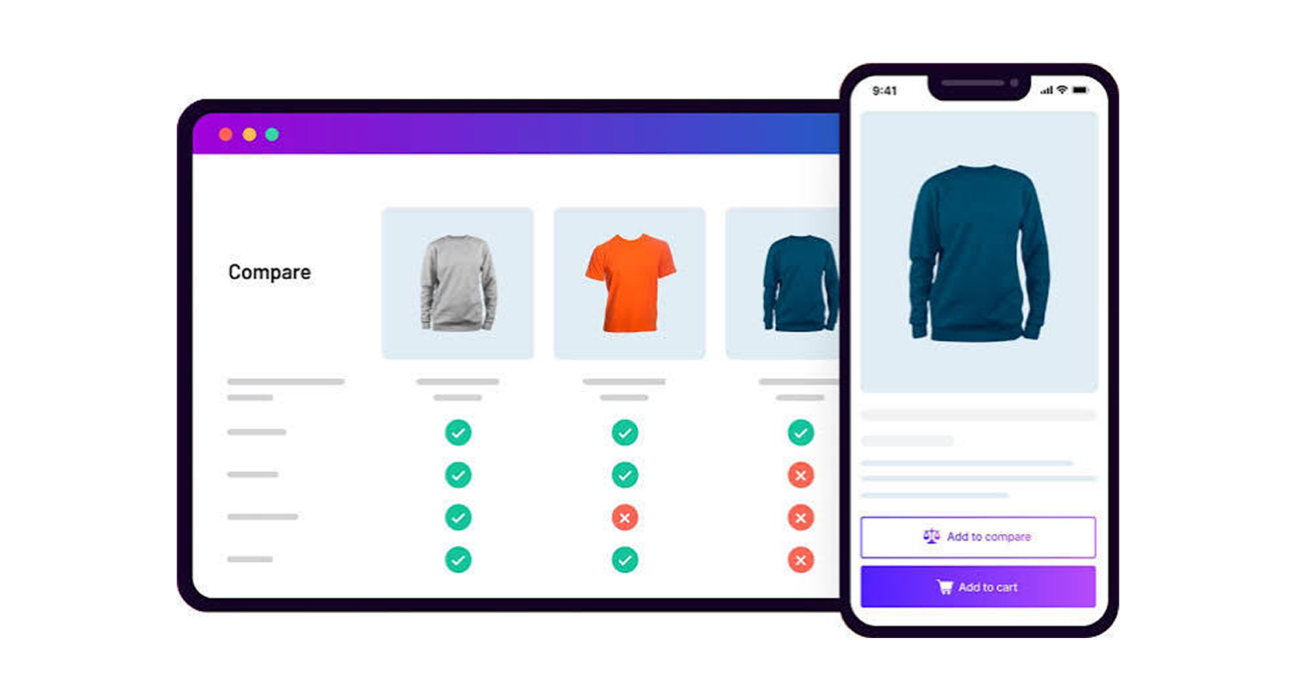
Shopping online gives you more choices than ever, but having more options can also make buying decisions harder.
Two products may look almost identical but differ significantly in quality, features, durability, warranty, or overall value. A cheaper product is not always the better deal, and a product with more features may not necessarily be the right choice.
The key is knowing what to compare before you buy.
Whether you are purchasing electronics, home appliances, furniture, clothing, fitness equipment, or everyday products, a structured comparison can help you make a smarter decision.
Here is a practical guide to comparing products online.
1. Start With Your Actual Needs
Before comparing products, define what you actually need.
Ask yourself:
- What will I use the product for?
- How frequently will I use it?
- Who will use it?
- Which features are essential?
- Which features are optional?
- What problems should the product solve?
For example, if you need a laptop primarily for web browsing, documents, and video calls, buying an expensive high-performance model may not provide much additional value.
Your requirements should determine your shortlist—not the other way around.
2. Set a Realistic Budget
Price is one of the easiest factors to compare, but it should not be the only one.
Set a comfortable budget before you start shopping.
A useful approach is to divide products into three groups:
| Price Range | What to Consider |
|---|---|
| Budget | Essential features and basic quality |
| Mid-range | Balance between price, features, and quality |
| Premium | Advanced features, materials, performance, and longevity |
A product that costs slightly more may be better value if it lasts considerably longer or provides features you genuinely need.
3. Compare the Important Specifications
Product specifications can help you understand differences between models.
However, you should focus on specifications that actually affect your use.
For example:
For smartphones:
- Processor
- RAM
- Storage
- Display
- Battery
- Camera
- Software support
For washing machines:
- Capacity
- Energy efficiency
- Wash programs
- Spin speed
- Noise level
- Warranty
For headphones:
- Battery life
- Audio quality
- Noise cancellation
- Connectivity
- Comfort
- Microphone quality
Do not automatically assume that the product with the highest specification is the best.
4. Look Beyond the Headline Features
Product pages often highlight the most attractive features, but important details can be hidden deeper in the specifications.
Check things such as:
- Dimensions
- Weight
- Compatibility
- Connectivity
- Included accessories
- Operating requirements
- Material quality
- Replacement parts
- Software support
- Maintenance requirements
These details can make a significant difference after the purchase.
5. Compare the Total Cost
The purchase price is not always the total cost of owning a product.
Consider additional expenses such as:
- Accessories
- Installation
- Delivery
- Maintenance
- Replacement parts
- Subscriptions
- Consumables
- Extended warranties
For example, a printer may appear inexpensive initially but become expensive if its ink or toner costs are high.
Similarly, a smart device may require a paid subscription for certain features.
The better comparison is therefore:
Purchase price + ongoing costs = real ownership cost
6. Read Customer Reviews Carefully
Reviews can provide useful information that product descriptions often do not.
Look for repeated patterns rather than focusing on one extremely positive or negative review.
Pay attention to comments about:
- Build quality
- Real-world performance
- Ease of use
- Reliability
- Battery life
- Comfort
- Customer service
- Long-term problems
If several customers independently mention the same issue, it deserves attention.
7. Check the Number of Reviews
A product with a 5-star rating from 10 customers is not necessarily more reliable than one with a 4.5-star rating from thousands of customers.
Review volume provides additional context.
Instead of looking only at the average rating, consider:
Rating + number of reviews + recurring feedback
This gives you a better picture of customer experience.
8. Read Negative Reviews Too
Negative reviews can be particularly useful when comparing products.
Look for complaints that repeatedly appear.
For example:
“The battery is poor.”
One complaint may not mean much.
But if hundreds of customers report poor battery performance, that could indicate a genuine weakness.
At the same time, consider whether the complaint matters to you.
A product might have poor portability, for example, but that may not matter if you plan to use it at home.
9. Compare Products From the Same Category
Make sure you are comparing products that are designed for similar purposes.
For example, comparing:
- A budget laptop with a professional workstation
- A basic vacuum cleaner with a robotic vacuum
- Entry-level headphones with studio headphones
may not produce a useful conclusion.
Define your category first, then compare products within the same intended use.
10. Check the Brand’s Reputation
Brand reputation should not be the only reason to buy something, but it can provide useful context.
Consider:
- Product reliability
- Customer support
- Warranty service
- Availability of spare parts
- Software updates
- Return policies
- Track record with similar products
A lesser-known brand can sometimes offer excellent value, but make sure there is adequate support if something goes wrong.
11. Check the Warranty
Warranty coverage can be especially important for expensive products.
Look at:
- Warranty duration
- What is covered
- What is excluded
- Repair or replacement process
- International coverage, if relevant
- Authorized service availability
A longer warranty does not automatically mean better quality, but it can reduce your financial risk.
12. Check the Return Policy
Before buying, understand what happens if the product does not meet your expectations.
Check:
- Return window
- Refund conditions
- Replacement policy
- Restocking fees
- Return shipping costs
- Whether opened products can be returned
This is particularly important for products where size, fit, comfort, or performance can be difficult to judge online.
13. Compare Prices Across Multiple Stores
Do not assume the first price you see is the best price.
Compare the same model across different retailers.
Check the exact model number, because two products may have nearly identical names but different configurations.
Also consider:
- Shipping costs
- Taxes
- Promotional discounts
- Cashback
- Membership pricing
- Bundle offers
A lower listed price may not necessarily result in a lower final price.
14. Watch Out for Older Models
Manufacturers frequently release updated versions of products.
An older model may still be excellent, but you should understand what changed.
Compare:
- Release year
- Processor or hardware
- Features
- Battery
- Software support
- Warranty
- Price difference
Sometimes an older model provides excellent value because its price has dropped.
Other times, the newer model may be worth the additional cost.
15. Don’t Buy Based Only on the Number of Features
More features do not automatically mean better value.
Imagine two products:
Product A
- 15 features
- Higher price
- Several features you will never use
Product B
- 8 features
- Lower price
- Includes everything you actually need
Product B could be the smarter purchase.
Focus on useful features, not simply the number of features.
16. Consider Long-Term Durability
A product should not be judged only by how it performs on day one.
Think about how it might perform after one, two, or several years.
Ask:
- Is the product built well?
- Are replacement parts available?
- Can it be repaired?
- Does the manufacturer provide updates?
- Is the product likely to remain compatible with newer technology?
Long-term value can matter more than a small difference in the initial price.
17. Compare Energy and Operating Efficiency
For appliances and electronics, operating efficiency can affect long-term costs.
Look at:
- Energy consumption
- Battery efficiency
- Standby power
- Water consumption
- Maintenance requirements
A slightly more expensive efficient product could potentially cost less to operate over time.
18. Be Careful With Discounts
A large discount can make a product appear more attractive than it really is.
Before buying a heavily discounted product, check:
- Previous prices
- Product age
- Seller reputation
- Model number
- Reviews
- Warranty
- Included accessories
The most important question is not:
“How much am I saving?”
It is:
“Is this product worth the price I am paying?”
19. Create a Simple Comparison Table
When you have narrowed your choices to two or three products, create a simple comparison.
For example:
| Factor | Product A | Product B | Product C |
|---|---|---|---|
| Price | $ | $$ | $$$ |
| Performance | Good | Very Good | Excellent |
| Features | Basic | Balanced | Advanced |
| Build Quality | Good | Very Good | Excellent |
| Warranty | 1 Year | 2 Years | 2 Years |
| Reviews | Strong | Strong | Mixed |
| Best For | Budget buyers | Most users | Power users |
This makes differences much easier to see.
20. Identify Your Deal-Breakers
Not every factor has equal importance.
Before making your final decision, identify three to five factors that matter most.
For example:
Buying a laptop
- Performance
- Battery life
- Weight
- Display
- Price
Buying a washing machine
- Capacity
- Energy efficiency
- Reliability
- Noise
- Warranty
This prevents less important features from influencing your decision too much.
21. Don’t Ignore Compatibility
Compatibility problems can turn a good product into a bad purchase.
Check whether the product works with:
- Your existing devices
- Operating system
- Accessories
- Network
- Apps
- Power requirements
- Other equipment
This is particularly important for electronics, smart-home products, computer accessories, and gaming equipment.
22. Think About Who Will Actually Use It
The best product for one person may not be the best product for another.
A professional photographer, student, parent, gamer, traveler, and casual user may have completely different priorities.
Always evaluate a product based on your own usage rather than someone else’s setup.
23. Don’t Let Reviews Make the Decision for You
Reviews should inform your decision, not replace it.
A reviewer may prioritize:
- Performance
- Design
- Premium materials
- Professional features
while you may care more about:
- Price
- Simplicity
- Reliability
- Ease of use
Use reviews to identify strengths and weaknesses, then decide whether those factors matter to you.
24. Know When the More Expensive Product Is Worth It
Paying more can make sense when the additional cost provides meaningful benefits.
A premium product may be worth considering when it offers:
- Significantly better performance
- Better durability
- Longer support
- Better warranty
- Lower operating costs
- Features you genuinely need
However, avoid paying extra simply because a product is marketed as premium.
25. Use a Final Decision Checklist
Before clicking the buy button, ask yourself:
- Does this product meet my actual needs?
- Is it within my budget?
- Have I compared similar products?
- Have I checked the specifications?
- Have I read both positive and negative reviews?
- Is the seller reliable?
- What is the warranty?
- What is the return policy?
- Are there additional costs?
- Is this the latest or a previous model?
- Will I still be happy with this purchase after a year?
If you can confidently answer these questions, you are much more likely to make a good buying decision.
Final Thoughts
Comparing products online does not have to be complicated.
The goal is not to find the product with the most features or the biggest discount. The goal is to find the product that provides the best overall value for your specific needs.
Start by defining what you need, set your budget, compare important specifications, research reviews, check warranty and return policies, and consider the total cost of ownership.
Most importantly, don’t let marketing claims make the decision for you.
The best product is not necessarily the most expensive or the most popular. It is the one that delivers the right combination of quality, performance, price, and usefulness for you.