Why Slow Travel Is Changing the Way We Explore the World
For years, travel was measured in numbers.
How many countries have you visited?
How many cities can you see in seven days?
How many attractions can you fit into one itinerary?
The modern travel industry became incredibly good at helping people see more in less time.
But something is changing.
More travelers are beginning to ask a different question:
What if the goal of a trip isn’t to see everything?
That’s where slow travel comes in.
Slow travel isn’t about traveling slowly because your train is late or because you’ve missed your flight.
It’s about deliberately changing the way you experience a destination.
Instead of rushing through five cities, you might spend five days in one.
Instead of checking off attractions, you might spend an afternoon walking through a neighborhood.
Instead of asking, “What should I see?” you might ask, “What does it feel like to live here?”
What Is Slow Travel?
Slow travel is an approach to tourism that emphasizes spending more time in fewer places and engaging more deeply with the destination.
It often involves:
- Longer stays
- Fewer destinations
- Local experiences
- Public transportation
- Independent exploration
- Local food
- Neighborhoods beyond tourist centers
- More flexible itineraries
There isn’t one strict definition.
The idea is less about a particular mode of transportation and more about how you experience travel.
The Problem With Trying to See Everything
Imagine visiting Europe for ten days.
You could attempt:
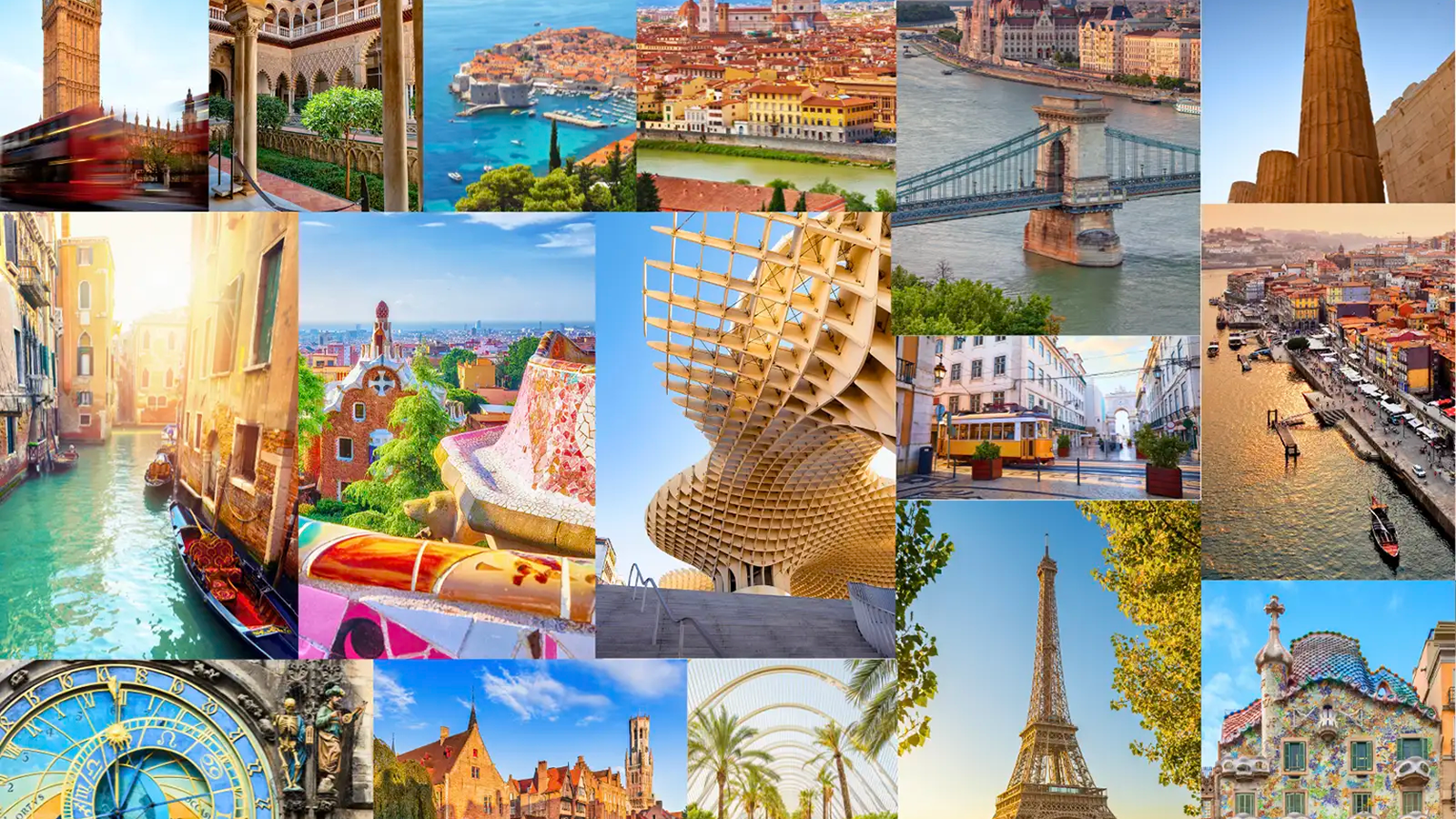
London → Paris → Amsterdam → Rome → Barcelona
It sounds impressive.
But after accounting for flights, trains, airports, hotels, check-ins, check-outs and transportation, a significant portion of your trip could disappear into logistics.
You may technically visit five cities.
But how much time did you actually spend experiencing them?
This is the central question behind slow travel.
The Rise of the “Checklist Trip”
Modern travel has become highly optimized.
Search engines can tell you the top attractions.
Social media can show you the most photographed locations.
Travel websites can create a perfect three-day itinerary.
Maps can calculate exactly how long it takes to move between locations.
All of this is useful.
But it can also turn travel into a checklist.
You arrive.
Take the photo.
Visit the attraction.
Eat somewhere recommended.
Move to the next location.
Repeat.
By the end, you may have hundreds of photographs but surprisingly few memories of simply being somewhere.
Slow Travel Changes the Question
Traditional tourism often asks:
“What can I see?”
Slow travel asks:
“What can I experience?”
That’s a subtle but important difference.
Instead of trying to visit every famous landmark, you might:
- Spend an evening in a local café
- Visit a neighborhood market
- Take a regional train
- Learn a few local phrases
- Eat where residents eat
- Walk without a strict destination
- Talk to people
- Return to the same place more than once
These experiences may not look spectacular on Instagram.
But they can become the parts of a trip you remember most.
Why Travelers Are Interested in Slow Travel
Several changes in modern life may be contributing to the appeal of slower travel.
People spend much of their daily lives moving quickly.
Emails arrive instantly.
Messages are answered immediately.
Meetings happen online.
Food can be delivered within minutes.
Entertainment is available whenever you want it.
Travel can therefore become attractive precisely because it offers something different:
time.
Time to walk.
Time to sit.
Time to explore.
Time to do nothing.
Slow Travel Is Not the Same as Luxury Travel
You don’t need a five-star hotel to travel slowly.
You could spend a week in a small apartment.
You could stay in a guesthouse.
You could travel by train.
You could rent a bicycle.
You could cook some of your meals.
You could simply stay longer.
Slow travel is primarily about pace and engagement, not price.
A luxury resort can be part of slow travel.
So can a budget hostel.
The Economics of Staying Longer
At first, slow travel may sound more expensive because you’re staying in one destination for longer.
But staying longer can sometimes change the economics of a trip.
Instead of repeatedly paying for:
- Transportation
- Airport transfers
- Short hotel stays
- Check-in and check-out costs
- Tourist-focused meals
you may spend more time in one place and establish a simpler routine.
Longer stays can also sometimes offer accommodation discounts, although this depends entirely on the destination and property.
Local Businesses Benefit Too
Slow travel can also change where tourist money goes.
A traveler who stays in one neighborhood for a week may spend money at:
- Local cafés
- Family-run restaurants
- Small shops
- Markets
- Independent tour operators
- Local transport providers
This can create a different economic relationship between travelers and destinations.
Instead of concentrating spending around major tourist attractions, money can spread across everyday businesses.
Food Becomes Part of the Journey
One of the easiest ways to understand slow travel is through food.
A rushed traveler might ask:
“Where is the best restaurant in this city?”
A slow traveler might ask:
“What do people here actually eat?”
That could lead to:
- Local markets
- Neighborhood bakeries
- Small family restaurants
- Regional specialties
- Street food
- Local cooking classes
- Seasonal ingredients
Food becomes more than something you need between attractions.
It becomes part of understanding the place.
Slow Travel and Public Transportation
Slow travel often works well with trains, buses, walking and cycling.
That’s partly because these forms of transportation can change the experience of moving between destinations.
An airplane makes distance disappear.
A train lets you watch landscapes change.
A bus can take you through towns that you might otherwise never see.
Walking allows you to notice details that are invisible from a car.
The journey itself becomes part of the experience.
The Appeal of Staying in One Neighborhood
One of the simplest ways to travel differently is to stop moving so much.
Instead of staying somewhere new every night, stay in one neighborhood.
After several days, something interesting happens.
The area starts becoming familiar.
You know where to buy coffee.
You recognize the streets.
You notice which restaurant is busy in the evening.
You start recognizing people.
You aren’t simply visiting a destination anymore.
You are beginning to understand its rhythm.
Slow Travel Doesn’t Mean No Planning
There’s a misconception that slow travel means traveling without a plan.
It doesn’t.
Planning can still be useful.
The difference is that a slow-travel itinerary leaves room for uncertainty.
Instead of scheduling every hour, you might plan one major activity each day.
The rest of the day remains flexible.
That gives you space for unexpected discoveries.
And some of the best travel experiences are the ones you didn’t plan.
The Role of Technology
Technology has made travel easier in countless ways.
You can use your phone to:
- Navigate
- Translate
- Book accommodation
- Find restaurants
- Check transportation
- Research attractions
- Stay in contact with family
But slow travel may involve using technology differently.
Instead of constantly searching for the next thing to do, you can use technology when necessary and then put the phone away.
The goal isn’t to reject technology.
It’s to stop allowing technology to dictate every moment of the trip.
Social Media Changed Travel
Instagram, TikTok, YouTube and other platforms have transformed travel inspiration.
They make it easier to discover places that were previously unknown to international audiences.
But they have also created a new phenomenon:
traveling for the photograph.
A location becomes popular because it looks beautiful online.
Millions of people then arrive wanting the same photograph.
This creates crowded destinations where visitors may spend more time waiting for a picture than experiencing the place.
Slow travel offers an alternative.
The most meaningful part of a destination may not be the most photogenic part.
The Search for “Underrated” Places
As famous destinations become increasingly crowded, travelers are looking for alternatives.
But there’s a paradox here.
The moment an “underrated destination” becomes popular on social media, it can stop being underrated.
Slow travel doesn’t necessarily mean finding a secret destination.
It can simply mean exploring a familiar destination differently.
You don’t need to discover a hidden island.
You could discover a different street in a city you’ve already visited.
Slow Travel and Sustainability
Slow travel is often associated with more sustainable tourism, although it isn’t automatically sustainable.
Spending longer in one place can reduce the number of short journeys within a trip.
Choosing trains or other shared transportation can also reduce reliance on individual vehicles in some destinations.
Supporting local businesses can help keep tourism spending within local communities.
However, every trip has environmental and social impacts.
Slow travel should therefore be seen as one possible approach to more thoughtful tourism rather than a guarantee of sustainability.
The Mental Benefit of Slowing Down
Travel can sometimes become surprisingly stressful.
You wake up early.
Catch transportation.
Navigate unfamiliar streets.
Reach an attraction before closing.
Find food.
Check into another hotel.
Pack again.
Repeat.
At some point, the holiday starts feeling like work.
Slow travel removes some of that pressure.
A day doesn’t have to be productive.
You can spend an afternoon doing almost nothing.
And that can be exactly what makes it valuable.
What a Slow Travel Day Might Look Like
Imagine waking up in a small European town.
You have no major attraction scheduled until the evening.
You walk to a nearby café.
Have breakfast.
Walk through the market.
Return to your accommodation.
Read for an hour.
Explore a street you haven’t seen before.
Stop for lunch.
Watch people go about their day.
In the evening, you visit one local restaurant.
Nothing extraordinary happened.
And yet, you might remember that day years later.
That’s the strange power of slow travel.
How to Try Slow Travel Yourself
You don’t need to completely change the way you travel.
Start with a few simple changes.
Stay Longer
Instead of visiting four destinations in eight days, consider staying in two.
Schedule Less
Leave some days intentionally open.
Explore Beyond the Center
Walk into residential neighborhoods and areas outside the main tourist zone, while respecting local communities and restrictions.
Eat Locally
Try regional food rather than relying exclusively on familiar international chains.
Use Local Transportation
Where practical, consider trains, buses, walking, or cycling.
Repeat Places
Return to the same café, market, or neighborhood.
Familiarity can become part of the experience.
Put the Camera Away Sometimes
Not every moment needs to become content.
Is Slow Travel Right for Everyone?
Not necessarily.
Some travelers genuinely enjoy fast-paced trips.
You may have limited vacation time.
You may want to see several major landmarks.
You may be traveling for a specific event.
You may simply enjoy moving between cities.
Slow travel isn’t a rule.
It’s another way of experiencing the world.
The important thing is to choose a travel style that matches what you actually want from the trip.
The Future of Travel May Be Slower
Travel has spent decades becoming faster.
Faster flights.
Faster booking.
Faster check-ins.
Faster itineraries.
But perhaps the next evolution isn’t about moving faster.
Maybe it’s about making better use of the time we already have.
As travelers become more conscious of overcrowding, sustainability, digital fatigue and the pressure to constantly document experiences, slower forms of tourism may become increasingly attractive.
The destination isn’t changing.
The way we experience it is.
Final Thoughts
Slow travel isn’t about traveling less.
It’s about trying to experience more from the time you spend somewhere.
One destination can provide enough stories for an entire trip.
One neighborhood can provide enough discoveries for a day.
One meal can tell you something about a culture that a checklist of attractions never could.
In a world that constantly encourages us to move faster, slow travel offers a surprisingly simple idea:
Stay a little longer. Look a little closer. And give yourself enough time to actually be there.