What Is Ray Tracing in Gaming? A Simple Guide
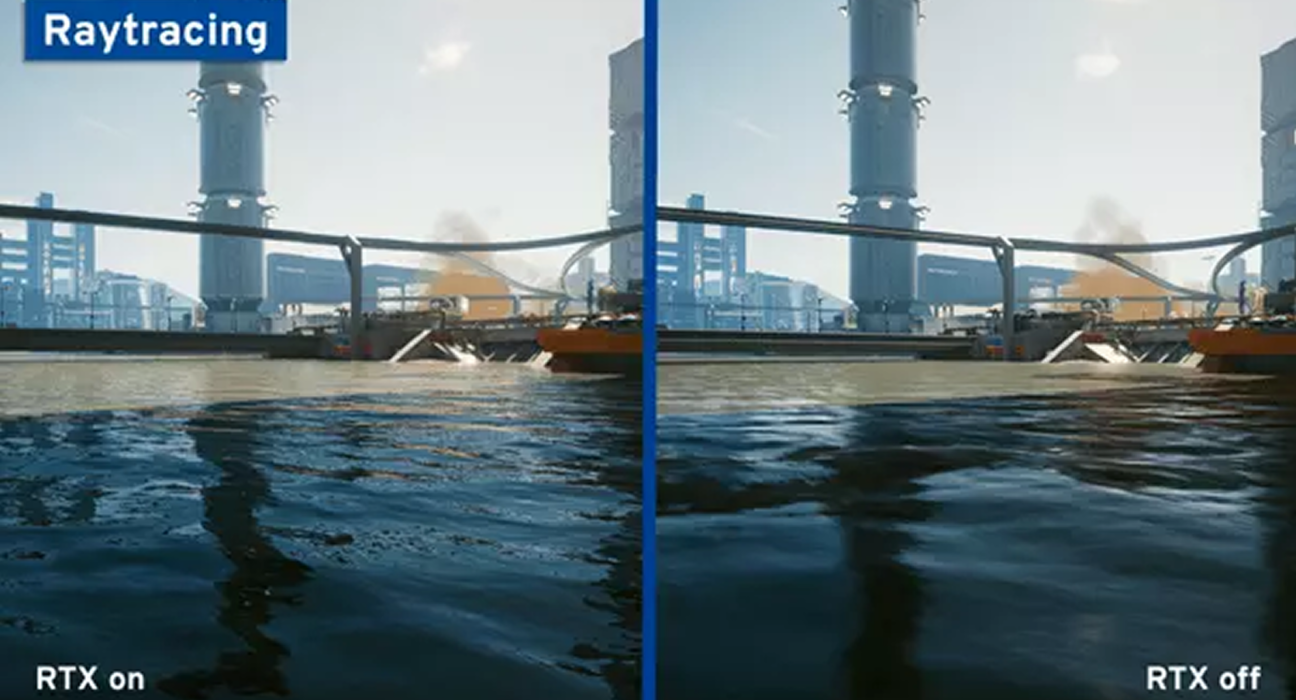
Modern video games can look remarkably realistic.
Realistic reflections on water, accurate shadows, light passing through windows and detailed lighting in dark environments are all examples of visual effects that can make a game world feel more believable.
One technology behind these effects is ray tracing.
You may have seen ray tracing mentioned when comparing graphics cards, gaming PCs or console games. But what exactly does it mean?
In simple terms, ray tracing is a rendering technique designed to simulate how light behaves in the real world.
Here is how it works and why it matters for gaming.
What Is Ray Tracing?
Ray tracing is a computer graphics technique that simulates the movement and interaction of light.
Traditional rendering methods use various techniques to create the appearance of lighting and reflections efficiently.
Ray tracing takes a different approach by mathematically simulating rays of light and calculating how they interact with objects in a virtual environment.
The result can be more realistic:
- Reflections
- Shadows
- Lighting
- Ambient illumination
- Refraction
- Light interactions
The technology can make virtual environments appear more natural and visually detailed.
How Does Ray Tracing Work?
Imagine shining a flashlight inside a room.
The light travels outward, hits surfaces and objects, reflects from some materials and is absorbed or scattered by others.
A ray-traced game attempts to reproduce aspects of this behavior digitally.
The rendering system calculates how virtual light interacts with objects in the scene.
For example:
- A light source produces light.
- The light interacts with an object.
- The system calculates the resulting lighting.
- Reflections or shadows are calculated based on the interaction.
- The final image is displayed on your screen.
Modern hardware and rendering techniques make it possible to perform these calculations fast enough for interactive applications.
Why Does Ray Tracing Make Games Look Better?
Lighting has a major influence on how realistic a digital environment appears.
Consider a room with a window.
Traditional rendering techniques may approximate how sunlight enters the room.
Ray tracing can simulate the path of light and calculate how it interacts with surfaces.
This can produce more natural-looking lighting and shadows.
The difference can be especially noticeable in scenes containing:
- Glass
- Water
- Mirrors
- Polished floors
- Metal
- Bright light sources
- Dark environments
Ray-Traced Reflections
One of the most noticeable uses of ray tracing is reflections.
Imagine a character standing beside a highly reflective surface.
Traditional rendering techniques may use approximations to create a reflection.
Ray tracing can calculate what should actually appear in the reflected surface based on the scene.
This can make reflections appear more accurate.
For example, a ray-traced reflection may show objects that are outside the player’s direct field of view but visible in the reflective surface.
Ray-Traced Shadows
Shadows are another major application.
Real-world shadows vary depending on:
- Light source size
- Distance
- Object position
- Surface
- Multiple light sources
Ray tracing can simulate these interactions more accurately.
This can create softer and more natural shadow edges in appropriate situations.
Ray-Traced Lighting
Lighting can become particularly impressive in complex environments.
Imagine a game set inside a building with sunlight entering through windows.
Ray tracing can help simulate how light interacts with walls, floors and other surfaces.
This can create more convincing illumination throughout the environment.
What Is Ray-Traced Global Illumination?
Global illumination refers to the way light can indirectly illuminate surfaces.
For example, sunlight may enter a room and bounce from one surface onto another.
This indirect light contributes to the overall appearance of the environment.
Ray-traced global illumination attempts to simulate these interactions.
It can create more realistic lighting in scenes where light bounces between surfaces.
What Is Ray Tracing Used For?
Ray tracing can be used for several visual effects.
| Effect | What Ray Tracing Can Improve |
|---|---|
| Reflections | More accurate reflective surfaces |
| Shadows | More realistic shadow behavior |
| Lighting | More natural direct lighting |
| Global Illumination | More realistic indirect lighting |
| Refraction | More realistic light through transparent materials |
| Ambient Lighting | More convincing environmental illumination |
Not every game uses ray tracing for all of these effects.
Developers choose which techniques to implement based on the game’s design and performance requirements.
Why Does Ray Tracing Require More Performance?
There is a trade-off.
More realistic lighting calculations require more computational work.
A game already needs to calculate:
- Characters
- Environments
- Animations
- Physics
- Textures
- Effects
- Audio
- Game logic
Ray tracing adds additional calculations for light interactions.
Without optimization and specialized hardware, these calculations can significantly reduce frame rates.
This is why ray tracing has traditionally been considered demanding for gaming hardware.
What Hardware Supports Ray Tracing?
Modern graphics hardware can accelerate ray-tracing calculations.
Many recent graphics processors support hardware-accelerated ray tracing.
The exact level of performance depends on:
- GPU architecture
- Graphics card model
- Game engine
- Resolution
- Ray-tracing settings
- Other graphics settings
- Frame-generation or upscaling technologies
Having ray-tracing support does not automatically mean a game will run smoothly with every ray-tracing setting enabled.
Does Ray Tracing Affect FPS?
Yes.
Turning on ray tracing can reduce frame rates because the system has to perform additional calculations.
The impact depends heavily on the game and hardware.
A powerful graphics card may handle ray tracing relatively well, while lower-end hardware may experience a much larger performance reduction.
This is why many games allow players to choose individual ray-tracing settings.
What Is the Difference Between Ray Tracing and Rasterization?
Rasterization is the traditional rendering technique used extensively in real-time graphics.
Instead of simulating light paths in the same way as ray tracing, rasterization converts three-dimensional objects into a two-dimensional image using highly optimized techniques.
It is extremely efficient and has been the foundation of real-time game graphics for many years.
Ray tracing provides a different approach to certain lighting calculations.
Modern games often combine both technologies rather than choosing only one.
Ray Tracing vs Rasterization
| Feature | Rasterization | Ray Tracing |
|---|---|---|
| Performance | Generally faster | Generally more demanding |
| Lighting | Often approximated | Can simulate light interactions |
| Reflections | Usually approximated | Can be more physically accurate |
| Shadows | Approximated techniques | More realistic potential |
| Hardware Demand | Lower | Higher |
| Real-Time Gaming | Widely used | Increasingly common |
The two technologies are not necessarily competitors.
They can work together.
What Is Hybrid Rendering?
Many modern games use a hybrid approach.
Rasterization handles much of the rendering because it is efficient.
Ray tracing is then used for specific effects such as:
- Reflections
- Shadows
- Global illumination
- Ambient occlusion
This allows developers to improve visual quality without requiring every part of the image to be rendered using ray tracing.
Does Ray Tracing Always Look Better?
Not necessarily.
Ray tracing can produce more physically accurate lighting, but whether you notice the difference depends on the scene.
The improvement can be particularly visible in:
- Reflective environments
- Wet surfaces
- Glass
- Night scenes
- Indoor lighting
- Complex shadows
In some scenes, the difference may be subtle.
This is why many games allow players to turn ray tracing on or off.
What About Resolution?
Resolution also affects performance.
Rendering a game at a higher resolution means the system has more pixels to process.
Combining:
High resolution + high graphics settings + ray tracing
can create a significant performance demand.
This is one reason modern games often provide multiple graphics presets.
How Upscaling Helps
Modern rendering technologies can help improve performance when ray tracing is enabled.
Instead of rendering every frame at the final display resolution, some systems render at a lower internal resolution and use advanced algorithms to produce a higher-resolution output.
This can reduce the workload while maintaining good image quality.
Different hardware manufacturers and game developers use different implementations and technologies for this purpose.
Should You Turn Ray Tracing On?
It depends on your priorities.
If you care strongly about visual quality and have hardware capable of handling the additional workload, ray tracing can be worth enabling.
If you prioritize:
- High frame rates
- Competitive gaming
- Low latency
- Consistent performance
you may prefer to disable some ray-tracing effects.
For competitive games, performance can often matter more than small visual improvements.
For a cinematic single-player game, you may prefer the enhanced lighting and reflections.
Is Ray Tracing Important for Gamers?
Ray tracing is not necessary to enjoy modern games.
Many games still look excellent without it.
However, the technology represents an important development in real-time graphics because it allows developers to create increasingly realistic lighting and reflections.
As hardware improves, ray tracing can become easier to use without sacrificing as much performance.
The Future of Ray Tracing
Real-time graphics continue to move toward more physically accurate rendering.
Future developments may improve:
- Ray-tracing performance
- Lighting quality
- Reflection accuracy
- Shadow quality
- Global illumination
- Rendering efficiency
Hardware acceleration and advanced rendering techniques can help reduce the performance cost.
Ray tracing is therefore likely to remain an important part of the development of real-time graphics.
Final Thoughts
Ray tracing is a technology that attempts to simulate how light interacts with objects in a digital environment.
It can improve reflections, shadows and lighting, creating more realistic game worlds.
The main limitation is performance. Ray tracing requires additional computational power, which can reduce frame rates depending on the game and hardware.
For most modern games, the best approach is not necessarily to use every ray-tracing feature at maximum settings.
Instead, experiment with the available options and find the balance between visual quality and performance that works best for your system.