





Why Brands Give Away Free Samples: The Psychology Behind Getting Something for Nothing
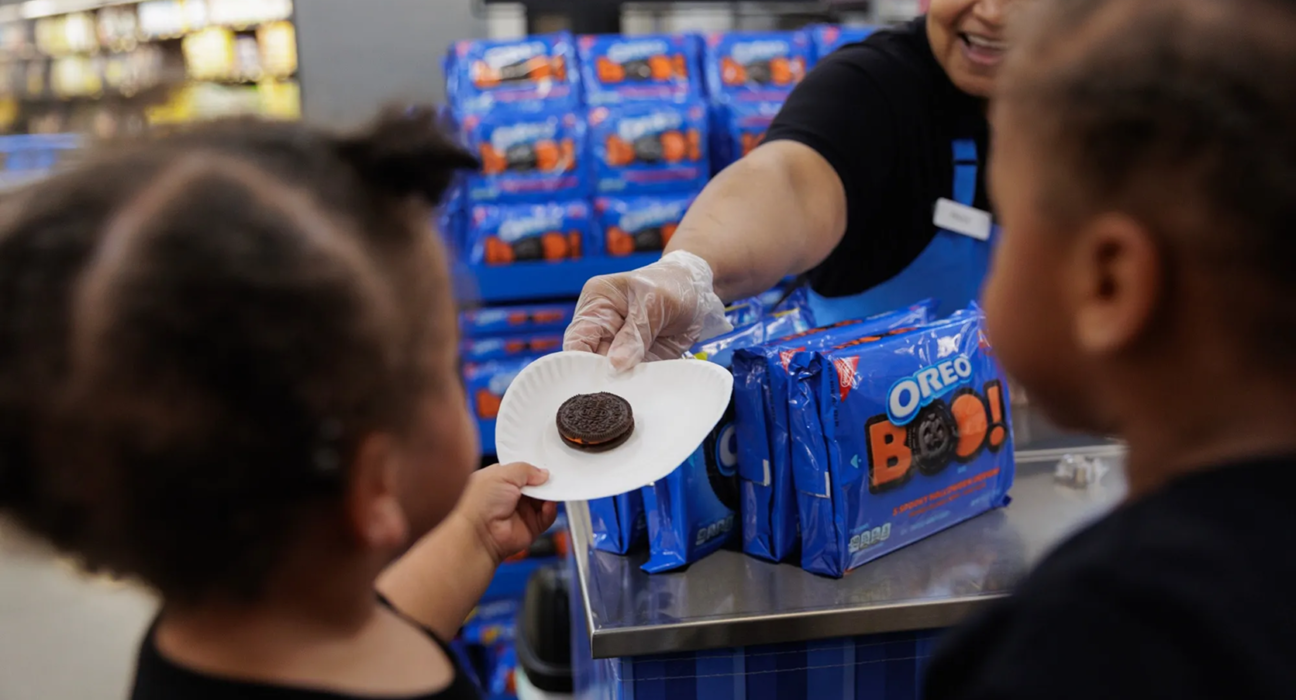
A small sachet of shampoo. A miniature bottle of perfume. A bite-sized piece of chocolate offered at a supermarket counter.
Free samples seem like simple gestures. You receive something without paying, try it, and decide whether you like it.
But behind that little moment is a carefully considered business strategy.
Brands spend money manufacturing, packaging and distributing products they do not immediately sell. They may hand them out in stores, include them in online orders, distribute them at events or send them directly to potential customers.
Why would a business give away its products?
Because sometimes, the fastest way to sell something is to let people experience it first.
1. Free Samples Remove the Fear of Buying the Wrong Thing
Every purchase involves some uncertainty.
Will the moisturiser suit my skin? Will the perfume smell good on me? Will this coffee taste better than the one I already buy?
For familiar, inexpensive products, the risk might be small. For unfamiliar brands, premium products or items with subjective qualities, the hesitation can be much greater.
A free sample reduces that hesitation.
Instead of relying entirely on advertisements, packaging or reviews, consumers can experience the product directly.
This is particularly valuable for products whose quality is difficult to judge before use, including:
- Skincare and personal care products
- Fragrances
- Food and beverages
- Cosmetics
- Certain household products
The sample does not eliminate every concern. A miniature product may behave differently from a full-size version, and a single trial cannot establish long-term results.
But it gives consumers something advertising alone cannot: personal experience.
2. Trying Something Can Make It Feel More Valuable
There is a psychological difference between looking at a product and actually using it.
When people try a product, they begin forming their own impressions. They notice its texture, flavour, scent, convenience or performance.
That experience can make a product easier to evaluate and remember.
It can also create a sense of familiarity. A brand that once felt unknown may now feel recognisable.
However, familiarity does not automatically lead to preference. A disappointing sample can have the opposite effect.
This is why product sampling works best when the experience genuinely reflects what the brand promises.
The objective is not simply to put a product into someone’s hands. It is to give them a reason to want it again.
3. The Sample Is an Advertisement You Can Experience
Traditional advertising tells consumers what a product might do.
A sample lets them test some of those claims for themselves.
Imagine two new coffee brands competing for attention.
One runs an advertisement describing its flavour notes and roasting process. The other offers a small tasting at a local store.
The advertisement can create curiosity, but the tasting introduces another dimension: direct sensory experience.
This is especially important when the product’s appeal is difficult to communicate through words or images.
Sampling can therefore serve several marketing purposes at once:
- Introduce a new product.
- Demonstrate a feature or benefit.
- Encourage trial among unfamiliar customers.
- Generate word-of-mouth conversations.
- Help consumers compare alternatives.
In that sense, a free sample is not merely a giveaway. It is a form of experiential marketing.
4. Why Free Samples Can Trigger the Feeling of Reciprocity
Receiving something for free can sometimes create a subtle social response.
People may feel appreciative toward the person or brand that offered it. In some situations, that appreciation can make them more receptive to a purchase.
This is related to the psychological principle of reciprocity: people often feel inclined to return a favour or respond positively after receiving something.
Retailers may benefit from this effect, particularly when samples are handed out personally.
But the response is not universal.
Some shoppers happily accept samples without feeling any obligation. Others actively avoid them because they dislike sales pressure.
A free product should never be treated as a guaranteed route to a sale.
The strongest sampling experiences allow customers to enjoy the offer without making them feel that they owe the brand anything.
5. Sampling Helps Brands Discover What Customers Actually Want
Product sampling can also function as a research tool.
A company launching a new flavour, fragrance or product variation may use sampling to understand consumer reactions.
Feedback can reveal questions that ordinary sales figures might not answer:
- Do people understand the product’s purpose?
- Is the flavour too strong or too mild?
- Does the packaging communicate the right benefits?
- Which product variation attracts the most interest?
- What concerns prevent people from purchasing?
Some brands collect feedback through surveys, tasting events or opt-in follow-up messages.
Others compare subsequent purchasing behaviour where measurement is possible and privacy requirements are met.
This information can help companies improve products, refine positioning or reconsider a launch strategy.
The important distinction is that distributing samples is not the same as conducting reliable research. A small, self-selected group of recipients may not represent the wider market.
6. The Economics Behind Giving Products Away
Free samples are not free for the business.
There are manufacturing costs, packaging expenses, logistics, distribution fees and sometimes promotional staffing costs.
The real question is whether the additional customers and sales generated justify the investment.
Consider a simplified illustration.
Illustrative example
10,000
Samples distributed
Cost per sample
₹20
Total sampling cost
₹2,00,000
Recipients who purchase
500
5% illustrative conversion
Sampling cost per buyer
₹400
Illustrative figures only. Assumes 500 buyers attributable to the campaign and ₹20 total sampling cost per distributed sample.
At first glance, the campaign has spent ₹400 for every purchasing customer acquired through the assumed conversion.
But that figure alone does not establish profitability.
The company still needs to consider product margins, repeat purchases, discounts, fulfilment costs, additional sales that would have happened anyway and the long-term value of customers.
If buyers make only one low-margin purchase, the campaign may struggle to recover its cost.
If customers repeatedly buy a profitable product, sampling may prove more valuable over time.
The right metric is not how many samples disappear. It is how much incremental value the campaign creates.
7. Why Brands Put Samples Inside Online Orders
Sampling has evolved beyond physical store counters.
Some online retailers and brands include trial-sized products in parcels, while others let customers select samples during checkout or distribute them through promotional partnerships.
This approach has a practical advantage: the brand is reaching someone who has already demonstrated an interest in shopping.
A skincare customer might receive a sample of a complementary cleanser. A fragrance buyer might discover another scent from the same collection.
These placements can introduce consumers to products they might not have searched for independently.
However, relevance matters.
A carefully selected sample may feel like a thoughtful discovery. An unrelated product can simply become unwanted packaging.
And when samples are selected using purchase history or customer profiles, brands should respect applicable privacy rules and communicate transparently about data use.
8. When Free Samples Backfire
Sampling is not automatically a successful marketing strategy.
There are several ways it can disappoint both customers and businesses.
The sample attracts bargain hunters, not future customers
Some people accept every free offer available but have little intention of buying.
High distribution numbers can therefore create an impressive campaign report without generating meaningful demand.
The sample creates the wrong expectations
A premium sample may create excitement, but the full-size product could feel overpriced or underwhelming once the consumer sees the actual purchase proposition.
The product experience is poor
A sample can introduce a brand to thousands of people. If the experience is disappointing, it may amplify negative impressions rather than improve awareness.
The campaign becomes too expensive
Small individual costs can become significant when multiplied across manufacturing, packaging, shipping and distribution.
Brands must also account for waste, expired products and environmental considerations.
A sampling strategy should therefore be designed around a defined audience and objective rather than simply maximising the number of giveaways.
9. How to Tell Whether a Sampling Campaign Actually Worked
A good campaign measures what happens after the sample is received.
Useful performance indicators include:
| Metric | What it reveals |
|---|---|
| Sample redemption rate | How many eligible offers are claimed |
| Purchase conversion | How many recipients subsequently buy |
| Incremental sales | Sales generated beyond what would otherwise have occurred |
| Customer acquisition cost | Cost of acquiring a genuinely new customer |
| Repeat purchase rate | Whether customers return |
| Contribution margin | Whether the resulting business is economically worthwhile |
One measurement challenge deserves particular attention: attribution.
A customer might receive a sample and purchase later after seeing an advertisement, reading a review or encountering the product elsewhere.
That purchase should not automatically be credited entirely to the sample.
Where feasible, controlled tests, holdout groups or other sound measurement methods can help estimate whether sampling actually changed purchasing behaviour.
Without that comparison, brands risk confusing correlation with impact.
10. What Consumers Should Know Before Accepting Free Samples
Free samples can be a useful way to discover products, particularly when you are considering a purchase but are unsure about quality or suitability.
Still, a few sensible habits help:
- Check the ingredients: Especially for skincare, cosmetics and food products.
- Review expiry information: Particularly for products with limited shelf lives.
- Understand the offer: Some promotions involve subscriptions, paid shipping or future marketing messages.
- Protect your personal information: Consider whether the information requested is necessary.
- Do not feel pressured: Accepting a sample does not create an obligation to buy.
- Evaluate the actual product: A sample is an introduction, not proof that the full product will meet every expectation.
For businesses, the same principle applies from another angle: make the offer valuable enough that customers welcome it.
The Bigger Picture: Sometimes Experience Sells Better Than Advertising
Free samples reveal something interesting about how people make decisions.
Consumers do not always need another promise, another advertisement or another discount. Sometimes, they simply need a chance to experience something before committing.
For brands, that opportunity can create familiarity, reduce uncertainty, encourage discovery and generate valuable feedback.
But the strategy works best when the product deserves the attention it receives.
A free sample may win someone’s first experience with a brand. What happens next depends on the quality of the product, the price, the customer experience and whether the business has given people a genuine reason to return.
Because the most valuable thing a brand gives away may not be the sample itself. It may be the opportunity to earn a customer’s trust.