Why Concert Tickets Are So Expensive: The Business Behind Live Music
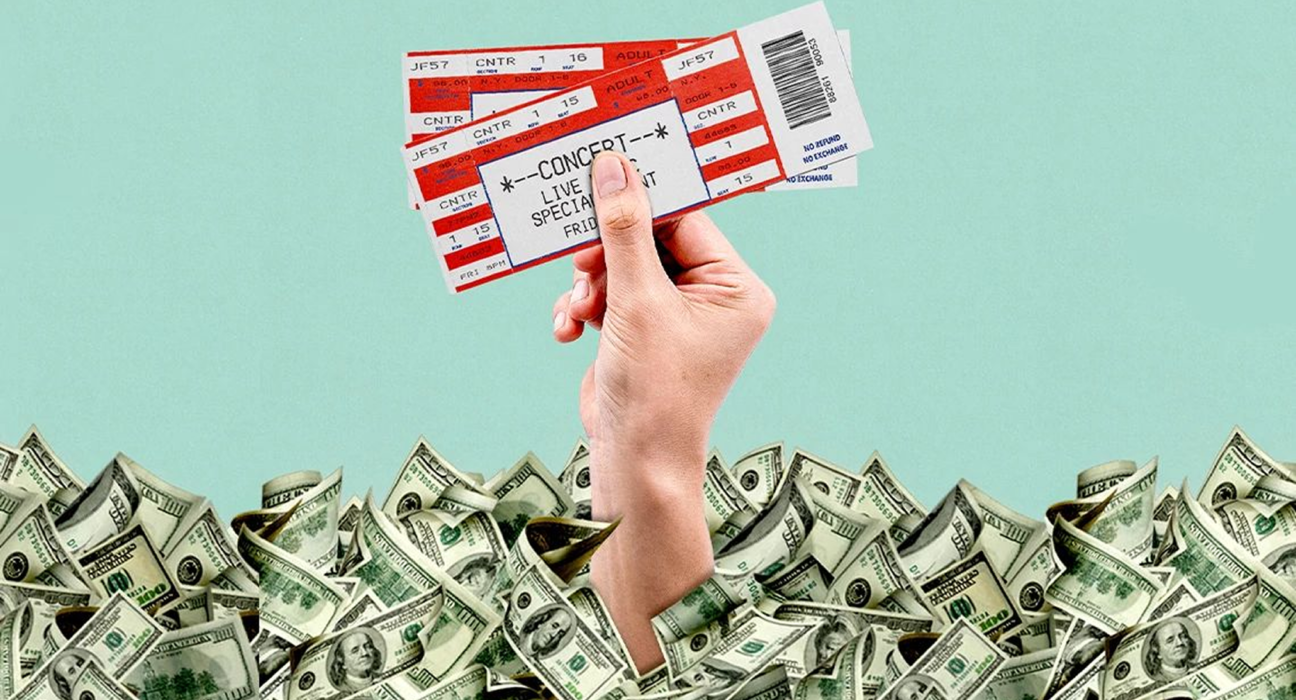
There was a time when buying a concert ticket felt like a relatively simple decision. You liked an artist, checked the price, found a seat and made a plan.
Today, buying a ticket for a popular concert can feel like a competition. There are countdowns, virtual queues, presale codes, rapidly changing prices and checkout totals that look nothing like the number you first saw.
And sometimes, even after getting through the queue, the concert is already sold out.
So what exactly happened to buying a ticket?
The answer goes beyond inflation or popular artists charging more. Live music has become a complex business where demand, technology, touring economics, ticketing platforms and resale markets all influence what fans ultimately pay.
1. Live Music Became the Main Event
For much of the traditional music industry, recorded music helped artists build an audience, sell albums and attract attention. Concerts were an important part of that relationship.
The economics have evolved.
Music streaming has transformed how people access songs. Instead of buying an album every time they discover an artist, listeners can explore enormous music libraries through subscriptions and ad-supported services.
For many artists, touring, merchandise, sponsorships and other opportunities have consequently become important parts of their revenue mix.
Live performances offer something a recording cannot fully replicate: the experience of being in the same room as thousands of other fans.
That experience has become a valuable product.
A major tour can involve elaborate stages, lighting systems, video production, dancers, musicians, transport, accommodation, venue operations and dozens of suppliers.
The bigger the production, the more moving parts there are.
But production costs are only part of the story. A popular artist can also command a higher price because thousands of people want the same limited number of seats.
2. There Are Only So Many Seats to Sell
Imagine an artist performing in a venue with 20,000 seats.
Now imagine 200,000 people trying to buy tickets.
Even if every seat is sold, most interested fans cannot attend.
This is the fundamental problem behind high-demand concerts: interest can grow almost endlessly, but the number of seats cannot.
An artist can add another show, extend a tour or perform in a bigger venue, but those options have limits.
Venue availability, travel schedules, production requirements and the artist’s own capacity all matter.
And not every seat is necessarily available for general sale. Some may be allocated to production needs, accessible seating arrangements, artist holds, sponsors or other purposes, depending on the event.
That means the number of tickets fans can actually purchase may be smaller than the venue’s full capacity.
When demand significantly exceeds available supply, prices and competition tend to rise.
3. The Price You See Is Not Always the Price You Pay
One of the most frustrating parts of concert ticketing is the difference between the advertised ticket price and the final checkout total.
A ticket may carry several kinds of charges:
- Face value: The base ticket price established under the event’s pricing arrangement.
- Service fees: Charges associated with ticketing services.
- Facility fees: Charges connected with venue operations.
- Order or delivery charges: Depending on the seller, transaction and delivery method.
- Taxes: Applicable taxes based on the location and transaction.
Not every event uses every charge, and the exact structure varies by country, venue and seller.
The important point is that the base price alone does not necessarily tell you what attending the event will cost.
For example, consider this illustrative ticket:
| Charge | Example |
|---|---|
| Base ticket | $100 |
| Service fee | $20 |
| Facility fee | $10 |
| Other charges | $5 |
| Total before any additional applicable taxes | $135 |
A ticket advertised at $100 has now become a $135 purchase.
That is a 35% difference.
The numbers above are hypothetical, not an industry-wide fee benchmark.
In the US, rules have increasingly focused on showing mandatory charges earlier in the buying process. But showing the complete price upfront and making the price affordable are two very different things.
Transparency can improve the experience without necessarily lowering the bill.
4. Dynamic Pricing Changed the Ticket-Buying Experience
One of the biggest changes in ticketing is the ability to offer different prices for tickets within the same event.
This is often called dynamic pricing, although pricing methods vary.
The basic idea is familiar from other industries: prices can change as demand and availability change.
For selected events, organizers may authorize pricing systems that adjust prices within predetermined parameters or use different price tiers.
Consider a simplified example:
- A ticket is initially offered at $120.
- Demand is exceptionally high.
- The price for some available seats increases.
- Similar seats may later be offered at a different price.
The seat has not necessarily improved. The performer has not suddenly added a better song to the setlist.
What changed is the pricing environment.
However, not every price increase is automatic. Some event organizers set prices manually, and the ticketing platform may simply display or process the prices it has been instructed to use.
The exact process depends on the event and its commercial arrangements.
Why organizers use it
From a business perspective, demand-based pricing can help event organizers capture more of the value that fans are willing to pay.
Suppose a ticket priced at $100 could easily sell for $400 because demand is extraordinary.
If the primary seller keeps the price at $100, someone who purchases that ticket may resell it at a substantial markup.
Pricing closer to market demand can reduce that gap.
Why fans dislike it
The argument for dynamic pricing may make economic sense, but it creates a difficult consumer experience.
Fans may feel that being loyal is no longer enough. They might have planned a budget, joined the queue early and still find the same event suddenly outside their price range.
It also introduces uncertainty into what should be a straightforward purchase.
The tension is simple: a pricing strategy that captures more revenue for sellers can make the experience less predictable for buyers.
5. The Resale Market Turns Scarcity Into Another Business
There is another layer to the ticket economy: the secondary market.
The primary market is where tickets are sold for the first time.
The secondary market is where previously purchased tickets are resold.
Resale itself is not inherently bad. Someone might have a genuine reason to sell a ticket they can no longer use.
The problem becomes more complicated when professional resellers purchase tickets specifically to sell them at higher prices.
Consider this example:
A fan buys a ticket for $150.
The concert sells out.
A reseller lists a comparable ticket for $450.
A different fan, desperate to attend, considers paying the higher price.
That $300 difference is not additional production value. It is largely the price of access to a scarce seat, before considering any applicable marketplace charges.
This is why resale can dramatically change the public perception of concert prices.
The original ticket may have been relatively affordable, but the price circulating online can be several times higher.
In some markets, resale rules restrict certain pricing practices. Consumer protections and transfer rules differ across jurisdictions, so buyers should not assume every marketplace operates under the same rules.
6. Ticketing Is More Than a Website With a Checkout Button
Behind a concert ticket is a network of businesses.
Artists and their representatives negotiate commercial arrangements. Promoters organize tours. Venues provide spaces. Ticketing platforms handle distribution, payments, seat selection and access systems.
These businesses may be independent or connected through ownership and contracts.
That structure matters.
When companies occupy multiple roles in the live-event business, questions arise about competition, fees and who controls access to major venues and ticket inventory.
In the United States, the relationship between Live Nation and Ticketmaster has been the subject of significant antitrust scrutiny.
The US Department of Justice and a coalition of states filed an antitrust lawsuit against Live Nation Entertainment in 2024, alleging unlawful monopolization in the live entertainment industry. The company has disputed allegations against it.
The broader debate highlights a central issue: how much competition exists when fans have limited alternatives for purchasing tickets to a particular show?
Even when alternative ticketing platforms exist, they cannot necessarily sell tickets to an event unless they have the relevant arrangements with its organizers or venue.
This is an important distinction.
Competition between ticketing websites does not automatically mean competition for every concert ticket.
7. Why Two Fans Can Pay Very Different Prices
Two people can attend the same concert and spend completely different amounts.
One might purchase during an early presale.
Another might find tickets during general sale.
A third might buy a premium package.
Someone else may purchase through resale.
The difference may come down to:
- When they purchased.
- Which ticket category they selected.
- Whether demand-based pricing applied.
- Which fees and taxes were charged.
- Whether the ticket was bought through a resale marketplace.
- The event’s location and local pricing rules.
This is also why comparing two ticket screenshots can be misleading.
A $200 ticket is not necessarily comparable to another $200 ticket if one includes additional charges or represents a different seating category.
The real comparison should be between the complete prices for genuinely comparable tickets.
8. The Concert Ticket Is Only the Beginning
The ticket might be the largest expense, but it is rarely the only one.
For fans travelling to see an artist, the full cost can include:
- Flights, trains or fuel.
- Hotel accommodation.
- Local transport.
- Food and drinks.
- Merchandise.
- Parking or other venue expenses.
A concert in another city can quietly become a weekend trip.
And when a major artist performs in a popular destination, event demand can overlap with ordinary tourism demand.
Hotel prices and transport costs may add another layer to the experience.
That makes the decision more interesting than simply asking whether a ticket is affordable.
The better question is: What will the entire experience cost?
A cheaper ticket in another city might not be cheaper after travel and accommodation.
9. Can Concert Tickets Become More Affordable Again?
There is no single solution because the problem has several causes.
Different changes could address different parts of the experience.
Clearer pricing: Displaying mandatory charges upfront helps fans understand the real cost before entering checkout.
Better resale protections: Stronger controls against abusive purchasing practices and deceptive listings can reduce certain forms of exploitation.
More ticketing competition: Greater choice may improve services and commercial pressure, although competition alone does not guarantee cheaper tickets.
Thoughtful pricing policies: Artists and organizers can choose approaches that balance revenue, accessibility and long-term relationships with fans.
More supply: Additional performances or larger venues can sometimes help, though not every tour can expand.
None of these measures guarantees inexpensive tickets for every popular artist.
There is also a genuine trade-off. Keeping prices low can make shows more accessible, but it can leave a significant difference between the original price and what people are willing to pay. Raising prices may reduce that gap while excluding fans with smaller budgets.
There is no pricing model that automatically satisfies every interest.
The Bigger Picture: We Are Paying for Access to an Experience
Concert tickets reveal something interesting about modern consumer culture.
We are not simply buying products anymore. In many cases, we are competing for experiences that cannot be replicated or stored for later.
A live performance happens on a particular date, in a particular place, with a finite number of seats.
That scarcity gives the experience its commercial power.
Technology has made buying tickets faster, resale easier and demand more visible. But it has not removed the basic limitation that makes the entire business possible: there are only so many places from which you can watch the show.
For fans, the most useful habit may be to look beyond the first advertised price, set a realistic spending limit and compare the complete cost before committing.
Because the best concert memory should be the performance itself, not the moment you realize how much you paid to get inside.