What Is Blockchain? How Blockchain Technology Works
Blockchain is one of the technologies that has attracted enormous attention over the past decade.
It is closely associated with cryptocurrencies, but blockchain technology is not limited to digital currencies.
The same basic concept can be used to create systems for recording and verifying information across a distributed network of computers.
But what exactly is a blockchain?
How does it work, why is it considered difficult to alter, and what can it actually be used for?
Let’s break it down in simple terms.
What Is Blockchain?
A blockchain is a type of distributed digital ledger that records information in a sequence of linked blocks.
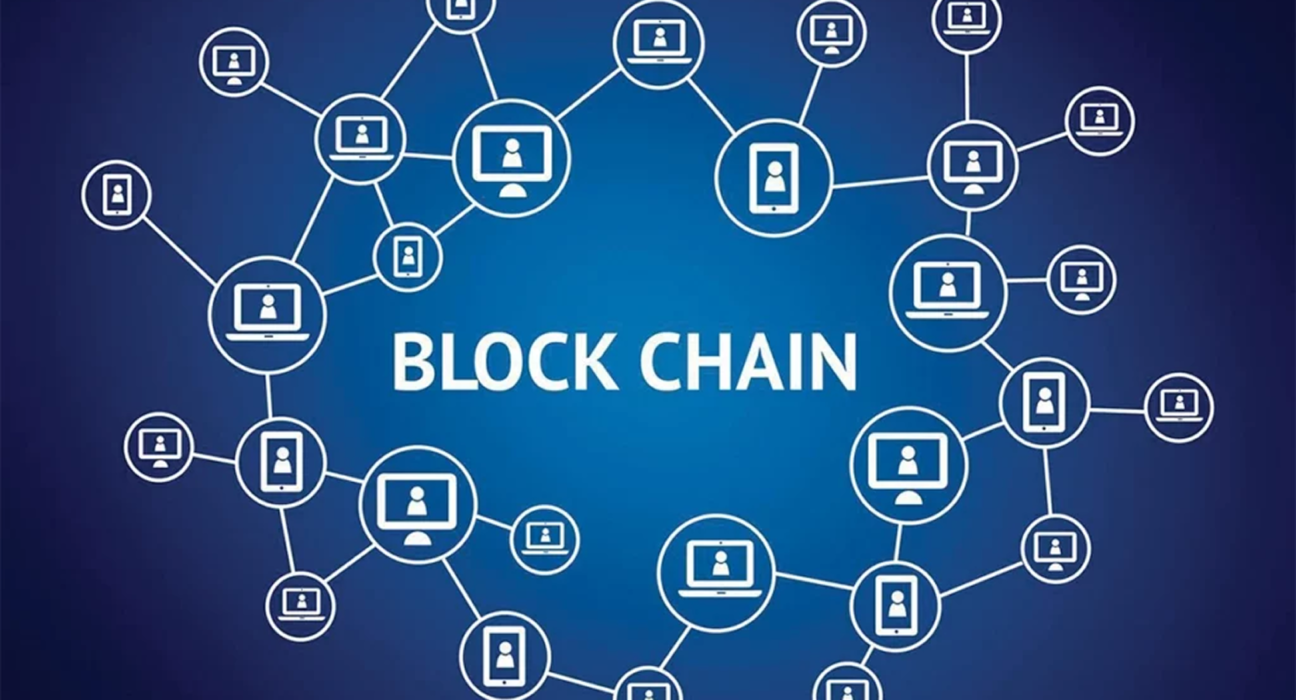
Instead of keeping the entire record in one central database, a blockchain network can maintain copies of the ledger across multiple participating computers.
Each block contains information and is connected to the previous block using cryptographic techniques.
This creates a chain of records—hence the name blockchain.
A simplified structure looks like this:
Block 1 → Block 2 → Block 3 → Block 4 → Block 5
Each new block becomes part of the growing record.
Why Is It Called a “Distributed Ledger”?
A ledger is simply a record of transactions or information.
Traditional financial systems often rely on centralized databases controlled by a particular organization.
For example, a bank maintains records of customer accounts and transactions.
A distributed ledger can instead be maintained across multiple computers participating in a network.
This means there isn’t necessarily one single database that everyone must rely on.
How Does Blockchain Work?
Although different blockchain networks use different designs, the basic process can be explained through several steps.
Step 1: A Transaction or Record Is Created
Someone initiates an action that needs to be recorded.
This could involve:
- A financial transaction
- Transfer of a digital asset
- A data record
- A smart contract interaction
Step 2: The Information Is Broadcast
The proposed transaction is sent to computers participating in the network.
These computers are often called nodes.
Step 3: The Network Validates the Information
The network uses predefined rules to determine whether the transaction is valid.
The exact validation process depends on the blockchain.
Step 4: Transactions Are Grouped Into a Block
Valid transactions can be collected together into a new block.
Step 5: The Block Is Added to the Chain
Once the network reaches the required agreement, the block is added to the existing blockchain.
Step 6: The Record Becomes Part of the Distributed Ledger
Participating systems update their records according to the network’s rules.
The process creates a continuously growing chain of information.
What Is a Block?
A block is a collection of information recorded on a blockchain.
Depending on the blockchain, a block may contain:
- Transactions
- A timestamp
- A reference to the previous block
- A cryptographic identifier
- Other technical information
The exact structure differs between blockchain networks.
The important concept is that blocks are connected to one another.
What Is a Hash?
A hash is a type of digital fingerprint generated from data.
A cryptographic hashing function takes information and produces a fixed-format output.
Even a small change in the original information can produce a very different hash.
This property helps blockchains detect changes to recorded information.
For example:
Original data → Hash A
If the data changes:
Modified data → Hash B
Because the resulting hashes differ, the change can be detected.
How Are Blocks Connected?
Blockchain systems can use cryptographic references to connect each block to the previous one.
A simplified example might look like:
Block 1 → Hash 1
Block 2 → Contains reference to Block 1
Block 3 → Contains reference to Block 2
If someone attempts to alter information in an earlier block, the cryptographic relationships can become inconsistent.
That is one reason blockchains can make historical records difficult to modify without detection.
Is Blockchain Immutable?
Blockchain is often described as “immutable,” but this word needs some context.
It doesn’t mean that information can never be changed under any imaginable circumstances.
Rather, many blockchain designs make previously recorded information difficult to alter without the network detecting the change or requiring significant control over the system.
The level of resistance to modification depends on:
- Network design
- Consensus mechanism
- Number of participants
- Governance
- Security
- Implementation
So “difficult to alter” is generally a more useful way to understand the concept than assuming absolute permanence.
What Is a Blockchain Node?
A node is a computer or system that participates in a blockchain network.
Depending on the network and node type, it may:
- Store blockchain data
- Validate transactions
- Relay information
- Participate in consensus
- Maintain a copy of some or all network records
Different blockchain systems can have different types of nodes and responsibilities.
What Is Consensus?
A blockchain needs a way for participating systems to agree on which transactions should be accepted and what the current state of the ledger should be.
This process is known as consensus.
Different blockchains use different consensus mechanisms.
Two well-known approaches are:
Proof of Work
Participants compete using computational work to help secure and validate the network.
This approach is associated with Bitcoin.
Proof of Stake
Participants commit or “stake” assets according to the network’s rules and can take part in validating transactions and securing the network.
Different implementations have different mechanisms and requirements.
Blockchain and Cryptocurrency
Cryptocurrency is one of the most well-known applications of blockchain technology.
A blockchain can provide a shared record of cryptocurrency transactions without requiring a traditional central ledger operator to maintain the transaction history.
For example, a cryptocurrency network can use blockchain technology to record transfers between digital addresses.
However:
Blockchain ≠ Cryptocurrency
Blockchain is the underlying technology or architecture used by some cryptocurrency systems.
Cryptocurrency is one application of that technology.
Can Blockchain Be Used Without Cryptocurrency?
Yes.
Blockchain technology can potentially be used for applications involving shared records, verification, digital ownership, and automated processes.
Potential areas include:
- Supply chains
- Digital identity
- Asset tracking
- Record management
- Digital certificates
- Intellectual property
- Certain financial applications
- Decentralized applications
However, not every problem requires a blockchain.
A conventional database can often be simpler, faster, cheaper, and easier to manage.
Blockchain in Supply Chains
Supply chains involve many organizations.
A product may move through:
Manufacturer → Distributor → Warehouse → Retailer → Customer
Different participants may maintain separate records.
Blockchain can potentially provide a shared record of certain events.
For example, information about a product could be recorded as it moves through different stages.
This could help organizations investigate:
- Where a product came from
- When it changed hands
- Which stages it passed through
- Whether records have been altered
The usefulness depends heavily on the quality and reliability of the information entered into the system.
Blockchain and Digital Identity
Blockchain has also been proposed for certain digital identity applications.
A digital identity system could potentially allow individuals or organizations to prove specific information without relying on a single centralized database for every verification.
However, identity systems involve significant privacy and security considerations.
Blockchain alone does not automatically make an identity system private or secure.
The entire system—including wallets, applications, authentication, and data storage—must be designed properly.
What Are Smart Contracts?
A smart contract is a program deployed on a blockchain that can automatically execute actions when predefined conditions are met.
For example:
Condition → Verification → Program executes predefined action
Smart contracts can be used to create automated applications on certain blockchain networks.
They can potentially support:
- Digital asset transfers
- Automated agreements
- Decentralized applications
- Financial protocols
- Digital ownership systems
However, smart contracts are software and can contain bugs or vulnerabilities.
What Are the Advantages of Blockchain?
1. Distributed Record Keeping
Information can be maintained across multiple participating systems.
2. Transparency
Some public blockchains allow anyone to inspect transaction records.
3. Tamper Resistance
Cryptographic linking and consensus mechanisms can make unauthorized changes difficult.
4. Reduced Dependence on a Single Database
Some blockchain designs distribute responsibility across a network.
5. Programmability
Smart contracts can allow certain blockchain networks to execute programmed actions automatically.
What Are the Disadvantages?
Blockchain also has limitations.
Complexity
Blockchain systems can be more complicated than traditional databases.
Performance
Some blockchain networks process transactions more slowly than centralized systems.
Costs
Certain networks can involve transaction or infrastructure costs.
Energy Consumption
Some consensus mechanisms, particularly certain proof-of-work systems, can require substantial computational energy.
Storage
Blockchain data can grow continuously, creating storage and infrastructure requirements.
Governance
Deciding how a blockchain should evolve can be complicated, especially in decentralized systems.
Blockchain vs Traditional Database
A traditional database is often more appropriate when one organization is responsible for managing the data.
| Blockchain | Traditional Database |
|---|---|
| Can distribute control across participants | Usually managed by a central organization |
| Uses cryptographic mechanisms | Uses conventional database security |
| Can provide tamper-resistant records | Data can generally be edited by authorized administrators |
| May involve consensus | Typically relies on centralized authorization |
| Can support decentralized applications | Often simpler for centralized applications |
| May have greater complexity | Usually easier to manage for ordinary business systems |
Blockchain isn’t automatically better.
The right technology depends on the problem being solved.
Is Blockchain Secure?
Blockchain networks can be highly resistant to certain forms of tampering, but blockchain security isn’t the same as complete system security.
Weaknesses can exist in:
- Wallet software
- Smart contracts
- Exchanges
- User accounts
- Private keys
- Applications
- Network implementations
For example, losing control of a private key can result in losing access to assets controlled by that key.
A secure blockchain doesn’t automatically make every application built around it secure.
What Is a Blockchain Wallet?
A blockchain wallet is software or hardware that allows users to manage cryptographic keys associated with blockchain assets.
The wallet doesn’t necessarily “store” digital assets in the same way a physical wallet stores cash.
Instead, it generally manages the credentials needed to interact with assets recorded on a blockchain.
Depending on the wallet, users may be able to:
- Send assets
- Receive assets
- Sign transactions
- Interact with applications
- Manage multiple blockchain accounts
Private-key security is extremely important.
Why Is Blockchain Considered Important?
Blockchain introduced a different approach to digital record keeping.
Instead of automatically relying on a central authority to maintain a shared database, certain blockchain systems allow multiple participants to maintain and verify a shared ledger according to predefined rules.
This can be useful when multiple parties need to coordinate information but don’t necessarily want one participant to have complete control over the record.
At the same time, blockchain introduces trade-offs in complexity, performance, governance, and cost.
The Future of Blockchain
Blockchain development continues across several areas.
Potential applications include:
- Digital assets
- Financial infrastructure
- Tokenized assets
- Decentralized applications
- Digital identity
- Supply-chain systems
- Automated agreements
- Data verification
Some applications may become widely adopted, while others may prove less useful than conventional technologies.
The long-term importance of blockchain will ultimately depend on whether it can solve real-world problems more effectively than existing alternatives.
Final Thoughts
Blockchain is fundamentally a way of maintaining and verifying a shared digital record across a network using cryptography and consensus mechanisms.
Although cryptocurrency made blockchain famous, the technology itself has applications beyond digital currencies.
Its biggest potential advantage is not simply that information is stored digitally. Traditional databases have done that for decades.
The interesting part is the possibility of creating shared, verifiable, and tamper-resistant records without relying entirely on a single central database administrator.
At the same time, blockchain isn’t the right solution for every problem.
Understanding both its advantages and limitations is essential before deciding where the technology actually makes sense.