How Does Inflation Work? A Simple Guide to Rising Prices
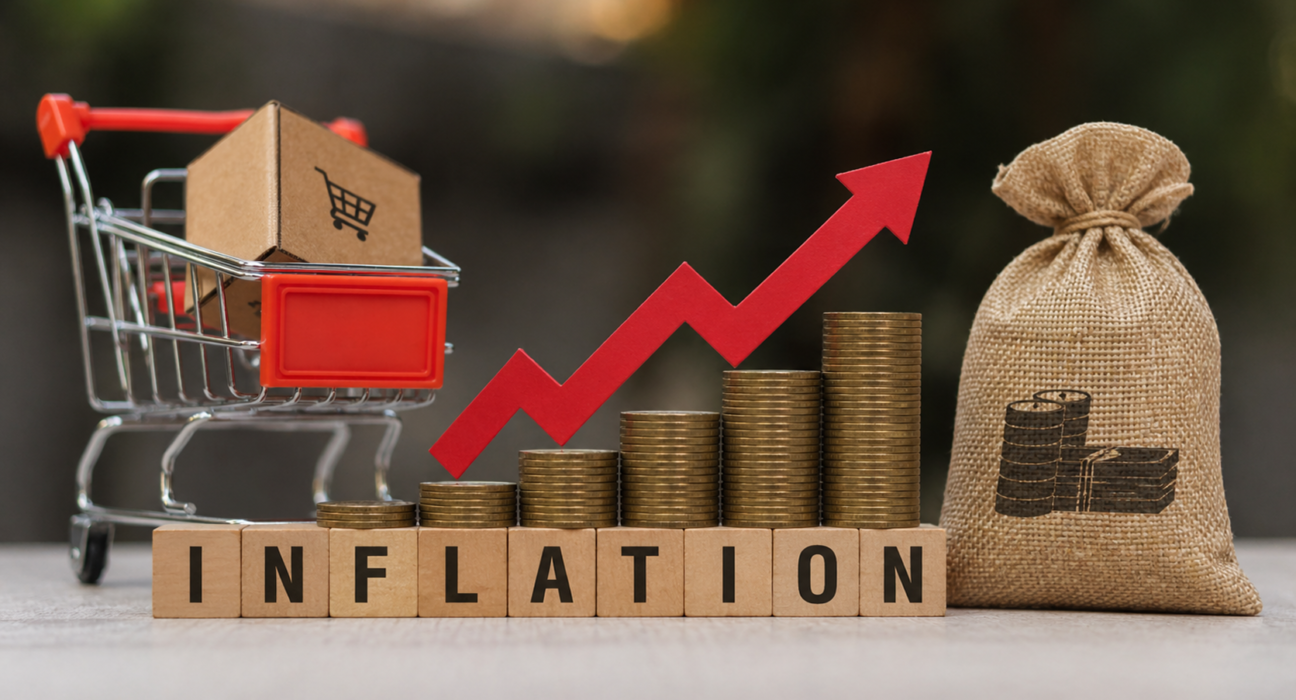
You may have noticed that the same amount of money doesn’t always buy the same amount of goods and services.
A meal that cost one amount several years ago may cost more today. Rent, groceries, transportation, electricity, and other everyday expenses can also change over time.
One of the main economic concepts used to describe broad increases in prices is inflation.
Inflation affects consumers, businesses, governments, investors, savers, and borrowers.
But what exactly causes inflation, how is it measured, and why does it matter?
What Is Inflation?
Inflation is a sustained increase in the general price level of goods and services in an economy over time.
When inflation occurs, the purchasing power of money generally declines.
For example, if the overall price of many goods and services rises, the same amount of money will generally purchase fewer things than it did previously.
Inflation does not mean that every individual product becomes more expensive at the same rate.
Some prices may rise quickly, some may rise slowly, and others may even fall.
Inflation refers to the broader movement in prices across an economy.
A Simple Example of Inflation
Imagine that a basket of everyday goods costs:
$100 today
A year later, the same basket costs:
$104
The price increase would be approximately:
4%
If similar price increases occur across a broad range of goods and services, economists may describe the economy as experiencing inflation.
The actual measurement of inflation is more sophisticated because statistical agencies use carefully constructed price indexes and baskets of goods and services.
What Is the Inflation Rate?
The inflation rate measures how quickly prices are changing over a particular period.
For example, if a price index rises from 100 to 103 over a year, the annual inflation rate would be approximately 3%.
A simplified calculation is:
Inflation Rate = ((New Price Index − Old Price Index) ÷ Old Price Index) × 100
Inflation is commonly reported as an annual percentage.
You might therefore hear statements such as:
“Inflation was 3% over the past year.”
This does not mean that every product became exactly 3% more expensive.
It represents the change in the relevant overall price index.
How Is Inflation Measured?
Governments and statistical organizations use price indexes to measure changes in the cost of goods and services.
One widely used measure is the Consumer Price Index (CPI).
The CPI tracks the prices of a selected basket of goods and services that represents consumer spending patterns.
The exact basket and methodology vary by country.
The basket can include categories such as:
- Food
- Housing
- Transportation
- Clothing
- Healthcare
- Education
- Recreation
- Communication
- Household goods
- Other services
The weights assigned to different categories are important because households do not spend the same percentage of their income on every category.
Why Does Inflation Feel Different to Different People?
Inflation is not experienced equally by everyone.
Imagine two households.
One spends a large portion of its income on rent and food.
Another spends more on travel, entertainment, and technology.
If food and housing prices rise significantly while other prices remain relatively stable, the first household may feel much more financial pressure.
This is why an official inflation rate doesn’t necessarily represent the personal inflation rate experienced by every household.
What Causes Inflation?
There is no single cause of inflation.
Different economic conditions can lead to rising prices.
Some major causes include:
- Increased demand
- Higher production costs
- Supply disruptions
- Wage and labor-market pressures
- Changes in commodity prices
- Monetary conditions
- Government policies
- Exchange-rate movements
These factors can also interact with one another.
Demand-Pull Inflation
Demand-pull inflation occurs when demand for goods and services grows faster than the economy’s ability to supply them.
Imagine a situation where:
- Consumers are spending more
- Businesses are investing heavily
- Employment is strong
- Demand is rising rapidly
If production cannot increase quickly enough, businesses may raise prices.
A simple example would be a popular product becoming scarce because many more people want to buy it than manufacturers can supply.
Cost-Push Inflation
Cost-push inflation occurs when the cost of producing goods and services increases.
Businesses may face higher costs for:
- Energy
- Raw materials
- Transportation
- Labor
- Components
- Rent
- Other inputs
If those costs increase significantly, businesses may raise prices to protect their margins.
For example, a sharp increase in fuel costs can raise transportation expenses, which can affect the cost of moving goods throughout an economy.
Supply Shocks
Sometimes inflation can be caused or intensified by sudden disruptions to supply.
Examples can include:
- Natural disasters
- Wars
- Trade disruptions
- Factory closures
- Crop failures
- Energy shortages
- Major transportation disruptions
When supply falls while demand remains strong, prices can rise.
The effect can spread beyond the original product because businesses often depend on interconnected supply chains.
Why Energy Prices Matter
Energy is an important input for many parts of the economy.
Businesses use energy to:
- Manufacture products
- Heat buildings
- Operate machinery
- Transport goods
- Run data centers
- Provide services
When energy prices rise sharply, businesses may face higher operating costs.
Those higher costs can eventually affect consumer prices.
Energy prices can therefore influence inflation directly and indirectly.
How Do Wages Affect Inflation?
Wages and inflation can influence each other.
When labor becomes more expensive, businesses may face higher costs.
They may respond by:
- Raising prices
- Reducing costs elsewhere
- Accepting lower profit margins
- Investing in productivity
- Hiring fewer workers
At the same time, workers may seek higher wages when living costs rise.
This can create complex interactions between wages, prices, productivity, and demand.
It is important not to assume that every wage increase automatically causes inflation.
The relationship depends on broader economic conditions.
What Is Core Inflation?
Some inflation measures exclude categories that can be particularly volatile.
A commonly discussed concept is core inflation, which typically removes food and energy prices from the measure in some statistical frameworks.
The purpose is to make underlying price trends easier to analyze when food and energy prices are moving sharply.
However, consumers still have to pay for food and energy.
So excluding them from a particular measure does not mean those costs are unimportant to households.
Inflation vs Deflation
Inflation and deflation describe opposite directions in the general price level.
Inflation
Prices generally rise over time.
Deflation
Prices generally fall over time.
Deflation might initially sound positive because consumers could pay less for goods.
However, persistent deflation can create economic problems.
Consumers may delay purchases if they expect prices to fall further.
Businesses may experience lower revenues.
Debt can also become more burdensome in real terms because the amount owed does not automatically fall when prices decline.
This is one reason policymakers pay attention to both excessive inflation and persistent deflation.
What Is Disinflation?
Disinflation is different from deflation.
Disinflation means inflation is slowing down.
For example:
Year 1: 8% inflation
Year 2: 5% inflation
Year 3: 3% inflation
Prices are still rising in this example.
They are simply rising at a slower rate.
With deflation, the general price level would be falling.
Why Doesn’t the Government Simply Stop Inflation?
Controlling inflation is complicated because the factors behind it can come from many parts of the economy.
Central banks generally use monetary policy to influence economic conditions.
One important tool is the setting of policy interest rates.
Higher interest rates can make borrowing more expensive and saving relatively more attractive.
This can reduce spending and investment demand, which can help reduce inflationary pressure under appropriate conditions.
But monetary policy works with delays and can have trade-offs.
Overly aggressive tightening can weaken economic activity and employment.
How Do Interest Rates Affect Inflation?
Interest rates influence borrowing and spending decisions.
Imagine that interest rates rise.
Loans and other forms of borrowing may become more expensive.
Consumers may reduce spending.
Businesses may delay investment.
People may also choose to save more.
Reduced demand can help ease pressure on prices.
When inflation is too low or economic activity is weak, central banks may take the opposite approach and lower interest rates, depending on their objectives and economic conditions.
What Is the Relationship Between Inflation and Central Banks?
Central banks generally have monetary policy responsibilities, although their specific mandates differ by country.
Many central banks aim to maintain price stability while also considering other economic objectives.
They monitor indicators such as:
- Inflation
- Employment
- Economic growth
- Consumer spending
- Wage growth
- Financial conditions
- Inflation expectations
Based on economic conditions, they may adjust monetary policy.
The exact framework differs between countries.
How Does Inflation Affect Your Money?
Inflation can reduce the purchasing power of money over time.
Suppose you have $1,000.
If prices rise significantly over several years while your money earns little or no return, that $1,000 may buy fewer goods and services in the future.
This is one reason people consider returns on savings and investments in relation to inflation.
Nominal vs Real Returns
Suppose an investment earns:
7%
and inflation is:
3%
The investment’s nominal return is 7%.
Its approximate real return before considering taxes, fees, and compounding differences would be around:
4%
The real return is important because it considers the change in purchasing power.
This simplified example illustrates why an investment’s headline return isn’t the whole story.
How Does Inflation Affect Savings?
Inflation can reduce the purchasing power of cash that earns little or no interest.
This doesn’t mean keeping cash is always a bad idea.
Cash can be important for:
- Emergency funds
- Short-term expenses
- Unexpected costs
- Financial flexibility
The key is understanding the difference between holding money for security and expecting it to preserve purchasing power indefinitely.
How Does Inflation Affect Borrowers?
Inflation can affect borrowers differently from savers.
If you have a fixed-rate loan, the nominal payment may remain unchanged even while wages and prices rise.
Over time, the real value of those fixed payments can decline if income and prices increase.
However, this does not mean inflation automatically benefits borrowers.
Variable-rate loans can become more expensive when interest rates rise, and high inflation can also reduce household purchasing power.
The impact depends on the type of debt, interest rate, income, and broader economic conditions.
How Does Inflation Affect Businesses?
Businesses face both challenges and opportunities during inflationary periods.
Higher costs can affect:
- Raw materials
- Labor
- Rent
- Energy
- Transportation
- Financing
Businesses may respond by increasing prices.
However, they may not always be able to pass the full increase onto customers.
If customers become more price-sensitive, businesses may experience lower sales or narrower profit margins.
Companies with strong pricing power may be better positioned to manage certain cost increases, although no business is completely protected from inflation.
How Does Inflation Affect Investments?
Inflation can influence different investments in different ways.
Stocks
Companies may be able to increase prices as costs rise, but higher costs and weaker consumer demand can hurt profits.
The impact therefore varies by company and industry.
Bonds
Inflation can reduce the purchasing power of fixed payments.
Higher inflation expectations can also affect bond prices and interest rates.
Real estate
Property values and rents can sometimes rise during inflationary periods, but real estate is also affected by interest rates, supply, demand, location, and financing conditions.
Commodities
Certain commodities can rise in price during periods of inflation, but commodity prices are highly volatile and influenced by many factors.
There is no single investment that automatically protects against every inflation environment.
Why Inflation Expectations Matter
What people expect about future inflation can influence current economic behavior.
If workers expect prices to rise significantly, they may seek higher wages.
If businesses expect costs to rise, they may increase prices earlier.
If consumers expect prices to rise, they may bring purchases forward.
These behaviors can influence actual inflation.
This is why central banks pay attention not only to current inflation but also to inflation expectations.
Is Some Inflation Normal?
Many modern economies operate with a goal of maintaining low and stable inflation rather than achieving zero inflation indefinitely.
A small, stable level of inflation can be compatible with economic growth and allows prices and wages to adjust over time.
The specific inflation target varies by central bank and country.
The problem arises when inflation becomes excessively high, unstable, or persistent.
Why High Inflation Can Be a Problem
Rapid inflation can create several challenges.
Reduced purchasing power
Money buys less when prices rise quickly.
Uncertainty
Businesses and households may find long-term planning more difficult.
Higher borrowing costs
Central banks may raise interest rates to address inflationary pressure.
Pressure on household budgets
Essential expenses can consume a larger share of income.
Difficulty for businesses
Companies may struggle to predict costs and customer demand.
Can Prices Fall Even When Inflation Is Positive?
Yes.
Inflation measures the overall movement of prices, not every individual price.
Imagine:
- Electronics prices fall
- Clothing prices remain stable
- Food prices rise
- Rent rises
- Transportation costs rise
The overall inflation rate could still be positive even though some products became cheaper.
This is why individual shopping experiences can differ significantly from the headline inflation rate.
How Can Consumers Deal With Inflation?
Consumers cannot control the overall inflation rate, but they can make adjustments.
Some practical steps include:
Review your regular expenses
Identify where your spending has increased.
Compare prices
Check multiple stores or providers for major purchases.
Avoid unnecessary high-interest debt
High borrowing costs can become particularly painful when household expenses are already rising.
Build an emergency fund
Having accessible savings can provide protection against unexpected expenses.
Review subscriptions
Cancel services you no longer use.
Improve household efficiency
Reducing unnecessary energy or other recurring costs can help.
Review your financial goals
Inflation can affect the amount you need to save for future goals.
Final Thoughts
Inflation is more than simply “things getting expensive.”
It is a measure of how the general price level of goods and services changes over time, and it can influence almost every part of an economy.
Demand, production costs, supply disruptions, wages, energy prices, monetary conditions, and expectations can all play a role.
For individuals, inflation matters because it affects purchasing power, savings, borrowing, investment returns, and household budgets.
Understanding inflation doesn’t allow you to predict every future price movement, but it does give you a better framework for understanding economic news and making informed financial decisions.
Financial Disclaimer
This article is provided for general informational and educational purposes only. Economic conditions, inflation rates, interest rates, and financial markets can change rapidly. This article is not financial or investment advice. Consider your individual circumstances and consult a qualified financial professional before making significant financial decisions.