
Earth Has a Growing Space Junk Problem. And It’s Getting Harder to Ignore.
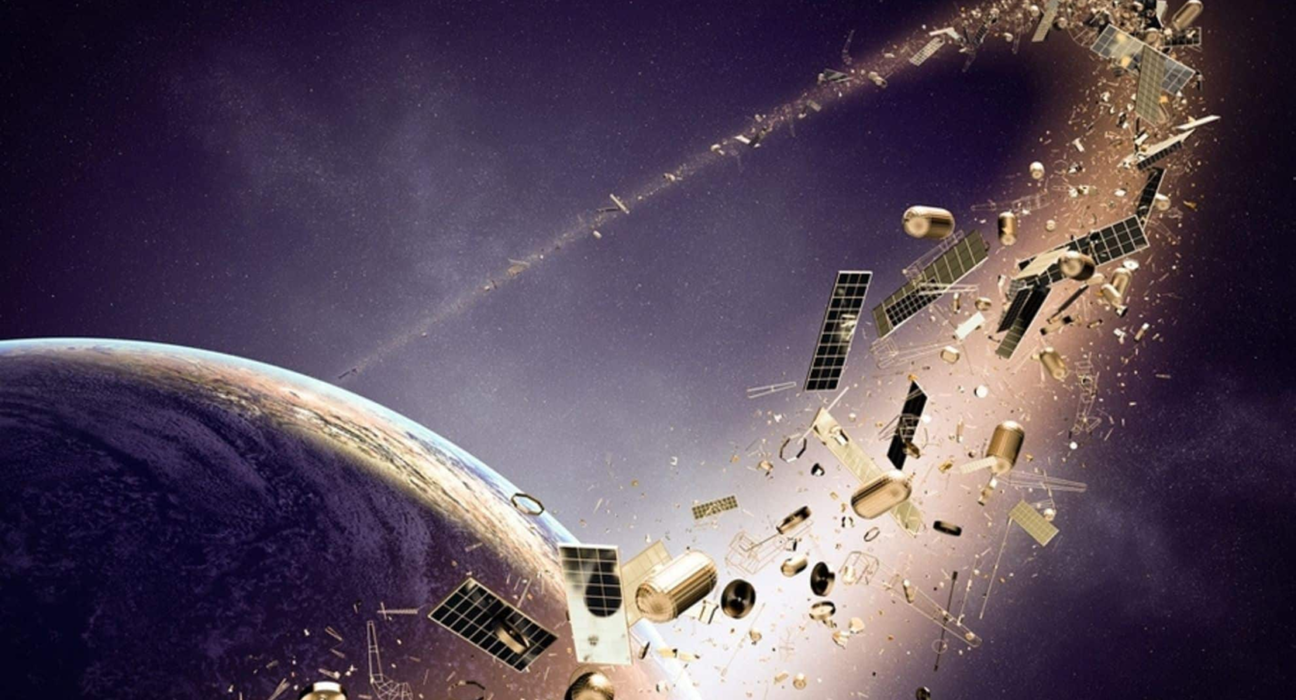
Every day, satellites help people navigate cities, forecast weather, communicate across continents and observe changes happening on Earth.
Most of us rarely think about the infrastructure making these services possible.
But above our atmosphere, something unusual is happening.
Thousands of active satellites share Earth’s orbital environment with old spacecraft, discarded rocket stages and fragments left behind by collisions and explosions.
Some objects are large enough to track. Others are tiny pieces moving at extraordinary speeds.
Together, they form a growing challenge for one of humanity’s most valuable technological environments.
Space is enormous, but useful orbits are not unlimited.
And as more satellites enter orbit, managing the objects already there becomes increasingly important.
What Exactly Is Space Junk?
Space junk, also called space debris or orbital debris, refers to human-made objects in orbit that no longer serve a useful purpose.
This includes a surprisingly wide range of objects.
- Defunct satellites that have stopped operating.
- Spent rocket stages left in orbit.
- Fragments from collisions.
- Pieces released during spacecraft separation.
- Debris created by accidental explosions or destructive tests.
Not every object in orbit is junk.
Working satellites, crewed spacecraft and operational vehicles are part of active space infrastructure.
The problem is the accumulation of objects that can no longer contribute to a mission but still occupy the orbital environment.
Some debris is large enough to be monitored and tracked. Much smaller fragments may be difficult or impossible to track individually.
Yet even small debris can pose a risk.
Why a Tiny Piece of Metal Can Cause a Huge Problem
On Earth, a small metal fragment may seem harmless.
In orbit, speed changes everything.
Objects in low Earth orbit can travel at roughly 7–8 kilometres per second, depending on their orbit.
When two objects collide, their relative speed can be extremely high.
Even a small fragment can damage spacecraft surfaces, solar panels, sensors or other critical systems.
The risk depends on several factors:
- The object’s size and mass.
- Its speed and direction.
- The orbit it occupies.
- The spacecraft’s design and shielding.
- Whether the object can be detected in time.
A large piece of debris may be easier to track than a tiny fragment.
That creates an uncomfortable situation: some hazards can be predicted and avoided, while others remain difficult to manage.
For satellites operating expensive instruments or supporting essential services, even a low-probability collision can have serious consequences.
Where Does Space Debris Come From?
Space debris has accumulated over decades of launches, missions and orbital activity.
Understanding its origins helps explain why the problem is difficult to solve.
1. Retired satellites
Satellites eventually run out of fuel, experience technical failures or become obsolete.
If they remain in orbit, they can become long-term hazards.
How long they remain depends heavily on altitude and atmospheric drag.
Objects in lower orbits may gradually re-enter the atmosphere, while debris at higher altitudes can remain for much longer.
2. Rocket stages
Launching satellites requires rockets, and some rocket components may remain in orbit after deployment.
If a discarded stage breaks apart, it can generate many additional fragments.
This is one reason mission design and responsible disposal practices matter.
3. Collisions
When objects collide in orbit, the impact can create clouds of debris.
These fragments may spread into different trajectories, creating additional collision risks.
A single event can therefore contribute to a much larger environmental problem.
4. Explosions and destructive events
Residual energy, fuel or other failures can cause spacecraft or rocket bodies to fragment.
Intentional destructive events, including anti-satellite tests, can also generate significant debris.
Some debris-producing events have consequences that extend far beyond the original spacecraft.
The Chain Reaction Scientists Worry About
One of the most discussed ideas in orbital debris research is the Kessler syndrome.
The concept describes a scenario in which collisions create additional debris, increasing the likelihood of further collisions.
More collisions could produce more fragments.
More fragments could increase collision risks for other objects.
In a sufficiently dense orbital environment, this could make certain orbital regions increasingly difficult or expensive to use safely.
However, Kessler syndrome is not a prediction that all satellites will suddenly collide or that space will become unusable overnight.
It describes a potential cascading problem whose severity depends on debris populations, orbital regions, collision rates and mitigation efforts.
The concern is that debris can create long-lasting consequences even after new launches stop.
Removing the source of new debris is essential, but existing debris also matters.
Why Satellite Constellations Have Changed the Conversation
Satellite technology is evolving rapidly.
Large constellations place many satellites into orbit to provide services such as broadband internet, communications and Earth observation.
These systems can offer significant benefits.
They can improve connectivity in remote areas, support disaster response and enable new commercial applications.
But large constellations also introduce new operational demands.
More satellites mean more objects that need to be tracked, coordinated and eventually managed at the end of their useful lives.
Operators must consider orbital positioning, collision avoidance, reliability and disposal planning.
The challenge is not simply the number of satellites.
It is how responsibly the entire system is designed and managed over time.
A satellite constellation can provide valuable services while still requiring strong environmental safeguards in orbit.
How Space Junk Threatens Life on Earth
Space debris may seem like a problem for spacecraft engineers alone.
In reality, many everyday services depend on satellites.
Navigation and positioning
Satellite navigation systems support transport, mapping, logistics and various timing applications.
Disruptions to particular satellite services can affect businesses and systems that depend on them.
Weather forecasting
Weather satellites provide observations used to monitor storms, clouds, oceans and atmospheric conditions.
Losing important spacecraft could reduce observational capacity or create gaps in particular datasets.
Communications
Satellites help deliver connectivity, broadcasting and communications services, especially in areas where terrestrial infrastructure is limited.
Earth observation
Satellites support agriculture, environmental monitoring, disaster assessment and scientific research.
Damage to these systems could affect the availability or quality of important information.
It is worth noting that one satellite collision would not automatically disable global navigation or communications.
Many services operate through multiple satellites, backup systems and ground infrastructure.
The broader concern is the cumulative effect of increasing risk, replacement costs and potential service disruptions.
Can Space Junk Be Cleaned Up?
Yes, but it is far more complicated than collecting rubbish on Earth.
Orbital debris moves at high speed, occupies different altitudes and follows different trajectories.
A cleanup spacecraft must safely approach its target, match its motion and capture or otherwise remove it.
Potential approaches include several technologies.
Robotic capture
A spacecraft could use robotic arms or other capture mechanisms to secure a defunct satellite or rocket body.
The challenge is that many old objects were never designed for capture.
They may rotate unpredictably, lack suitable attachment points or present structural risks.
Nets and harpoons
Some concepts involve capturing debris using nets or harpoon-like mechanisms.
These approaches have been explored in technology demonstrations and research, but practical use depends on the target, mission design and safety considerations.
Controlled deorbiting
A removal spacecraft may guide an object into an orbit that leads to atmospheric re-entry.
For suitable objects, this can reduce the time they remain a hazard.
However, removal missions require careful planning, and the object must be handled safely.
Designing satellites for disposal
Preventing future debris is often more practical than removing every object already in orbit.
Satellite designers can incorporate systems that support reliable end-of-life disposal.
Depending on the mission and orbit, this may involve controlled deorbiting or moving a spacecraft to an appropriate disposal orbit.
Prevention does not solve the entire legacy problem, but it can reduce future accumulation.
Why Cleaning Up Space Is Also a Business Challenge
Active debris removal has a technical challenge, but it also faces a commercial one.
Removing debris is expensive.
A mission needs launch capacity, spacecraft hardware, guidance systems, tracking, mission operations and risk management.
There is also a question of responsibility.
Who pays to remove an abandoned satellite?
Who has permission to approach and capture it?
What happens if the operation damages the object or creates additional debris?
Ownership, liability, authorisation and international coordination complicate these missions.
A satellite may be physically inactive, but that does not automatically mean it is free for another party to capture or remove.
These questions make orbital cleanup both an engineering challenge and a governance issue.
As space activity expands, new services may emerge around debris tracking, collision avoidance, spacecraft servicing and end-of-life management.
The long-term opportunity is not just removing debris.
It is building a space industry where responsible operations become part of normal business practice.
What Can Be Done to Reduce the Problem?
There is no single solution.
A sustainable orbital environment requires coordinated action across spacecraft manufacturers, operators, launch providers, regulators and governments.
Some important measures include:
Better mission planning: Consider disposal strategies before launching a satellite.
Reliable end-of-life disposal: Design missions with realistic plans for safely leaving valuable orbital regions.
Passivation: Reduce stored energy in retired spacecraft and rocket stages where feasible to lower the risk of accidental breakups.
Improved tracking: Expand observation and data-sharing capabilities to support collision avoidance.
Responsible launch practices: Minimise the release of mission-related debris.
International coordination: Encourage common standards, responsible behaviour and collaboration between spacefaring nations.
Guidelines and regulatory requirements vary by jurisdiction and mission type, and implementation remains an ongoing challenge.
But the principle is straightforward: every new mission should consider not only how it enters orbit, but also how it leaves.
Is Space Becoming Too Crowded?
The answer depends on which orbital region you are talking about.
Earth’s orbital environment is not uniformly crowded.
Low Earth orbit, medium Earth orbit and geostationary orbit have different characteristics, uses and debris risks.
Some regions face more intense activity than others.
A satellite’s altitude, inclination and operational lifetime all influence the environment it occupies.
This means the problem cannot be understood through a single global debris count.
The location, size and trajectory of debris matter just as much as the total number of objects.
Even so, the growth of satellite activity makes long-term orbital management increasingly important.
Space infrastructure is becoming more commercially valuable, and protecting that infrastructure requires thinking beyond individual missions.
The Future of Space Depends on What We Leave Behind
For decades, space exploration was often associated with launches, discoveries and technological achievements.
Now, another measure of progress is becoming just as important.
How responsibly can we use the environment around Earth?
The next generation of space infrastructure will likely depend not only on more advanced satellites, but also on better tracking, more reliable disposal systems and smarter coordination between operators.
A successful space economy cannot be measured only by the number of spacecraft launched.
It must also consider the long-term condition of the environment those spacecraft share.
Because every satellite has a lifecycle.
And every mission leaves behind decisions that may affect the missions that follow.
Final Takeaway
Space junk is a reminder that technological progress can create problems that outlast the technology itself.
Satellites bring enormous value to life on Earth, but their benefits depend on maintaining a safe and usable orbital environment.
The solution will require better engineering, responsible operations, international cooperation and investment in debris management.
Space may look endless from the ground.
But the orbital pathways we depend on deserve careful protection.
The future of space exploration will depend not just on what humanity sends into orbit, but on how responsibly we manage what stays there.