
Why Prices End in 99: The Psychology Behind Pricing
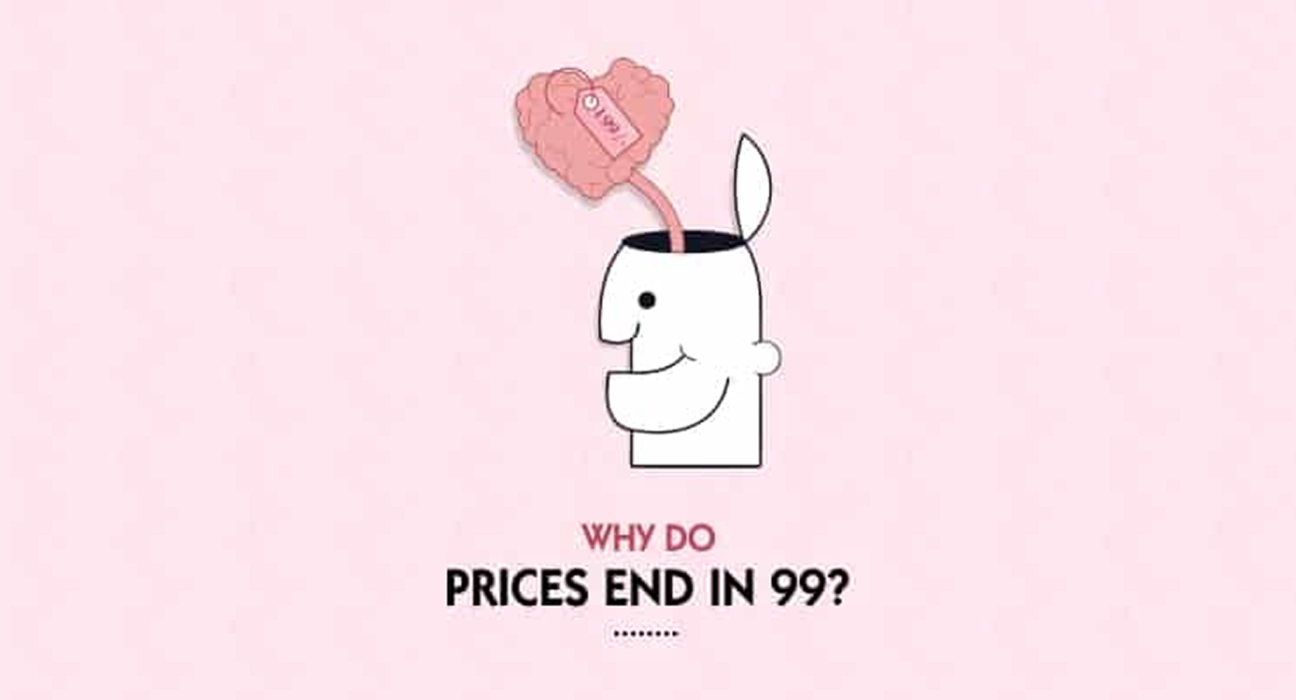
A product costs $9.99.
Another costs $10.
The difference is just one cent. Yet, for decades, retailers have used prices ending in 9 to make products look more attractive.
Walk through a supermarket, browse an online store or check the price of a subscription, and you’ll probably notice the pattern.
$4.99. $19.99. $99.99.
It appears so often that we barely question it.
But why does a business choose $9.99 instead of simply charging $10? Is it genuinely more appealing to customers, or is it just an old retail trick that refuses to disappear?
The answer lies somewhere between psychology, pricing strategy, shopping habits and the complicated way people perceive value.
1. The Left-Digit Effect: Why $9.99 Can Feel Cheaper Than $10
One explanation for prices ending in 9 is known as the left-digit effect.
When people see a price, the leftmost digits can influence their initial perception.
Consider these examples:
- $9.99 versus $10.00
- $49.99 versus $50.00
- $199.99 versus $200.00
The actual differences are tiny.
But the first digit changes, creating a psychological boundary between price categories.
A shopper may perceive $9.99 as belonging to the $9 range rather than the $10 range, even though the difference is practically negligible.
This doesn’t mean everyone consciously thinks that way.
Many customers know perfectly well that $9.99 is essentially $10. Others compare prices carefully or round numbers automatically.
Still, the way prices are presented can influence the first impression a product makes.
That initial impression can matter when someone is browsing quickly.
2. Why Retailers Don’t Always Round Up
From a purely mathematical perspective, charging $10 instead of $9.99 seems simpler.
But pricing is not only about mathematics.
Retailers want prices to communicate something about a product.
A price ending in 9 may signal affordability, a deal or a competitive offer.
For example, a store selling everyday household products might use prices such as $2.99 or $7.99 to create a value-oriented shopping experience.
A luxury brand, on the other hand, might prefer a clean price such as $500 or $2,000 because it wants to communicate quality, exclusivity or simplicity.
Neither approach is automatically better.
The pricing format helps shape the brand’s identity.
A discount retailer and a luxury boutique may sell products at very different prices, but their choice of how to display those prices is also part of the message.
3. The Strategy Has a Name: Charm Pricing
Pricing products just below a round number is commonly called charm pricing.
It is a form of psychological pricing, a broader approach that considers how customers respond to prices rather than treating every price as a purely numerical figure.
Charm pricing can appear in many industries:
- Fashion and footwear.
- Consumer electronics.
- Supermarkets.
- Online marketplaces.
- Subscription services.
- Restaurants and food delivery.
But the format is not limited to prices ending in 9.
Some businesses use prices ending in 5. Others use whole numbers, depending on the category and positioning.
A retailer may also combine pricing approaches across its product range.
For instance, basic accessories might have charm prices while premium products use round numbers.
The objective is to find a price structure that supports both the commercial goal and the intended customer perception.
4. Does $9.99 Actually Make People Buy More?
This is where the strategy becomes interesting.
Research into pricing psychology has found that price presentation can affect consumer responses in some contexts.
But the effect is not universal.
A customer choosing between two similar products may be influenced by a small difference in displayed price.
A customer purchasing an expensive appliance after comparing specifications, reviews and warranties may care much more about the overall value.
The effectiveness of charm pricing can depend on several factors:
Product category: A small everyday purchase may involve a different decision process from a major financial commitment.
Customer expectations: Shoppers familiar with discount pricing may respond differently from customers shopping for premium products.
Price differences: A one-cent change may attract attention in one setting and be irrelevant in another.
Shopping environment: A crowded supermarket aisle creates a different decision environment from a carefully researched online purchase.
Brand positioning: A price that works for a value brand may not suit a luxury brand.
In other words, ending a price in 9 is not a guaranteed sales formula.
It is one tool among many.
5. Why Online Stores Use It So Often
Online shopping makes pricing experiments easier to conduct.
A retailer may test different prices, product page designs or promotional messages across customer groups, subject to applicable laws and platform rules.
For example, a business might compare how customers respond to:
- $49.99
- $50.00
- $48.95
The goal could be to understand which price presentation performs best.
However, a proper experiment needs more than simply comparing two sales totals.
Businesses need to consider traffic quality, customer segments, timing, promotions and other factors that may influence results.
A price may appear successful because of an unrelated marketing campaign rather than the final digit.
Well-designed testing can help retailers separate the effects.
This is particularly useful for businesses with substantial online traffic, where small differences in conversion rates may become commercially meaningful.
But even a measurable improvement in conversions does not automatically mean higher profit.
If the lower price reduces margins too much, the retailer may sell more while earning less.
6. The Hidden Trade-Off Between Sales and Profit
Imagine an online retailer selling a product.
It is considering two pricing options.
| Metric | Option A | Option B |
|---|---|---|
| Selling price | $9.99 | $10.00 |
| Units sold | 1,000 | 980 |
| Revenue | $9,990 | $9,800 |
In this hypothetical example, the $9.99 price generates more revenue because the retailer sells more units.
But revenue alone doesn’t tell the complete story.
The retailer also needs to consider product costs, fulfilment, returns, marketing and other expenses.
If the lower price attracts substantially more customers but leaves too little contribution per order, the strategy may be less attractive.
On the other hand, a small price reduction could improve profitability if the resulting increase in sales is sufficiently large and incremental costs remain manageable.
That is why experienced retailers do not evaluate pricing only by asking:
Which price sells more?
They also ask:
Which price creates the healthiest business outcome?
7. Why Some Premium Brands Avoid Prices Ending in 9
Walk into a premium furniture showroom or browse a luxury product catalogue, and you may see more round-number pricing.
There is a reason some brands prefer it.
Round prices can communicate simplicity, confidence and a different kind of positioning.
A product priced at $1,000 can feel intentionally presented.
A product priced at $999.99 can sometimes look more promotional.
Of course, this is not a universal rule. Many premium businesses use prices ending in 9, and plenty of affordable brands use round prices.
But the contrast illustrates an important principle.
A price does more than tell customers what something costs. It can influence what they think the product represents.
A brand that constantly advertises discounts may attract price-sensitive shoppers, but it can also shape customer expectations around future promotions.
That may make it harder to sell at full price later.
Pricing consistency can therefore be part of long-term brand management.
8. Why Discounts Make the Effect Even More Powerful
Charm pricing often appears alongside promotional messaging.
Consider these examples:
- Was $50, now $39.99.
- Limited offer: $99.99.
- Save 20% today.
These messages combine price presentation with a reason to act.
The customer is no longer evaluating the number alone. They are also evaluating the perceived saving, urgency and attractiveness of the deal.
This can make a promotion more compelling.
But discounts can also distort decision-making.
A shopper may focus on the amount supposedly saved rather than whether the product is worth buying at the advertised price.
The reference price matters, too. A claimed discount is only meaningful when the comparison price is genuine and presented in compliance with applicable pricing and advertising rules.
For shoppers, the useful question is not simply whether a price looks discounted.
It is whether the final price represents good value compared with realistic alternatives.
9. Should Shoppers Pay Attention to the Last Digit?
Absolutely, but not because every price ending in 9 is suspicious.
The real lesson is to look beyond the visual impression.
A few habits can help:
- Round prices mentally. Treat $19.99 as approximately $20.
- Compare unit prices. Especially when buying groceries, toiletries or bulk products.
- Check the final checkout total. Delivery fees, taxes and additional charges can change the actual cost.
- Compare similar products. A slightly higher price may include better quality, a warranty or more useful features.
- Question promotional anchors. A large discount doesn’t automatically mean a good deal.
- Buy based on need and value. Not because a price appears to sit just below a psychological boundary.
These habits make pricing presentation less influential in the decision.
They also help shoppers distinguish between a genuinely attractive offer and one that merely looks attractive.
The Bigger Picture: A One-Cent Difference Can Tell a Bigger Story
The popularity of prices ending in 9 reveals something fascinating about the relationship between businesses and consumers.
People do not always experience prices as pure numbers.
We interpret them through context, expectations, habits and emotion.
A single cent may not materially change what a product costs, but the way a price is displayed can shape how it feels.
For retailers, that perception can influence positioning, conversion and profitability.
For customers, it is a reminder that the number on a price tag is both a financial figure and a communication tool.
The next time you see something priced at $99.99, remember that the final digits may be doing more work than they appear to.
And the smartest buying decision usually begins when you stop looking at the price the way the seller wants you to see it.