




Why AI Is Changing How We Work, Not Just What We Do
For years, people imagined artificial intelligence taking over jobs.
The conversation usually sounded simple:
A machine learns to do a task. A human stops doing that task.
But that is not quite what is happening.
AI is increasingly entering workplaces without completely replacing the people already there.
It writes first drafts.
Summarizes meetings.
Analyzes information.
Generates ideas.
Translates documents.
Creates images.
Explains complicated subjects.
Writes code.
Answers questions.
And sometimes, it simply sits in the background helping someone make a decision faster.
The bigger change may therefore not be that AI is replacing work.
It may be that AI is changing what people consider work in the first place.
The Job Description Is Changing Quietly
Imagine someone whose job involves creating presentations.
A few years ago, much of their time might have gone into:
- Researching information
- Writing initial copy
- Organizing slides
- Finding visuals
- Formatting content
- Checking grammar
- Making revisions
AI can now assist with several of those activities.
But that doesn’t necessarily eliminate the job.
Instead, the person may spend more time deciding:
What should the presentation actually say?
Which information matters?
What should the audience remember?
Does the final result make sense?
The work shifts from producing every individual component to directing, evaluating and improving the output.
That is a very different skill.
AI Is Good at Starting Things
One of the biggest advantages of AI is that it reduces the difficulty of getting started.
A blank document can be intimidating.
A blank presentation can be worse.
A blank spreadsheet.
A blank design file.
A blank marketing campaign.
AI can provide a starting point within seconds.
That first draft may not be perfect.
It may even be wrong.
But it gives the human something to react to.
And sometimes that is enough to overcome the hardest part of creative work:
starting.
The First Draft Is Becoming Cheap
In the past, producing a first draft required time.
Today, producing a first draft can be almost instantaneous.
This changes the economics of experimentation.
You can ask AI for five different approaches.
Then ten.
Then twenty.
You can compare them.
Reject most of them.
Combine the best ideas.
And build something better.
The value is no longer necessarily in producing the first version.
Increasingly, the value is in knowing which version deserves to survive.
The New Skill Is Knowing What to Ask
As AI becomes more capable, simply knowing that AI exists is no longer enough.
People need to understand how to communicate with it.
That does not mean everyone needs to become an expert prompt engineer.
It means people need to become better at expressing:
- What they want
- Why they want it
- Who it is for
- What constraints exist
- What a good result looks like
- What should be avoided
This is really an extension of an older skill:
clear thinking.
AI often exposes unclear thinking because vague instructions tend to produce vague results.
AI Doesn’t Remove Judgment
This may be the most important part of the entire conversation.
AI can produce an answer.
That does not automatically make the answer correct.
It can produce a convincing paragraph containing an incorrect fact.
It can create an attractive design that communicates the wrong message.
It can write code containing a security problem.
It can summarize information while missing an important detail.
The ability to evaluate AI output therefore becomes extremely valuable.
People increasingly need to ask:
Is this accurate?
Is this useful?
What is missing?
What assumption is being made?
Would I trust this without checking it?
AI can accelerate production.
But judgment determines whether the production is worth using.
The Fastest Person May Not Be the Best Person
AI can make individuals dramatically faster.
But speed creates an interesting problem.
If everyone can produce more content, more designs, more emails and more ideas, then the amount of output increases.
That does not automatically increase quality.
In fact, the opposite can happen.
The internet can become flooded with mediocre material.
When production becomes cheap, taste becomes more valuable.
Knowing what not to publish can become just as important as knowing how to create something.
AI Could Make Good Questions More Valuable
For a long time, education often emphasized finding answers.
AI changes that equation.
If a machine can generate an answer almost instantly, the harder problem becomes knowing which question to ask.
Consider a business problem.
Someone might ask:
“How can we get more customers?”
A better question might be:
“Which part of our customer journey is losing the highest-value users, and what evidence would help us understand why?”
The second question creates a much more useful investigation.
AI does not remove the need for thinking.
It can make thinking more important.
The Best Workers May Become AI Directors
A new type of workflow is emerging.
A person identifies the objective.
AI handles parts of the execution.
The person reviews the results.
AI generates alternatives.
The person chooses a direction.
AI refines it.
The person makes the final decision.
This creates a loop:
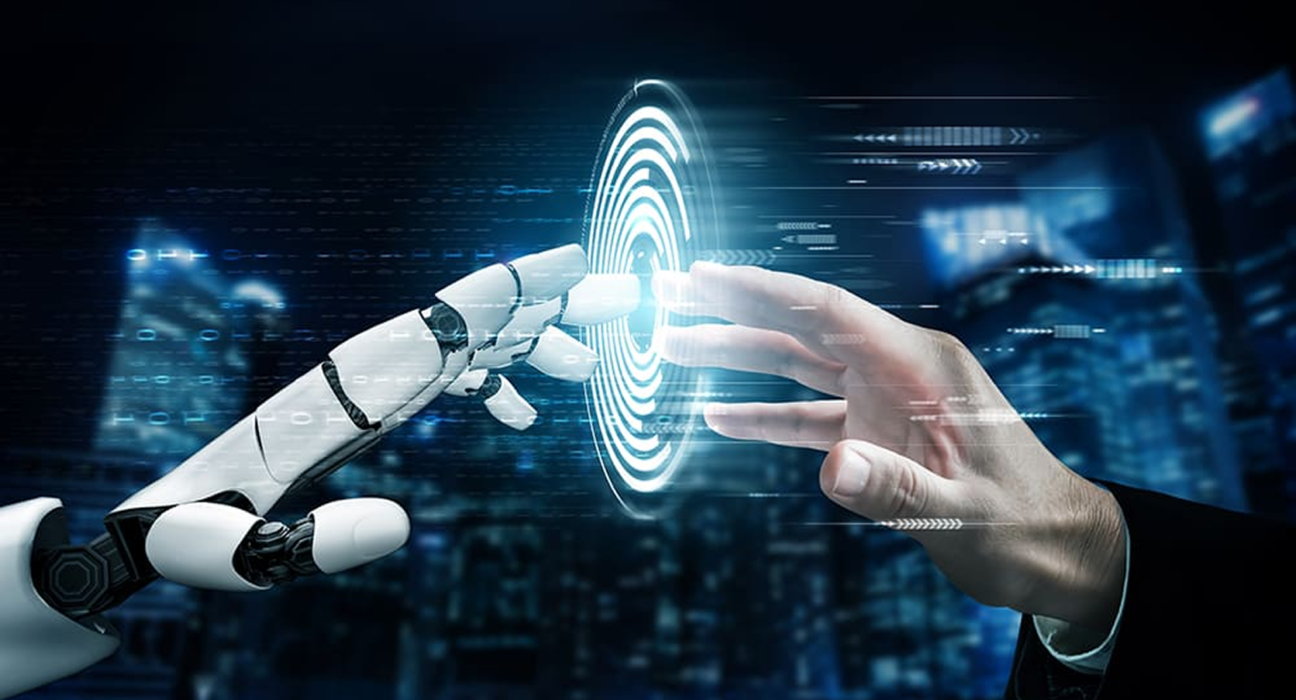
Human → AI → Human → AI → Human
The machine produces.
The human directs.
The machine explores.
The human evaluates.
The machine accelerates.
The human decides.
This may become a common structure for knowledge work.
Small Teams Can Suddenly Do Much More
AI also changes the relationship between team size and output.
A small team can potentially handle work that previously required several specialized roles.
A startup might use AI for initial research, content drafts, customer support, data analysis and software development assistance.
That does not mean one person can replace an entire company.
But it can reduce the amount of repetitive work required to operate one.
This could make small teams more competitive.
And it could lower the barrier to building new businesses.
Creativity May Become More About Direction
AI can generate ideas quickly.
That creates an unusual situation for creative professionals.
The challenge is no longer simply:
“Can I create something?”
It becomes:
“Can I recognize something worth creating?”
A designer may generate dozens of concepts.
A writer may explore multiple story angles.
A filmmaker may test different visual directions.
A marketer may create many campaign ideas.
The person who can identify the strongest concept may have an advantage over the person who can simply produce the most concepts.
Creation is becoming cheaper.
Direction is becoming more valuable.
Not Every Task Needs AI
There is also a danger in assuming AI should be used everywhere.
Sometimes a task is already simple.
Sometimes automation creates more complexity than it removes.
Sometimes human interaction is the entire point.
A handwritten note from someone you care about does not become better because AI helped write it.
A creative conversation does not always need an algorithm.
And some decisions require human responsibility that cannot simply be delegated to software.
The goal should not be:
Use AI for everything.
It should be:
Use AI where it genuinely improves the outcome.
The Workplace May Become Less About Doing and More About Deciding
This could be the biggest long-term change.
Many jobs have historically rewarded people for completing tasks.
As AI handles more execution, organizations may increasingly reward people for:
- Making better decisions
- Setting priorities
- Understanding customers
- Solving unusual problems
- Communicating clearly
- Managing uncertainty
- Connecting ideas
- Taking responsibility
The person who simply follows a process may become less valuable when software can follow that process faster.
The person who can decide which process should exist in the first place may become more valuable.
The AI Advantage Will Not Be Equal
There is another side to this transformation.
Not everyone will have the same access to AI tools, training or information.
Some workers will learn how to integrate AI deeply into their workflow.
Others may use it occasionally.
Companies will adopt different strategies.
Industries will move at different speeds.
That means the impact of AI will probably not arrive as one dramatic moment.
It will happen unevenly.
Some workplaces may feel completely different within a few years.
Others may change very slowly.
The Most Important Question Is Not “Will AI Take My Job?”
That question is understandable.
But it may not be the most useful one.
A better question is:
“Which parts of my work are becoming easier to automate, and which parts are becoming more valuable because of AI?”
Every profession has repetitive tasks.
Every profession also has judgment, context and human interaction.
The balance between those two categories is changing.
Understanding that shift may be more useful than trying to predict exactly which jobs will disappear.
AI Is Becoming Part of the Workflow
The most interesting future may not look like humans versus machines.
It may look much less dramatic.
You open your computer.
AI is already integrated into the tools you use.
It summarizes something.
Suggests something.
Finds something.
Creates something.
Checks something.
You review it.
You change it.
You approve it.
Then you move on.
The AI may not feel like a separate technology anymore.
It may simply become part of how digital work happens.
And when that happens, the biggest advantage may not belong to people who know the most about AI.
It may belong to people who understand how to combine AI capabilities with genuinely good human judgment.
Because the future of work may not be about humans doing less.
It may be about humans spending less time doing the work machines are good at—and more time doing the work that still requires them.