Why Supermarkets Make You Walk So Much Before You Buy
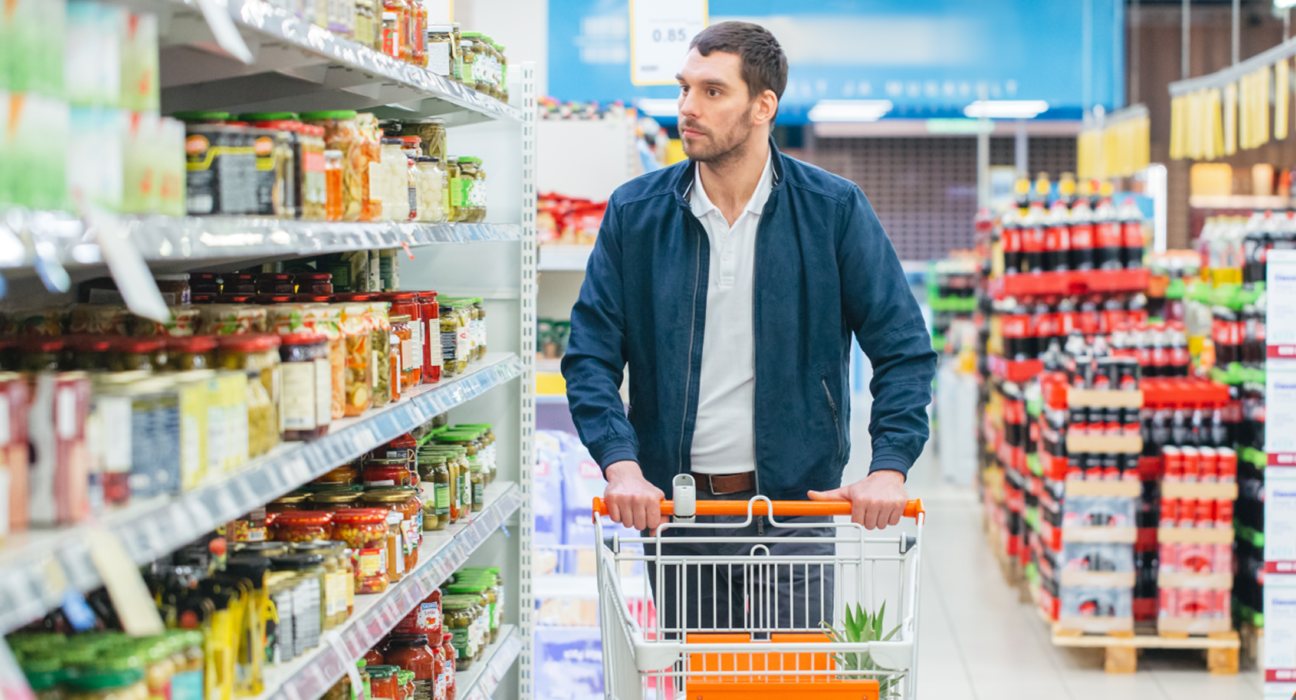
You walk into a supermarket for one thing.
Milk.
Ten minutes later, your basket contains snacks, cleaning products, a drink you didn’t plan to buy and something you suddenly decided you needed.
Then you reach the checkout.
The bill is much higher than expected.
It feels like you simply made a few random decisions.
But the supermarket may have been influencing those decisions long before you reached the checkout.
The shelves, aisles, signs, smells, product positions and even the direction you walk through the store can all play a role.
Supermarkets aren’t simply places where products are stored. They’re carefully designed environments for shopping.
Why Aren’t the Things You Need Always Near the Entrance?
Think about the products people regularly visit a supermarket to buy.
Milk.
Bread.
Eggs.
Basic household products.
Fresh food.
These are often essential purchases.
If you placed everything people needed directly beside the entrance, customers could enter, collect their items and leave quickly.
That isn’t necessarily what a retailer wants.
A supermarket benefits when shoppers discover additional products while they are there.
So essential products may be positioned deeper inside the store.
The longer you remain inside, the more opportunities there are to see something else.
The Longer Route Creates More Opportunities
Imagine you enter a store looking for milk.
If the milk is immediately visible, your journey might look like this:
Entrance → milk → checkout → exit.
But if milk is located toward the back, the journey becomes:
Entrance → aisles → promotions → snacks → drinks → household products → milk → checkout.
You don’t necessarily buy everything you see.
But you now have many more opportunities to consider something.
That’s the fundamental principle.
More exposure creates more opportunities for purchases.
The First Products You See Matter
The entrance of a supermarket is carefully designed.
The first products you encounter can establish the mood of the shopping experience.
Fresh produce is often visually appealing.
Bright colors.
Fresh-looking food.
Large displays.
Seasonal products.
The goal isn’t only to sell those products.
It can also create a particular impression:
This is a place where fresh and appealing things are available.
The first few minutes of the shopping experience can influence how the rest of the store feels.
Why Fresh Produce Often Comes First
There is a practical reason too.
Fresh produce is visually attractive.
Fruits and vegetables have strong colors and natural shapes.
Large displays create a feeling of abundance.
That can make the store feel fresh and inviting.
Compare that with entering a store surrounded immediately by cleaning chemicals and packaged household products.
Both may be useful.
But they create very different first impressions.
Retailers understand that shopping isn’t only about functionality.
It is also about atmosphere.
Your Shopping Cart Is Bigger Than You Think
There’s another subtle trick.
Shopping carts have become remarkably large.
That isn’t necessarily an accident.
When a cart is nearly empty, a few products can make it look as though you’ve barely bought anything.
A larger cart can therefore reduce the psychological feeling that you’re spending a lot.
You might add another product because there appears to be plenty of space.
The same principle can apply to baskets.
The physical container can influence how much shopping feels “normal.”
Product Placement Is a Competition
Not every shelf position is equally valuable.
Eye-level space is highly visible.
Products placed directly in front of you are easier to notice than products on the lowest shelf.
That’s why brands and retailers care so much about shelf positioning.
A product can be excellent and still struggle if customers rarely see it.
Visibility is part of retail competition.
The Most Convenient Shelf Isn’t Always the Cheapest
Walk through a supermarket and compare similar products.
You may find different brands positioned at different heights.
The product that’s easiest to notice may not be the cheapest.
It may simply have the most valuable position.
This is why experienced shoppers often look beyond the first product they see.
The supermarket has already made a choice about what you notice first.
You don’t have to make the same choice.
Why Children’s Products Are Placed Differently
Retailers understand that children are shoppers too — even when they aren’t the ones paying.
Products aimed at children often use bright packaging, recognizable characters and eye-catching designs.
Some are positioned where younger shoppers can easily see them.
A child doesn’t evaluate a product the same way an adult does.
The packaging itself can create desire.
Then comes the familiar question:
“Can we get this?”
Retailers know that a small request can become a sale.
The Checkout Is the Final Shopping Zone
You’ve already finished your main shopping.
You should be done.
But the checkout area contains one final opportunity.
Small products.
Snacks.
Drinks.
Gum.
Magazines.
Small household items.
These products are easy to add because they usually don’t require much consideration.
You’re already waiting.
You’re already paying.
Adding one more item can feel insignificant.
That’s why checkout displays are so valuable.
They target the moment when the customer has already committed to spending.
Why Impulse Purchases Feel So Small
Imagine you’ve already filled a basket with $80 worth of products.
A $2 snack doesn’t feel like a major decision.
But repeat that behavior several times and the small purchases add up.
This is one reason retailers don’t necessarily need every customer to make a huge impulse purchase.
They simply need enough small additions across millions of transactions.
Scale changes everything.
Music Can Change the Shopping Experience
The supermarket environment isn’t only visual.
Sound can influence how a space feels.
Music can affect the perceived atmosphere.
A quieter environment can feel different from a busy, energetic one.
The specific effect varies by setting and customer, but retailers understand that the environment around shopping can influence how people experience the store.
You aren’t shopping in silence.
The store is communicating with you through multiple senses.
Even Smell Can Sell
Smell is another powerful part of retail.
The smell of freshly baked bread can make a supermarket feel different.
Coffee can create warmth.
Fresh food can reinforce the impression of quality.
Certain environments deliberately use scent to create associations.
This works because smell is strongly connected with memory and emotion.
A store doesn’t have to tell you that something is fresh.
Sometimes it can simply make the environment smell fresh.
Promotions Create a Sense of Urgency
Then there are the signs.
SPECIAL OFFER
LIMITED TIME
BUY MORE, SAVE MORE
TODAY ONLY
These messages change the way a shopper evaluates a product.
Instead of asking:
“Do I need this?”
you may start asking:
“Am I missing a deal?”
That is a very different question.
The product hasn’t changed.
The framing has.
Bulk Deals Can Make You Buy More
Consider two offers:
One for $4
or
Three for $10
The second looks like a better deal.
But if you only needed one, you’ve still spent more.
This doesn’t mean multi-buy promotions are bad.
They can genuinely save money when you would have purchased the additional products anyway.
The important thing is recognizing that discounts can also change the quantity you buy.
A lower price per unit can lead to a higher total bill.
The Store Wants You to Slow Down
Supermarkets aren’t designed like highways.
They aren’t trying to get you from entrance to checkout as quickly as possible.
They want you to browse.
Look around.
Compare.
Notice displays.
Discover products.
That’s why aisles can feel repetitive.
You move past shelf after shelf.
Each one creates another opportunity for something to catch your attention.
The longer you’re exposed to products, the more possibilities there are for an unplanned purchase.
Your Routine Is Part of the Strategy
Most shoppers develop habits.
They walk through familiar aisles.
They know where certain products are.
They repeat the same route.
That makes the shopping experience efficient for them.
But retailers regularly change displays and product positions.
Why?
Because a customer who always knows exactly where everything is can move through the store very quickly.
Changing the environment encourages people to look around again.
You came for one product.
Now you’re searching for it.
And while searching, you’re seeing everything else.
Supermarkets Are Designed Around Human Behavior
The most interesting thing about all of this is that none of these techniques require forcing anyone to buy anything.
The store doesn’t control your decisions.
It shapes the environment in which you make them.
You still decide.
You can ignore the promotion.
Choose the cheaper brand.
Walk past the snacks.
Leave without buying anything extra.
But the environment creates possibilities.
And retailers spend enormous amounts of time understanding which possibilities are most likely to influence shoppers.
The Best Defense Is Knowing the Game
You don’t need to become suspicious of every supermarket.
You simply need to become more deliberate.
Make a list.
Set a rough budget.
Compare products.
Look beyond eye-level shelves.
Check the unit price.
Don’t automatically assume a promotion is a saving.
And be careful with the phrase:
“It’s only a few more dollars.”
Those few dollars are exactly how a planned $30 shopping trip can become a $60 one.
The Store Isn’t Just Selling Products
This is what makes supermarkets so interesting.
They aren’t simply warehouses filled with food.
They are carefully designed environments that combine architecture, psychology, pricing, branding, lighting, sound, smell and human behavior.
Every aisle has a purpose.
Every shelf has a value.
Every display is competing for attention.
And every extra product you place in your basket contributes to a business model built around one simple objective:
Get you to buy a little more than you originally planned.
The next time you walk into a supermarket for “just one thing,” look around.
You may discover that the real product being sold isn’t only what’s on the shelves.
It’s your attention.