





Why Batteries Are Becoming More Important Than Ever
Your phone has one.
Your laptop has one.
Your smartwatch has one.
Your electric car may have thousands of individual cells working together.
Even the future of renewable energy depends heavily on them.
Batteries have quietly become one of the most important technologies in modern life.
Yet most people rarely think about them.
We notice batteries when they run out.
1% remaining.
Suddenly, the technology becomes very important.
But the bigger story is not about keeping your phone alive.
Batteries are becoming part of a much larger transformation: how the world stores and uses energy.
Electricity Has Always Had a Problem
We are very good at generating electricity.
We are also very good at using it.
The difficult part is sometimes what happens in between.
Electricity is needed at different times, in different places and in different amounts.
A power plant may generate energy when demand is low.
A solar panel may produce electricity during the day even when a household needs more power at night.
A wind farm may generate enormous amounts of electricity when the wind is strong and much less when it isn’t.
This creates a fundamental challenge:
How do you save energy now and use it later?
That is where batteries become extremely important.
Batteries Are Basically Time Machines for Electricity
A battery doesn’t create energy from nothing.
It stores energy and makes it available later.
That sounds simple.
But at large scale, it becomes incredibly powerful.
Imagine a solar farm producing more electricity during the afternoon than people currently need.
Instead of allowing all that excess energy to go unused, a storage system can charge.
Later, when the sun has gone down and demand rises, that stored energy can be released.
The battery effectively moves energy from one moment to another.
It changes when electricity can be used.
Your Phone Started the Battery Revolution
The modern battery story is closely connected to portable electronics.
Phones became thinner.
Laptops became lighter.
Wireless devices became more common.
All of this required batteries that could store significant amounts of energy without becoming enormous and heavy.
Lithium-ion technology became particularly important because of its combination of energy density, rechargeability and practical performance.
The result was a world where powerful computers could fit inside pockets.
But that was only the beginning.
Then Cars Became Batteries on Wheels
Electric vehicles changed the scale completely.
A smartphone battery might fit in your hand.
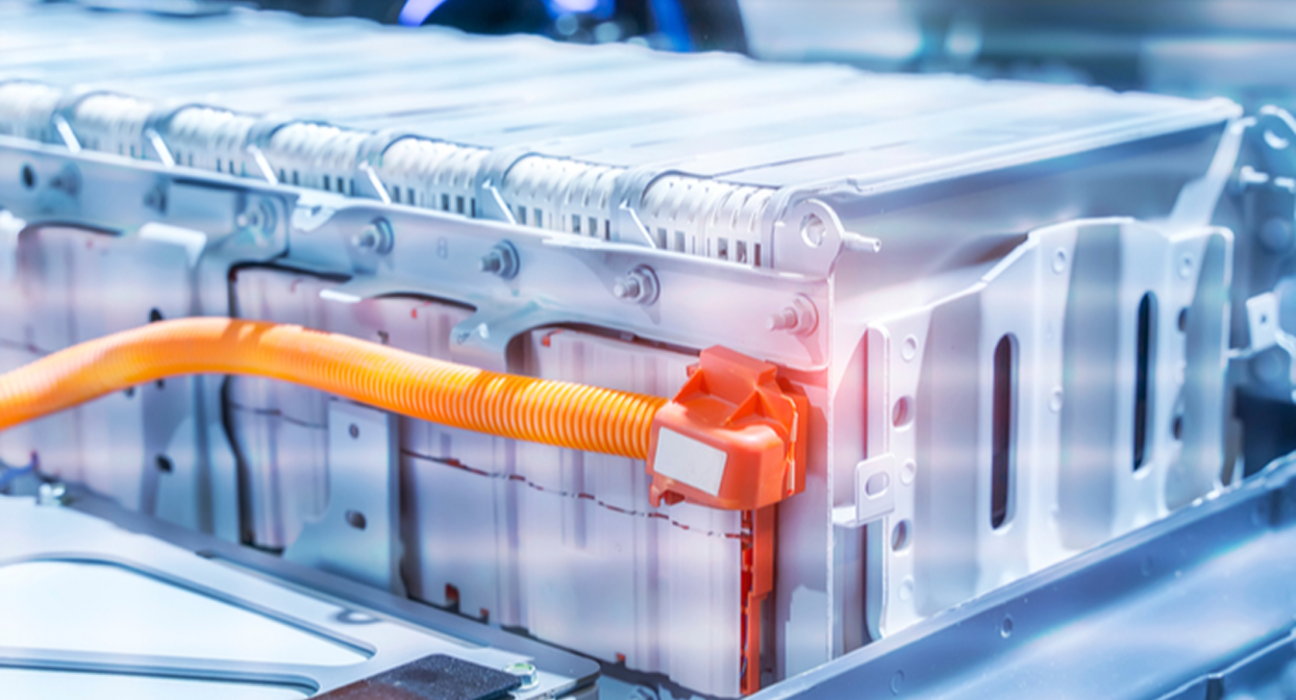
An electric vehicle battery can occupy a significant portion of the vehicle.
That creates very different engineering challenges.
The battery needs to provide enough energy for useful driving range.
It needs to operate safely.
It needs to handle repeated charging and discharging.
It needs sophisticated thermal management.
And it needs to remain useful over many years.
The car is no longer simply carrying fuel.
A major part of its identity becomes the battery system itself.
The Battery Is Becoming Part of the Vehicle’s Design
Traditional cars were largely designed around engines, fuel systems and mechanical components.
Electric vehicles shift that architecture.
The battery can form a large structural and engineering component of the vehicle.
This affects:
- Vehicle weight
- Interior space
- Range
- Acceleration
- Charging
- Thermal management
- Manufacturing
- Vehicle software
In other words, changing the energy source can change the entire product.
That is why battery technology isn’t simply an electrical engineering story.
It is also a transportation story.
Renewable Energy Makes Batteries Even More Important
Solar and wind energy have an obvious advantage:
They don’t require conventional fuel to generate electricity.
But they also have a fundamental characteristic.
They depend on environmental conditions.
Solar power depends on sunlight.
Wind power depends on wind.
Electricity demand doesn’t necessarily follow either one.
People don’t stop using electricity because the sun has set.
This creates a storage problem.
The more renewable energy systems grow, the more valuable flexible energy storage can become.
The Grid Is Becoming More Complicated
For decades, electricity systems were designed around relatively predictable flows.
Large generation facilities produced electricity.
Networks distributed it.
Consumers used it.
Modern energy systems can be much more dynamic.
Homes may generate electricity through rooftop solar.
Electric vehicles may charge at different times.
Large battery systems may store energy.
Businesses may change their electricity consumption based on prices or demand.
The grid increasingly has to coordinate many different sources and uses of energy.
Batteries can become one of the tools that help balance this system.
Not Every Battery Is the Same
When people say “battery,” they often imagine the same basic technology.
In reality, there are many different battery chemistries and designs.
Different applications have different priorities.
A phone might prioritize compact size.
An electric vehicle might prioritize energy density, cost, safety and longevity.
A grid storage system may care heavily about cost, cycle life and scalability.
There is no single battery that is perfect for everything.
That’s why battery research continues across many different technologies.
The Race Isn’t Only About More Energy
It is easy to think that the perfect battery is simply one that stores more energy.
But battery development involves several competing goals.
A useful battery may need to be:
Energy dense.
Affordable.
Safe.
Long-lasting.
Fast to charge.
Easy to manufacture.
Made from reasonably available materials.
Improving one characteristic can sometimes create challenges elsewhere.
A battery that performs extremely well may be too expensive.
A cheaper chemistry may have lower energy density.
A high-energy design may require more complex thermal management.
The challenge is finding the right balance.
Raw Materials Matter
Battery technology isn’t only about chemistry.
It is also about supply chains.
Battery manufacturing requires materials that must be extracted, processed and transported.
That creates economic, environmental and geopolitical questions.
If a particular material becomes difficult to obtain, expensive or concentrated in only a few regions, manufacturers can face serious challenges.
This is one reason battery research also focuses on reducing dependence on particular materials and developing alternative chemistries.
The battery race is therefore partly a race for materials and manufacturing capability.
Recycling Will Become More Important
As the number of batteries increases, another question becomes unavoidable:
What happens when they reach the end of their useful life?
A battery that is no longer ideal for a car may still have potential for other uses.
Some batteries can be refurbished or repurposed.
Materials can also potentially be recovered through recycling processes.
The goal is to avoid treating valuable battery materials as disposable.
As battery production expands, recycling could become an increasingly important part of the entire industry.
Batteries Could Change How Homes Use Energy
Imagine a home with solar panels and a battery.
During the day, solar energy can help power the home and potentially charge the battery.
Later, when solar production falls, stored electricity can be used.
The homeowner becomes more flexible about when energy is generated and consumed.
Add an electric vehicle and the relationship becomes even more interesting.
The car is no longer only transportation.
It is also a large energy storage device.
That creates possibilities for how homes, vehicles and electricity networks interact.
The Future May Be About Storing Everything
Batteries are increasingly appearing in places where they weren’t previously necessary.
Small devices.
Vehicles.
Buildings.
Factories.
Data infrastructure.
Renewable energy projects.
Backup power systems.
The reason is simple.
Modern life is becoming increasingly dependent on electricity.
The more systems become electric, the more important energy storage becomes.
The Battery May Become the New “Invisible Infrastructure”
People rarely think about the electrical grid when they charge a phone.
They don’t think about energy storage when an electric car starts.
They don’t think about batteries when a backup system keeps equipment running during an outage.
That’s what infrastructure does.
It becomes invisible because it works.
Batteries may increasingly become part of that invisible infrastructure.
They won’t always be the most visible technology.
But they could quietly determine what other technologies are practical.
The Biggest Breakthrough May Not Be One Magical Battery
Battery technology is often discussed as if scientists are searching for one revolutionary invention that will change everything overnight.
Reality is more complicated.
Progress can come from hundreds of smaller improvements.
Better materials.
Better manufacturing.
Better software.
Better cooling.
Better charging systems.
Better recycling.
Better cell designs.
Better production methods.
A few percent improvement here and another improvement there can become enormous when multiplied across millions of devices.
The future of batteries may therefore be less about one dramatic invention and more about continuous engineering progress.
Why Batteries Matter Beyond Cars and Phones
The battery story is ultimately an energy story.
And energy affects almost everything.
Transportation.
Homes.
Factories.
Communications.
Data centers.
Renewable power.
Consumer electronics.
As the world becomes more dependent on electricity, the ability to store electricity becomes increasingly valuable.
That makes batteries much more than accessories inside our devices.
They are becoming one of the foundations of the next generation of technology.
The Technology You Notice Only When It Fails
There is something almost strange about batteries.
When they work, nobody thinks about them.
Your phone turns on.
Your laptop works.
Your car moves.
Your backup system operates.
Everything feels normal.
But when the battery reaches zero, the entire experience changes instantly.
That tells you something about their importance.
Batteries aren’t necessarily the most exciting technology people talk about.
They don’t have the glamour of artificial intelligence or the spectacle of space travel.
But they may be just as important.
Because the future isn’t only about what technology can do.
It’s also about whether we can store enough energy to make it possible.