Why Everyone Is Looking for a “Third Place” Again
For most people, there are two places that dominate everyday life.
Home.
Work.
But there is often a third place that sits somewhere between them.
A café where you know the staff.
A neighborhood park.
A library.
A local restaurant.
A gym.
A community center.
Somewhere you can go without having a specific reason.
You don’t necessarily have an appointment.
You don’t have to buy anything expensive.
You don’t have to be particularly productive.
You can simply be there.
And increasingly, people are realizing how much they’ve missed places like this.
What Exactly Is a “Third Place”?
The idea of a third place describes a social environment outside the home and workplace where people can spend time and interact with others.
The important part isn’t the building.
It’s the role the place plays.
A third place can be different for everyone.
For one person, it might be a coffee shop.
For another, it might be a sports club.
For someone else, it could be a bookstore, religious community, park or local market.
What connects these places is something simple:
They give people somewhere to belong without needing a formal reason to be there.
Why Modern Life Made Them Harder to Find
Modern life has become incredibly convenient.
You can order food without leaving home.
You can work without going to an office.
You can shop without visiting a store.
You can talk to friends without physically meeting them.
You can watch entertainment without leaving the sofa.
Technology has removed countless reasons to go outside.
That’s a remarkable achievement.
But it has also created an unexpected problem.
We can do almost everything without physically being around other people.
Convenience solved the problem of access.
It didn’t necessarily solve the problem of connection.
The Home Became More Powerful
Home used to be one part of daily life.
For many people, it has become much more.
It can now be:
- Office
- Restaurant
- Cinema
- Gym
- Shopping center
- Classroom
- Entertainment space
That sounds wonderful.
And sometimes it is.
But when home becomes the place where almost everything happens, leaving it can start to feel unnecessary.
The third place becomes less visible.
Until you realize you don’t really have one anymore.
Work Changed Too
The workplace traditionally provided more than employment.
It created routine.
You saw the same people.
You had conversations between meetings.
You knew what happened in the office.
You developed small social relationships that weren’t necessarily planned.
Remote and hybrid work changed that experience for millions of people.
For many workers, the flexibility is valuable.
But there is a difference between working from home and having a social environment outside the home.
When the office disappears, something else may need to replace the social role it once played.
Why Cafés Became More Than Places to Drink Coffee
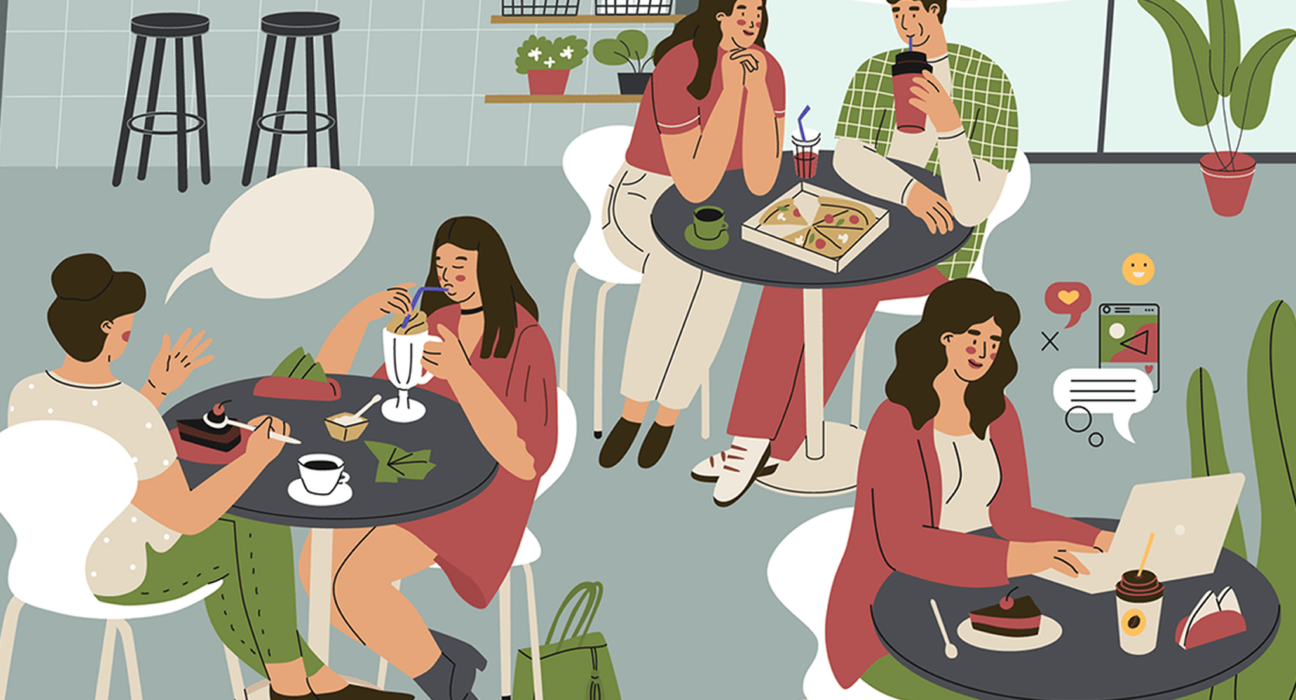
Walk into a busy café and you’ll often see very different people sharing the same space.
Someone is working.
Someone is reading.
Someone is meeting a friend.
Someone is having a business conversation.
Someone is simply sitting alone.
That’s what makes cafés interesting.
They allow different levels of participation.
You can talk to people.
You can work quietly.
You can sit alone without feeling completely isolated.
The coffee may be the product.
But the environment is part of what people are paying for.
You Don’t Always Need to Talk
A third place doesn’t require constant social interaction.
That’s important.
Sometimes people want to be around other humans without actually having a conversation.
Sitting in a busy café can feel different from sitting alone at home.
A park can provide the same experience.
A library can provide it too.
You are technically alone.
But you’re not completely disconnected from the world.
There is something comforting about being surrounded by ordinary human activity.
The Rise of “Community” as a Product
Businesses have noticed this desire.
Some modern spaces aren’t simply selling a service.
They’re selling a sense of community.
Gyms offer group classes.
Coworking spaces organize events.
Cafés create neighborhood identities.
Bookstores host discussions.
Restaurants organize gatherings.
Sports clubs create regular routines.
The common idea is that people don’t only want somewhere to go.
They want somewhere where they might eventually recognize someone.
That small possibility changes the experience.
Why Familiar Faces Matter
You don’t need to be best friends with everyone in a place.
Sometimes simply seeing familiar faces is enough.
The person who always sits at the same table.
The barista who knows your usual order.
The person you regularly see walking their dog.
The trainer at your local gym.
These relationships may seem insignificant.
But they create something important:
social familiarity.
You begin to feel that you belong to a place.
Third Places Can Make Cities Feel Smaller
Large cities can be strange environments.
Millions of people may live around you.
And yet you can go through an entire day without meaningfully interacting with anyone nearby.
Third places can create smaller communities inside huge cities.
A neighborhood café can become a meeting point.
A local park can become familiar territory.
A community sports club can connect people who might otherwise never meet.
The city remains enormous.
But your personal world becomes more manageable.
Why Young People Are Searching for Them
Younger generations have grown up with digital communication as a normal part of life.
Messaging is effortless.
Social media is everywhere.
Online communities can be incredibly meaningful.
But digital connection doesn’t completely replace physical presence.
There is a different feeling in sitting across from another person.
There is body language.
Shared surroundings.
Unexpected conversations.
Small moments that weren’t planned.
That unpredictability is part of what makes physical social spaces valuable.
The Problem With Turning Everything Into a Transaction
There is also a danger in how we build third places.
If every social environment requires spending money, access becomes limited.
A café requires a purchase.
A coworking space requires a membership.
Some clubs require fees.
Private spaces can create strong communities, but they aren’t available to everyone.
This is why public spaces remain important.
Parks, libraries, walking areas and community facilities can provide something businesses cannot always provide:
a place where being there doesn’t require buying something.
The Return of the Local
There is another interesting shift happening alongside this.
People are increasingly interested in things close to home.
Local restaurants.
Neighborhood markets.
Independent cafés.
Community events.
Small businesses.
Local sports.
The appeal isn’t necessarily that these places are objectively better.
It’s that they feel personal.
You can become a regular.
You can recognize the environment.
You can develop a relationship with a place rather than simply visiting it once.
A Third Place Doesn’t Need to Be Trendy
This is perhaps the most important point.
A third place doesn’t have to be a beautifully designed café.
It doesn’t need expensive furniture.
It doesn’t need a clever brand.
It doesn’t need to be photographed for social media.
It simply needs to make people comfortable enough to return.
The best third places often develop naturally.
People start coming back.
They recognize one another.
Small routines form.
Eventually, the place becomes part of the neighborhood’s identity.
What Happens When These Places Disappear?
When third places disappear, something subtle can happen.
People may spend more time alone.
Casual interactions become less common.
Neighbors may know less about one another.
Social life can become increasingly planned.
You don’t simply bump into people.
You schedule a meeting.
You send a message.
You make a reservation.
Everything becomes intentional.
But some of the most meaningful social moments are the ones nobody planned.
The Future May Be About Finding Somewhere to Simply Exist
Technology has become very good at helping us do things faster.
Work faster.
Shop faster.
Communicate faster.
Order faster.
Travel faster.
But people don’t always need more efficiency.
Sometimes they need somewhere to slow down.
Somewhere they can sit.
Somewhere they can see other people.
Somewhere they don’t have to accomplish anything.
That’s what makes the idea of a third place so interesting.
It isn’t really about cafés, parks or community centers.
It’s about something more basic:
having a place in the world that feels a little bit like yours.
And as modern life becomes increasingly digital, that simple feeling may become one of the things people value most.