How Music Streaming Works: A Simple Guide to the Music Industry
Music streaming has completely changed how people listen to music.
Instead of buying individual albums or downloading every song, listeners can access enormous music libraries through streaming services.
A single subscription can provide access to millions of songs, playlists, podcasts, and other audio content.
But what happens behind the scenes when you press play?
How does a song get onto a streaming platform? How are artists paid? And where does the money from your subscription actually go?
Here’s a simple explanation of how the modern music streaming system works.
What Is Music Streaming?
Music streaming allows you to listen to audio over the internet without permanently downloading the entire song to your device.
When you select a song, the streaming service delivers the necessary audio data to your device through an internet connection.
Depending on the service and your settings, music may also be temporarily stored or downloaded for offline listening.
Popular streaming platforms have made this model one of the primary ways people consume music today.
How Does a Song Get Onto a Streaming Platform?
Before you can stream a song, it needs to be delivered to the platform.
The process generally involves several parties.
A simplified version looks like this:
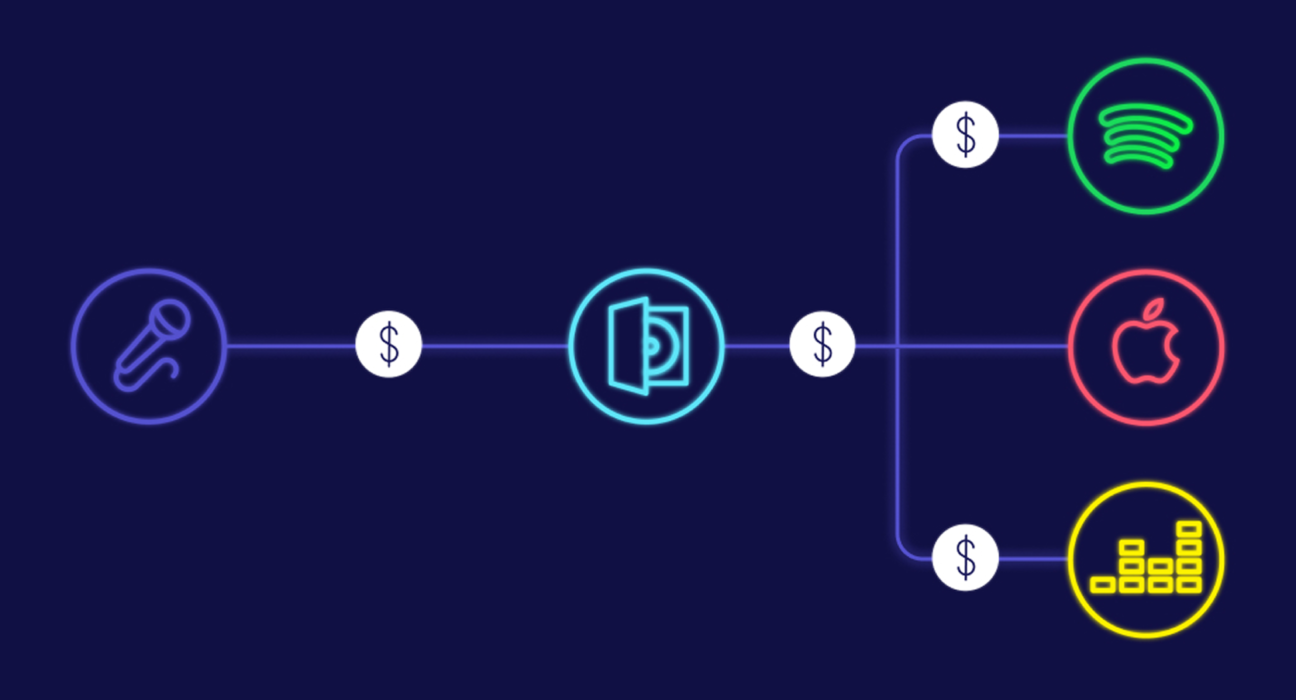
Artist → Label/Distributor → Streaming Platform → Listener
Independent artists may work with a digital distributor rather than a traditional record label.
The distributor can deliver the music and associated information to multiple platforms.
That information can include:
- Song title
- Artist name
- Album
- Release date
- Artwork
- Genre
- Composer information
- Rights information
This metadata helps streaming services organize and display the music correctly.
What Happens When You Press Play?
When you press play, several things happen very quickly.
The streaming service:
- Identifies the requested track.
- Checks your account and access permissions.
- Connects your device to its servers.
- Delivers the audio data.
- Your device processes the data.
- The song begins playing.
The process is designed to feel almost instant when you have a reliable internet connection.
You don’t normally need to know where the actual audio file is stored because the streaming platform manages the technical infrastructure.
What Is a Music Stream?
A stream is essentially an instance of a song being played through a streaming service under that platform’s rules for counting a stream.
However, the exact requirements for what qualifies as a stream can differ between platforms.
This is important because simply pressing play does not necessarily mean every partial interaction is counted in exactly the same way.
Streaming services use their own systems to determine eligible plays.
How Do Streaming Services Make Money?
Music streaming platforms generally generate revenue through different models.
Subscriptions
Users pay a recurring fee for access to premium features and music libraries.
Advertising
Some services offer free or lower-cost listening supported by advertisements.
Other Revenue
Depending on the platform, additional revenue can come from partnerships, bundles, or other services.
The money generated from these activities contributes to the overall economics of the platform.
How Do Artists Make Money From Streaming?
This is one of the most misunderstood parts of music streaming.
An artist does not necessarily receive a fixed amount every time someone plays a song.
Instead, streaming revenue generally flows through a rights and licensing system.
A simplified example is:
Listener revenue → Streaming service → Rights holders → Artist and other participants
The exact distribution depends on contracts, ownership, territory, platform policies, and other factors.
There Isn’t One Universal “Per-Stream Rate”
You may sometimes see claims such as:
“This platform pays exactly X amount per stream.”
In reality, music streaming economics are more complicated.
The amount associated with an individual stream can vary depending on factors such as:
- Streaming service
- Country or region
- Subscription type
- Total platform revenue
- Number of eligible streams
- Rights ownership
- Distribution agreements
- Record-label contracts
- Publishing rights
Therefore, there isn’t one universal rate that every artist receives for every stream.
Who Gets Paid?
A single song can involve several different rights and contributors.
Depending on the recording, these may include:
- Performing artist
- Songwriter
- Composer
- Producer
- Record label
- Music publisher
- Other rights holders
There are also different rights associated with the recording itself and the underlying composition.
This is one reason music royalties can be complicated.
Master Recording vs Composition
A useful distinction is between the recording and the underlying song.
Master Recording
The master is the specific recorded version of a song.
For example, if an artist records a song in a studio, that particular recording is a master.
Ownership may belong to the artist, record label, or another rights holder.
Composition
The composition refers to the underlying musical work, including elements such as the melody and lyrics.
Songwriters and publishers may have rights associated with the composition.
These two sides of the music business can generate different types of royalties.
What Does a Record Label Do?
A record label may provide services and investment around an artist’s career.
Depending on the agreement, a label might be involved in:
- Recording
- Marketing
- Distribution
- Promotion
- Artist development
- Music videos
- Public relations
In return, the label may receive a share of revenue according to the artist’s contract.
Not every artist works with a traditional label.
What Does a Music Distributor Do?
Independent artists can use music distributors to deliver their releases to streaming platforms.
A distributor can help with:
- Uploading music
- Metadata
- Platform delivery
- Release scheduling
- Royalty collection
- Reporting
The specific services and pricing depend on the distributor.
This model has made it easier for independent musicians to release music without necessarily signing with a traditional record label.
How Do Playlists Affect Music Discovery?
Playlists have become an important part of music discovery.
They can be created by:
- Streaming platforms
- Music editors
- Artists
- Record labels
- Independent users
- Algorithms
Getting included in a popular playlist can expose a song to a much larger audience.
Streaming services may also use recommendation systems to suggest music based on listening behavior.
How Music Recommendations Work
Modern streaming platforms can analyze patterns in listening activity to suggest songs.
Signals can include:
- Songs you play
- Artists you follow
- Songs you skip
- Playlists you use
- Listening frequency
- Similar users’ behavior
- Genre preferences
These signals can help create personalized recommendations.
The goal is to help listeners discover music they are likely to enjoy.
What Happens When You Download Music for Offline Listening?
Some premium services allow users to download music for offline listening.
This usually doesn’t mean you own the music file permanently.
Instead, the application stores protected content on your device so you can listen without an active internet connection, subject to the service’s rules.
Your access is generally connected to your account and the platform’s licensing arrangements.
Does Streaming Use a Lot of Data?
Music streaming does use mobile or Wi-Fi data.
The amount depends on factors such as:
- Audio quality
- Listening duration
- Streaming settings
- Platform
- Whether content is downloaded beforehand
Higher-quality audio generally requires more data.
If you’re using mobile data, many services allow you to reduce audio quality or download music over Wi-Fi.
What Happens If a Song Is Removed?
A song can sometimes disappear from a streaming service.
Possible reasons include:
- Licensing changes
- Rights disputes
- Distribution problems
- Artist or label decisions
- Contract changes
- Regional availability
This demonstrates that streaming access is different from permanently owning a physical copy of a recording.
Streaming vs Buying Music
There is an important difference between streaming and purchasing music.
Streaming
You pay for access to a service and its available catalog.
Advantages can include:
- Huge music libraries
- Personalized recommendations
- Playlists
- Easy discovery
- Multi-device access
Buying Music
You purchase music separately.
Depending on the format and store, this can provide a different type of ownership or access.
Physical formats such as CDs and vinyl also provide a tangible product.
Neither approach is automatically better. It depends on how you prefer to consume and collect music.
Why Streaming Changed the Music Industry
Streaming has changed music consumption in several major ways.
Listeners can discover music more easily, artists can reach global audiences, and platforms can continuously recommend new content.
It has also changed how music is released.
Instead of relying exclusively on albums, artists can release:
- Singles
- EPs
- Albums
- Collaborations
- Remixes
- Special versions
Music discovery has become increasingly continuous and personalized.
What Does Streaming Mean for Independent Artists?
Streaming platforms have lowered some barriers to distribution.
An independent artist can potentially reach listeners around the world without having a traditional physical distribution network.
However, reaching an audience is still difficult.
Artists often need to work on:
- Music quality
- Branding
- Promotion
- Social media
- Live performances
- Audience development
- Playlist discovery
- Consistent releases
Being available on a streaming platform doesn’t automatically create an audience.
The Future of Music Streaming
Music streaming continues to evolve.
Future developments may involve:
- Higher-quality audio
- Better personalization
- More sophisticated recommendations
- New artist monetization models
- Improved discovery tools
- More direct artist-to-fan relationships
- Integration with connected devices and vehicles
As technology changes, the way people discover, consume, and interact with music will continue to change as well.
Final Thoughts
Music streaming may look simple from the listener’s perspective: choose a song and press play.
Behind that simple action is a complex system involving technology, licensing, artists, songwriters, labels, publishers, distributors, and streaming platforms.
Understanding that system helps explain why streaming has become such a powerful part of the modern music industry.
For listeners, it provides convenient access to enormous music libraries. For artists, it provides another way to reach audiences around the world.
The music industry may continue to change, but one thing is clear: streaming has fundamentally changed how the world listens to music.