How to Identify Reliable News Online: A Practical Guide
Every day, people consume news through websites, social media, search engines, messaging apps, video platforms, newsletters, and notifications. Information is easier to access than ever, but that also makes it harder to know what is accurate.
A headline can spread around the world within minutes. A short video can remove important context. A social media post can look convincing even when the original source says something completely different.
This does not mean you should distrust everything you read online. Instead, it is important to develop a simple process for evaluating information before accepting or sharing it.
Knowing how to identify reliable news can help you make better decisions, avoid misinformation, and understand important events with greater confidence.
Why Reliable News Matters
News influences how people understand politics, business, technology, health, sports, entertainment, and major events around the world.
When inaccurate information spreads, it can create confusion and lead people to make decisions based on false or incomplete information.
Reliable journalism generally provides information with supporting evidence, identifies sources where appropriate, distinguishes reporting from opinion, and attempts to provide context.
However, even reputable publications can make mistakes. The goal is not to find a source that is perfect every time. The goal is to develop habits that help you evaluate information carefully.
1. Check Who Published the Story
One of the first things to check is the publisher.
Look at the website, publication name, author, and other information available on the page.
Ask yourself:
- Who published this?
- Is the publication established?
- Is there an identifiable author?
- Does the article provide sources?
- Does the website have an editorial or contact page?
- Does the publication regularly cover this subject?
A professional-looking website does not automatically mean the information is reliable.
Likewise, a smaller publication is not necessarily unreliable. The quality of the reporting and evidence matters more than appearance alone.
2. Read Beyond the Headline
Headlines are designed to attract attention.
Sometimes a headline accurately summarizes the article. In other cases, it may simplify the story or emphasize the most dramatic part.
For example, a headline might say that a new study “proves” something when the actual research only found an association or early evidence.
Before deciding what a story means, read the article itself.
Pay particular attention to:
- The date of publication
- The main claim
- Evidence supporting the claim
- Quotes from experts or organizations
- Links to original sources
- Important qualifications or limitations
A headline should be the beginning of your investigation, not the entire story.
3. Check the Publication Date
Old stories are frequently shared as though they are new.
This can happen with breaking news, technology announcements, political developments, disasters, and even product information.
Always check when the article was published or updated.
An article from several years ago may still contain useful background information, but it may no longer accurately describe the current situation.
This is particularly important when searching for:
- Current prices
- Stock market information
- Weather
- Travel restrictions
- Technology specifications
- Government policies
- Sports results
- Company announcements
4. Look for the Original Source
A strong way to verify information is to trace a claim back to its original source.
For example, if an article says that a company announced a major product change, look for the company’s official announcement.
If a story discusses research, look for the original study or research institution.
If a government policy is being discussed, check the relevant government department or official document.
Secondary reporting can be useful, but the original source often provides more context.
5. Compare Multiple Reliable Sources
Do not depend on a single article for major or controversial claims.
Instead, compare coverage from several independent publications.
Look for agreement on basic facts such as:
- What happened
- When it happened
- Where it happened
- Who was involved
- What evidence exists
Different publications may interpret an event differently. That is normal.
The important thing is to distinguish between facts that can be independently verified and opinions or interpretations.
6. Be Careful With Social Media
Social media can be an excellent way to discover breaking information, but it should not automatically be treated as a final source.
A post may contain:
- An old photograph
- An edited video
- An incomplete quotation
- A misleading caption
- A claim without evidence
- Information taken out of context
Social media posts can be useful starting points. When something appears important, trace it back to a reliable source before accepting or sharing it.
7. Watch for Emotional Headlines
Misinformation often relies on strong emotional reactions.
Be especially careful with headlines that make you immediately feel:
- Angry
- Frightened
- Shocked
- Extremely excited
- Outraged
- Suspicious
Emotional content is more likely to attract clicks and shares.
This does not mean an emotional story is automatically false. It simply means that strong emotions are a good reason to slow down and check the information before reacting.
8. Understand the Difference Between News and Opinion
News reporting and opinion content are not the same thing.
A news report generally focuses on reporting events and information.
An opinion article may analyze an event, argue for a particular position, or provide commentary.
Both can be valuable, but readers should understand which one they are consuming.
Look for labels such as:
- Opinion
- Editorial
- Analysis
- Commentary
- Review
- News
Understanding this distinction can prevent opinions from being mistaken for established facts.
9. Check the Evidence
A reliable article should provide enough information for readers to understand where important claims come from.
Evidence can include:
- Official documents
- Public records
- Research papers
- Interviews
- Direct statements
- Government data
- Company announcements
- Court documents
- Expert analysis
Be cautious when an article makes major claims but provides no supporting evidence.
The bigger the claim, the more important the evidence becomes.
10. Be Careful With Statistics
Numbers can make an article appear authoritative, but statistics can easily be misunderstood.
When you see an important statistic, ask:
- Where did the number come from?
- When was the data collected?
- What population was studied?
- What does the percentage actually represent?
- Is the number being compared with something meaningful?
For example, saying that something increased by 100% sounds dramatic, but the starting number matters.
Statistics need context.
11. Check Images and Videos Carefully
Images and videos can be particularly powerful because people often assume visual evidence must be authentic.
But an image can be:
- Old
- Cropped
- Edited
- Generated
- Taken in another location
- Used with an unrelated story
The same applies to video.
If a video is being used as evidence for an important claim, look for information about when and where it was recorded.
Reverse image search and reputable verification resources can sometimes help determine the original context of an image.
12. Watch Out for Anonymous Claims
Anonymous sources can sometimes play an important role in legitimate journalism, particularly when revealing sensitive information.
However, anonymous claims circulating on social media are different.
A statement such as “a friend who works there said…” is not strong evidence on its own.
If an important claim depends entirely on an unidentified source, look for independent confirmation.
13. Learn to Recognize Misinformation and Disinformation
The terms misinformation and disinformation are often used interchangeably, but there is an important distinction.
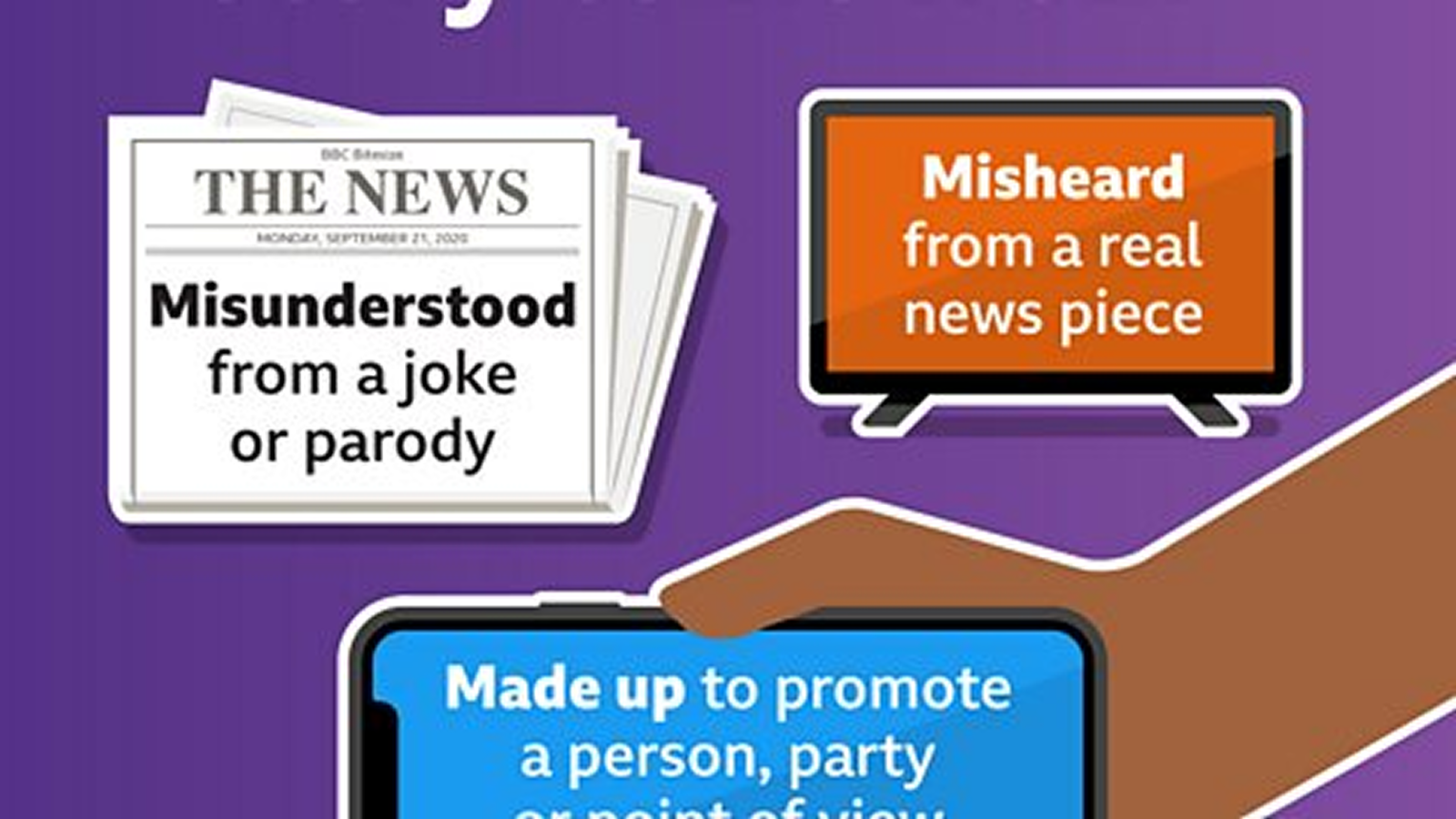
Misinformation generally refers to inaccurate or false information shared without necessarily intending to deceive.
Disinformation refers to false or misleading information deliberately created or distributed to deceive people.
Both can spread quickly online.
Understanding the difference helps explain why simply correcting a false claim does not always stop it from spreading.
14. Check the Website’s Track Record
If you regularly consume news from a particular publication, look at its overall reporting history.
Ask:
- Does it correct mistakes?
- Does it identify sources?
- Does it separate news and opinion?
- Does it provide evidence?
- Does it update developing stories?
- Does it clearly distinguish advertisements from editorial content?
A transparent correction policy can be a positive sign because responsible journalism recognizes that mistakes can happen.
15. Use Fact-Checking Carefully
Fact-checking organizations can be useful when investigating questionable claims.
However, fact-checking should be another part of your verification process rather than a replacement for critical thinking.
When reading a fact-check, examine:
- What exact claim was checked?
- What evidence was used?
- Is the original statement being represented accurately?
- Are the sources available for readers to examine?
Sometimes an argument is technically based on a real fact but presents it without important context.
A Simple News Verification Checklist
Before sharing an important story, take a few seconds to ask:
| Question | What to Check |
|---|---|
| Who published it? | Publication and author |
| When was it published? | Date and updates |
| What is the claim? | Exact statement being made |
| What is the evidence? | Data, documents, quotes or sources |
| What is the original source? | Official announcement or primary material |
| Do other sources confirm it? | Independent reporting |
| Is it news or opinion? | Article classification |
| Is the image/video authentic? | Original context |
| Does the headline match the article? | Full context |
| Am I reacting emotionally? | Slow down before sharing |
Why People Believe False Information
People do not always believe inaccurate information because they are careless.
Humans naturally tend to pay more attention to information that confirms what they already believe.
This is sometimes called confirmation bias.
If a story supports an opinion someone already has, they may be less likely to question it.
The opposite can also happen. People may immediately reject information simply because it conflicts with their existing beliefs.
A better approach is to apply the same verification standards to information you agree with and information you disagree with.
Do You Need to Check Everything?
Not every piece of information requires an investigation.
If you are reading a casual entertainment story or a simple lifestyle article, a basic source check may be enough.
For high-impact topics, however, stronger verification is worthwhile.
Be especially careful with information involving:
- Elections and politics
- Financial decisions
- Health
- Public safety
- Legal issues
- Major emergencies
- Breaking international events
- Investment opportunities
The more serious the potential consequences, the more carefully you should verify the information.
A Better Way to Consume News
Instead of constantly checking dozens of websites, develop a small group of reliable sources that cover the topics you care about.
You can then use social media and search engines primarily for discovery and follow important stories back to their original sources.
A useful routine is:
Discover → Read → Verify → Compare → Decide → Share
This simple process can significantly reduce the chance of spreading inaccurate information.
Final Thoughts
The internet has made access to information easier than ever, but access does not automatically mean accuracy.
Learning how to identify reliable news is increasingly important in a world where information can spread within seconds.
Check the source. Read beyond the headline. Look at the date. Find the original evidence. Compare independent reporting. Be careful with emotional claims, social media posts, statistics, images, and videos.
Most importantly, apply the same standards to information that supports your opinions as you do to information that challenges them.
You do not need to become a professional journalist to become a better news consumer. A few simple verification habits can make the information you rely on much more trustworthy.