Why Everything Is Becoming a Subscription
It used to be simple.
You wanted something.
You paid for it.
You owned it.
Today, the experience can be very different.
You don’t always buy software. You subscribe to it.
You don’t always buy entertainment. You subscribe to it.
You don’t always buy fitness services, food deliveries or digital tools individually.
You pay every month.
Sometimes, you don’t even remember signing up.
A free trial becomes a monthly charge.
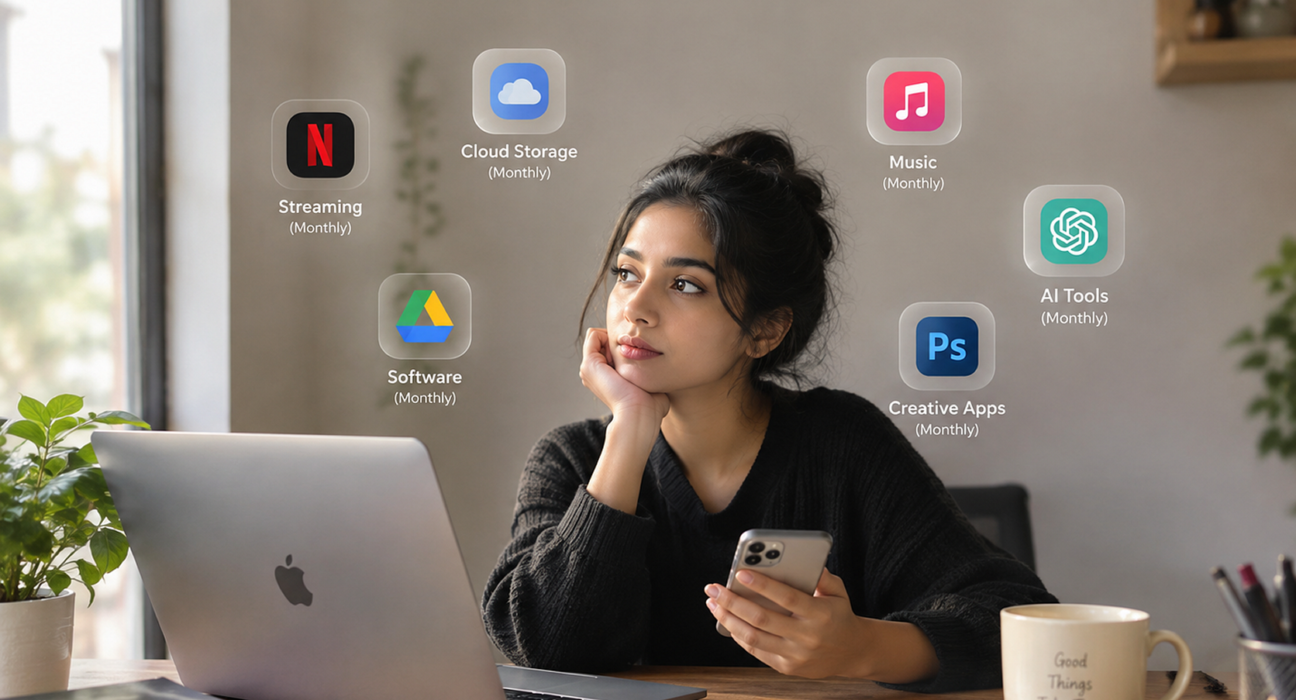
One subscription becomes five.
Five become ten.
And suddenly, a significant part of your spending happens automatically.
This isn’t an accident.
The subscription model has quietly changed the way businesses make money — and the way consumers think about buying things.
Why Businesses Love Subscriptions
From a business perspective, subscriptions are incredibly attractive.
A traditional sale can happen once.
A subscription can create recurring revenue.
Imagine selling a product for $100.
The customer pays once.
Now imagine a service charging $10 every month.
The customer may eventually pay much more than $100 over several years.
More importantly, the business can better predict future revenue.
That predictability is extremely valuable.
Instead of constantly asking:
“How many new customers will we get this month?”
the company can also ask:
“How many existing customers are likely to remain?”
That’s a very different business model.
The Customer Relationship Changes
When you buy something once, the transaction ends.
With a subscription, the relationship continues.
Every month becomes another opportunity for the company to provide value.
But it also becomes another opportunity for the customer to question whether the service is still worth paying for.
That’s why subscription businesses care so much about retention.
Getting a customer is only the beginning.
Keeping them becomes the real challenge.
The Psychology of a Small Monthly Payment
Subscriptions often feel affordable because the price is divided into smaller amounts.
A service costing $120 per year may feel expensive.
The same service presented as:
$10 per month
can feel much easier to accept.
The total hasn’t changed.
The way you experience the price has.
This doesn’t mean monthly pricing is deceptive.
Monthly payment can genuinely make useful services more accessible.
But it can also make it easier to accumulate multiple recurring expenses without noticing the total.
The Problem With “Just $5”
One subscription might cost $5.
Another costs $8.
Another costs $12.
Another costs $15.
Individually, none seems particularly serious.
Together, they can become a meaningful monthly expense.
That’s one of the strange things about recurring payments.
A purchase that requires a deliberate decision every month would probably receive more attention.
Automatic payments don’t.
They happen quietly.
The Subscription You Forgot About
Almost everyone has encountered this situation.
You sign up for something because you need it.
You use it for a few weeks.
Then you stop.
But the subscription continues.
Nothing dramatic happens.
There is no new purchase.
No delivery.
No shopping trip.
The money simply leaves your account again.
And again.
The subscription survives because cancellation requires a new decision.
Doing nothing means continuing to pay.
Free Trials Changed the Equation
Free trials are one of the most effective ways to introduce people to subscription services.
The customer can try the product without paying immediately.
If the experience is useful, they may continue.
The problem is that people are not always good at remembering future obligations.
A trial begins today.
The charge happens weeks later.
By then, the original decision may barely be remembered.
That doesn’t make every free trial problematic.
But it explains why businesses use them so often.
Subscriptions Create Habits
A successful subscription isn’t simply something people pay for.
It’s something they repeatedly use.
Streaming services are a good example.
You don’t wake up every month and reconsider whether you want access to television.
You simply continue.
The service becomes part of your routine.
That habit has enormous value to the business.
Once something becomes part of everyday life, cancelling it can feel like removing something familiar.
Convenience Is the Real Product
Subscriptions aren’t successful only because of pricing.
They sell convenience.
Think about what a subscription can remove:
- Repeated purchases
- Manual renewals
- Searching for alternatives
- Downloading individual products
- Remembering when something needs to be purchased
The business essentially says:
“Don’t worry about buying this again. We’ll handle it.”
For many people, that’s genuinely valuable.
Convenience is one of the strongest reasons subscriptions continue to grow.
Subscriptions Also Reduce Friction
Traditional purchasing creates moments where you have to decide.
Do I need this?
Should I buy it again?
Should I compare prices?
Should I look for another provider?
Subscriptions remove many of those decisions.
That can be good.
But it can also mean you’re spending money without actively reconsidering whether the service still deserves it.
The same friction that makes subscriptions convenient can make them easy to forget.
Even Physical Products Are Becoming Subscriptions
The subscription model isn’t limited to digital services.
Companies have experimented with recurring deliveries for:
- Food
- Coffee
- Beauty products
- Pet supplies
- Household essentials
- Clothing
- Health and wellness products
The idea is simple.
Instead of remembering to buy something when you run out, the product arrives automatically.
For products you genuinely use regularly, that can be incredibly convenient.
The danger appears when the automatic delivery becomes disconnected from actual consumption.
Subscriptions Can Create Waste Too
Imagine receiving a product every month when you only need it every six weeks.
Eventually, you have more than you need.
The subscription has become convenient but inefficient.
This can happen with physical products in ways that don’t happen with digital services.
Unused products take up space.
Some expire.
Some get forgotten.
The convenience of automatic delivery can therefore create its own form of waste.
Why Companies Keep Adding New Tiers
Once customers become comfortable with subscriptions, companies can create different levels.
Basic.
Standard.
Premium.
Family.
Business.
Enterprise.
The goal is to match different customers with different willingness to pay.
Someone who wants the cheapest option can stay at the basic level.
Someone who wants more features can pay more.
This creates another interesting development:
You may no longer be buying a product.
You’re choosing a level of access.
Ownership Is Becoming Less Important
One of the biggest cultural changes created by subscriptions is the shift from ownership to access.
You don’t necessarily own the movie library.
You access it.
You don’t necessarily own the software.
You access it.
You don’t necessarily own the music catalogue.
You access it.
This model can be incredibly convenient.
But it changes what happens when you stop paying.
The product doesn’t necessarily remain yours.
The right to access it may disappear.
That’s a fundamentally different relationship from buying something permanently.
Why Subscription Fatigue Is Growing
Eventually, people reach a limit.
There are only so many monthly payments they want to manage.
This has created what is often called subscription fatigue.
The problem isn’t necessarily that people dislike subscriptions.
They may simply have too many.
One service doesn’t feel expensive.
Ten services can feel exhausting.
Consumers increasingly have to decide:
Which subscriptions are actually worth keeping?
The Future May Be More Flexible
The subscription model isn’t going away.
But it may evolve.
Consumers may increasingly expect:
- Easier cancellation
- More flexible plans
- Pause options
- Better transparency
- Fewer hidden renewals
- More personalized pricing
- Shorter commitments
Businesses that make cancellation unnecessarily difficult may eventually damage trust.
A good subscription relationship should work because the customer continues to see value — not because leaving is difficult.
The Real Battle Is for Your Monthly Budget
Every subscription competes for the same limited resource:
your recurring spending capacity.
A streaming service competes with another streaming service.
A fitness membership competes with other forms of entertainment.
A software subscription competes with another tool.
Even small subscriptions compete with everyday expenses.
This means the subscription economy isn’t simply growing indefinitely.
Consumers eventually reach a point where something has to go.
Before You Subscribe, Ask One Question
The easiest way to avoid subscription overload is surprisingly simple.
Before signing up, don’t ask:
“Can I afford this every month?”
Ask:
“Would I still choose this if I had to manually pay for it every month?”
That question introduces a little friction.
And sometimes friction is useful.
It forces you to think about whether you’re paying for something you actually value.
The Subscription Economy Changed the Meaning of Buying
The traditional purchase was an event.
You wanted something.
You bought it.
The transaction ended.
The subscription is different.
It’s a relationship.
The company wants to remain part of your life.
You continue paying as long as you continue seeing value.
That creates enormous opportunities for businesses.
But it also gives consumers a new responsibility.
We have to pay attention not only to what we buy.
We have to pay attention to what we continue buying automatically.
Because the most expensive purchase isn’t always the one with the highest price.
Sometimes it’s the small payment you stopped noticing.