Why Cash Is Slowly Disappearing From Everyday Life
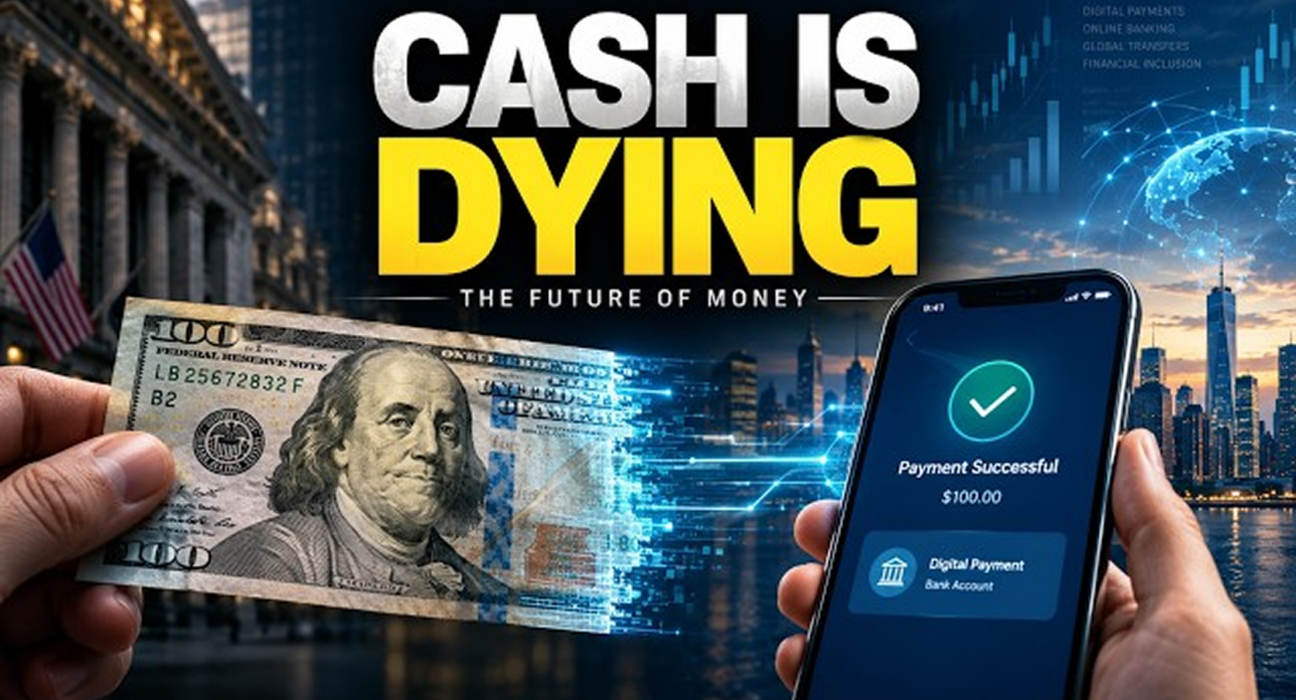
There was a time when leaving the house without cash felt risky.
You checked your wallet before going out.
You counted your notes.
You made sure you had enough for the taxi, restaurant or unexpected expense.
Today, many people leave home with nothing but a phone.
A payment terminal appears.
You tap.
Done.
No wallet.
No notes.
Sometimes, not even a physical card.
The strange thing is that money hasn’t become less important.
We’ve simply started carrying less of it in physical form.
And this shift is changing something much bigger than the way we pay.
It’s changing how we experience money itself.
Cash Used to Be the Default
For most of modern history, physical money was the simplest way to exchange value.
You earned money.
You received it in physical form.
You carried it.
You spent it.
The transaction was visible.
A banknote left your hand and something else came back.
Digital payments changed that relationship.
Money became numbers on a screen.
The transaction became almost invisible.
That convenience is one of the biggest reasons cash is gradually losing its place in everyday life.
The Payment Is Becoming Invisible
Think about how quickly a digital transaction can happen.
You buy coffee.
You tap your phone.
You walk away.
The payment itself may take only a second.
Compare that with physically handing over cash, waiting for change and putting the remaining notes back into your wallet.
The difference seems small.
But repeat it hundreds of times and the experience of spending changes dramatically.
The less friction there is between wanting something and paying for it, the easier spending can become.
Your Phone Is Becoming Your Wallet
The smartphone has quietly absorbed many objects that once lived in our pockets.
Camera.
Map.
Music player.
Ticket.
Boarding pass.
Banking app.
Loyalty card.
And increasingly:
Wallet.
Digital wallets allow users to store payment cards and use compatible devices to make purchases.
This creates an interesting transformation.
Your physical wallet used to represent your access to money.
Now, for many people, the device they already carry everywhere can do the same job.
Why Businesses Love Digital Payments
The shift isn’t happening only because customers want convenience.
Businesses also benefit.
Digital payments can make transactions faster.
They can simplify accounting.
They can reduce the need to handle physical cash.
They can integrate with loyalty programs and digital receipts.
They can also make it easier for businesses to understand purchasing patterns, depending on the systems they use and the applicable privacy rules.
For a retailer, a payment isn’t simply the final step of a sale.
It can become part of a larger digital system.
The Small Purchase Problem
Cash has one psychological advantage that digital payments don’t always have.
You can see it leaving.
If you have ₹2,000 in your wallet and spend ₹500, you can physically see that only ₹1,500 remains.
Digital money doesn’t provide the same visual feedback.
You may tap your phone several times throughout the day without feeling like you’re repeatedly taking money out of your pocket.
This doesn’t mean digital payments automatically make people irresponsible.
But removing physical friction can change the way spending feels.
A ₹200 purchase may feel less significant when it takes one second to complete than when you have to physically hand over two ₹100 notes.
Small Payments Become Easier
Digital payments also make tiny transactions practical.
A small purchase that might once have required exact change can now happen instantly.
A snack.
A short ride.
A coffee.
A digital subscription.
A small online purchase.
The easier these transactions become, the less important the physical value of the money can feel.
The payment becomes a background action rather than an event.
The Rise of Contactless Payments
Contactless payment technology pushed this even further.
Instead of inserting a card or entering information manually, users can simply tap.
The experience is almost physical:
Tap.
Beep.
Done.
That simplicity is one reason contactless payments have become so familiar in many markets.
And once people become comfortable with tapping a card, moving to a phone or wearable device isn’t a huge psychological leap.
Digital Payments Also Change Expectations
Once customers become used to instant payments, they begin expecting other parts of shopping to become faster too.
They expect:
- Faster checkout
- Instant confirmations
- Digital receipts
- Real-time transaction notifications
- Quick refunds
- Easy subscription management
The payment becomes part of the expectation that everything should happen immediately.
That creates pressure on businesses to modernize their entire customer experience.
But Cash Isn’t Going Away Everywhere
It would be a mistake to assume the world is simply moving toward a completely cashless future.
Cash still plays an important role in many places.
Some people prefer it for budgeting.
Some businesses still rely on it.
Some consumers don’t have easy access to digital banking.
Cash can also be useful when electronic payment systems are unavailable.
Power outages, network problems or technical failures can temporarily make digital payment systems difficult to use.
Physical money doesn’t need an internet connection.
That makes it surprisingly resilient.
Cash Also Offers a Different Kind of Privacy
One important difference between cash and digital payments is the information trail.
A cash transaction generally doesn’t create the same kind of digital record as an electronic payment.
Digital payments, depending on the provider and transaction, can create records about when and where money was spent.
That information can be useful.
It can help people track expenses.
It can help businesses manage operations.
It can help financial institutions identify suspicious activity.
But it also raises questions about privacy and how financial data is collected, stored and used.
The more digital money becomes, the more important those questions become.
What Happens When Money Becomes Just a Number?
This may be the biggest cultural change.
Physical money has a physical presence.
Digital money doesn’t.
If you have ₹10,000 in cash, you can hold it.
If you have ₹10,000 in a bank account, you see a number.
Both represent value.
But they don’t feel exactly the same.
As money becomes increasingly digital, our relationship with spending may become increasingly abstract.
We’re not always handing over money.
We’re authorizing a transaction.
That distinction matters.
The Future Isn’t Necessarily Cashless
The future of payments may not be about completely replacing one system with another.
Instead, different forms of payment may coexist.
Cash may remain important for certain situations.
Cards may remain popular.
Phones may become more common.
Wearables may become payment devices.
New technologies may make transactions even less visible.
The direction is clear even if the final destination isn’t.
Payments are becoming increasingly integrated into the devices and services we already use.
The Most Interesting Part Is What Comes Next
The biggest change may not be that fewer people carry cash.
It may be that payments are gradually disappearing from our attention.
Today, you tap your phone.
Tomorrow, a connected device may handle more of the process automatically.
The less visible payment becomes, the more important it becomes for consumers to understand where their money is going.
Because convenience has a hidden trade-off.
When spending becomes effortless, awareness has to become more deliberate.
Cash may eventually become less common.
But the need to understand money isn’t going anywhere.