What Is 5G? How It Works and What It Means for You
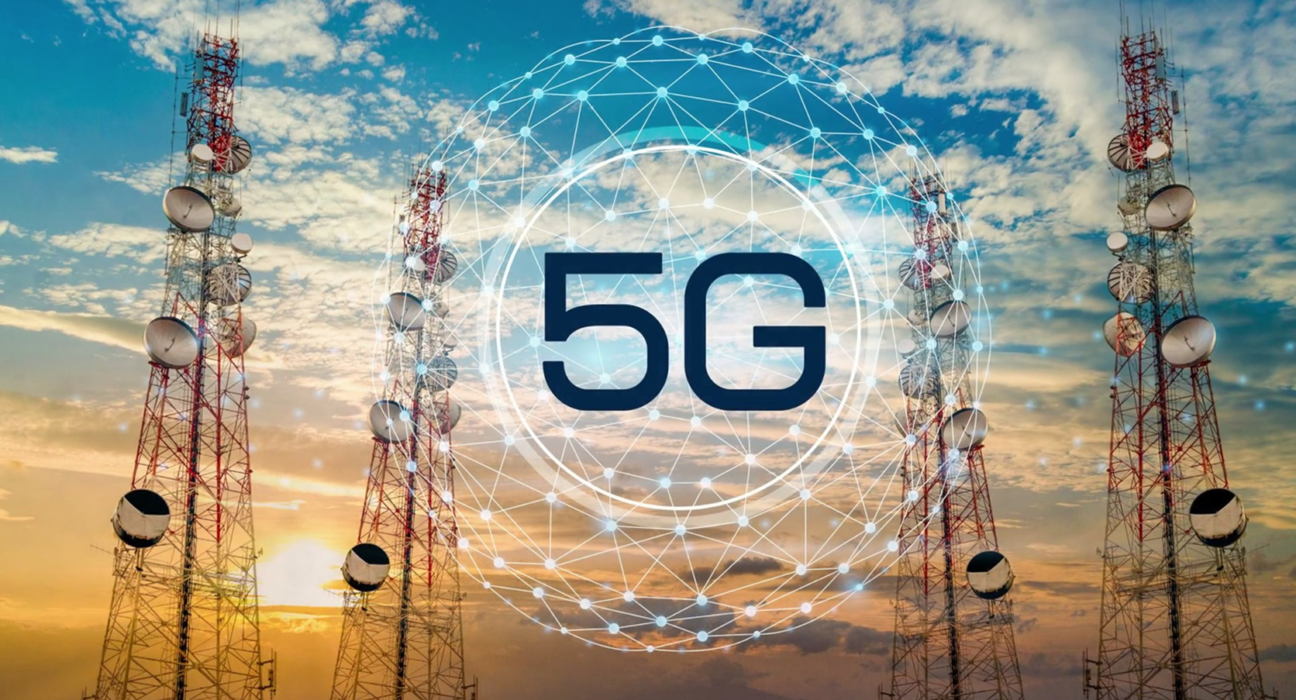
5G is the fifth generation of mobile network technology. It was developed to provide faster connectivity, lower latency, greater network capacity, and improved support for large numbers of connected devices.
For many people, the most noticeable difference between 4G and 5G is speed. But faster downloads are only one part of the technology.
5G is also designed to support applications that require responsive connections, high capacity, and reliable communication between devices.
From smartphones and home internet to connected vehicles, industrial systems, smart cities, and emerging technologies, 5G can influence how devices communicate with networks.
But what exactly is 5G, and how does it work?
What Does 5G Mean?
The term 5G simply means the fifth generation of cellular network technology.
Mobile networks have developed through several generations:
- 1G: Primarily analog voice communication
- 2G: Digital voice, texting, and basic data
- 3G: Faster mobile internet and multimedia services
- 4G: High-speed mobile broadband and modern smartphone connectivity
- 5G: Higher capacity, lower latency, faster potential speeds, and support for large numbers of connected devices
Each generation introduced improvements in how mobile devices communicate with cellular networks.
5G builds on the infrastructure and concepts of previous generations while introducing new technologies and network designs.
How Does 5G Work?
At a basic level, 5G works through radio communication between your device and nearby cellular network equipment.
When you use a 5G smartphone, the device communicates wirelessly with a nearby 5G-compatible cell site.
The network then connects your device to the wider internet or another service.
The basic process looks like this:
Your device → 5G radio connection → Cell site → Mobile network → Internet or service
The technology becomes more complicated behind the scenes because 5G networks can use different frequency ranges, advanced antennas, software-controlled networking, and different types of infrastructure.
5G Uses Different Frequency Bands
One of the important characteristics of 5G is that it can operate across different portions of the radio spectrum.
These are commonly described as:
Low-Band 5G
Low-band frequencies can travel relatively long distances and generally provide better coverage.
They are useful for expanding 5G coverage over large geographic areas.
However, low-band 5G may not provide the dramatic speed improvement that people sometimes associate with 5G.
Mid-Band 5G
Mid-band frequencies provide a balance between coverage and performance.
They can deliver higher capacity and faster speeds than many low-band deployments while still covering meaningful areas.
This makes mid-band spectrum particularly important for many 5G networks.
High-Band or mmWave 5G
Higher-frequency spectrum can provide extremely high capacity and very fast connections over short distances.
However, these signals generally have more difficulty travelling long distances and passing through obstacles.
As a result, high-band deployments are more suitable for specific high-capacity locations than broad nationwide coverage.
5G vs 4G: What Is the Difference?
5G is not simply “4G but faster.”
The two technologies can differ in speed, latency, capacity, network architecture, and the number of devices they are designed to support.
| Feature | 4G | 5G |
|---|---|---|
| Generation | Fourth | Fifth |
| Mobile broadband | Yes | Yes |
| Potential speed | High | Higher |
| Latency | Generally higher | Designed for lower latency |
| Network capacity | High | Designed for greater capacity |
| Connected devices | Large numbers | Designed for very large numbers |
| Advanced applications | Supported | Expanded possibilities |
| Infrastructure | Established | New and upgraded infrastructure |
The exact performance you experience depends on the network, spectrum, device, location, congestion, and service provider.
Is 5G Always Faster Than 4G?
Not necessarily.
This is an important point.
Seeing a 5G symbol on your phone does not guarantee a particular speed.
Your actual performance can depend on:
- Distance from the cell site
- Network congestion
- Frequency band
- Signal strength
- Smartphone capabilities
- Network configuration
- Building materials
- Location
- Number of connected users
- Your mobile plan
In some situations, a strong 4G connection can perform similarly to or better than a weak 5G connection.
The generation displayed on your phone is therefore only one part of the overall experience.
What Is Latency?
Latency refers to the time it takes for data to travel between two points.
It is different from download speed.
Imagine downloading a large file.
Speed affects how quickly the file can be transferred.
Latency affects how quickly the connection responds when you send or receive a request.
Lower latency can be particularly useful for applications that require rapid responses.
These can include:
- Online gaming
- Video calls
- Remote control systems
- Industrial automation
- Connected vehicles
- Interactive applications
- Certain augmented and virtual reality experiences
5G is designed to reduce latency compared with previous generations, although actual latency depends on the network and application.
What Can 5G Be Used For?
5G has applications beyond smartphones.
1. Faster Mobile Internet
The most familiar use case is mobile broadband.
Depending on the network and conditions, 5G can provide faster downloads and uploads than many 4G connections.
This can make activities such as streaming, downloading large files, and using cloud services more convenient.
2. Home Internet
5G can also be used as an alternative to traditional wired broadband.
This is often called fixed wireless access.
Instead of receiving internet through a traditional cable or fiber connection, a compatible router communicates with the cellular network.
This can be particularly useful in locations where installing wired infrastructure is difficult or expensive.
3. Gaming
Online gaming can benefit from responsive network connections.
Lower latency can help reduce delays between a player’s actions and what happens on a remote server.
However, gaming performance still depends on factors such as server distance, game infrastructure, Wi-Fi quality, and device performance.
5G alone does not automatically eliminate lag.
4. Video Streaming
Higher network capacity can make high-resolution streaming more practical in supported locations.
Users may be able to stream high-quality video without relying on a fixed Wi-Fi connection.
However, streaming quality also depends on the service, device, network congestion, and data plan.
5. Connected Vehicles
5G can support communication between vehicles, infrastructure, and cloud services.
Potential applications include:
- Traffic information
- Vehicle monitoring
- Navigation services
- Fleet management
- Road infrastructure communication
Some advanced vehicle applications may require extremely reliable and low-latency communication.
6. Smart Cities
Cities can use connected sensors and devices to collect information about infrastructure and public services.
Potential applications include:
- Traffic monitoring
- Parking systems
- Environmental sensors
- Street lighting
- Infrastructure monitoring
- Public transportation systems
The goal is not simply to connect more devices, but to create systems that can use the collected information effectively.
7. Industrial Applications
Factories and industrial facilities can use wireless connectivity for connected equipment, sensors, monitoring systems, and automation.
This can reduce the need for some physical network connections in environments where wireless communication is practical.
8. Healthcare Technology
5G can support connected medical devices and healthcare systems where reliable connectivity is available.
Potential applications include remote monitoring, connected equipment, and communication between healthcare systems.
However, medical applications require much higher reliability, security, and regulatory standards than ordinary consumer connectivity.
What Are the Benefits of 5G?
Several characteristics make 5G important.
Faster Potential Speeds
5G can provide significantly higher data rates under suitable network conditions.
Lower Latency
The technology is designed to support faster communication between devices and network services.
Greater Capacity
5G networks can support high volumes of data traffic and connected devices.
Better Support for Connected Devices
The technology is designed with large-scale machine-to-machine communication in mind.
New Application Possibilities
Higher capacity and lower latency can make new types of connected applications more practical.
What Are the Limitations of 5G?
5G also has limitations.
Coverage Can Vary
Not every location has the same level of 5G coverage.
Some areas may have extensive coverage while others may have limited availability.
Higher Frequencies Have Shorter Range
Some high-frequency 5G signals have difficulty travelling long distances or passing through obstacles.
This can require more network infrastructure.
Devices Need Compatible Hardware
A device must support the relevant 5G technologies and frequency bands to use a particular 5G network.
Older smartphones may only support 4G.
Infrastructure Is Expensive
Building and upgrading cellular infrastructure requires significant investment.
Network operators need to deploy equipment, acquire spectrum, upgrade backhaul, and maintain the network.
Real-World Speeds Vary
Theoretical maximum speeds do not represent the experience of every user.
Network congestion, signal strength, device capabilities, and spectrum availability all influence performance.
Does 5G Use More Battery?
5G connectivity can affect battery consumption, but the impact depends on the device, network conditions, software, and how the connection is being used.
Modern smartphones are designed to manage network connections efficiently.
In some situations, intensive 5G data usage can consume more power, particularly when the device is constantly searching for or switching between networks.
Battery performance therefore depends on more than simply whether a phone has 5G.
Do You Need a 5G Phone?
Whether you need a 5G smartphone depends on your situation.
A 5G phone may make sense if:
- Your carrier provides useful 5G coverage where you live
- You regularly use mobile data
- You plan to keep the phone for several years
- You want access to newer network capabilities
- The price difference compared with a 4G device is reasonable
You may not need to prioritize 5G if:
- You mainly use Wi-Fi
- 5G coverage is limited in your area
- Your current phone meets your needs
- You rarely use mobile data
- A 4G device offers better value for your budget
5G should be considered alongside other smartphone features rather than treated as the only deciding factor.
5G and the Internet of Things
One of the larger goals of 5G is supporting the growing number of connected devices.
The Internet of Things (IoT) refers to physical objects that can communicate digitally.
Examples include:
- Smart meters
- Industrial sensors
- Connected appliances
- Security systems
- Wearable devices
- Vehicles
- Environmental monitoring equipment
As more physical objects become connected, networks need to handle large numbers of devices efficiently.
5G is designed to support this broader connected-device ecosystem.
What Is 5G Standalone?
Not all 5G networks are built in exactly the same way.
One important distinction is between non-standalone (NSA) and standalone (SA) 5G.
Non-Standalone 5G
Non-standalone 5G uses some existing 4G network infrastructure alongside newer 5G components.
It can allow operators to introduce 5G without immediately replacing the entire existing network architecture.
Standalone 5G
Standalone 5G uses a 5G core network rather than depending on a 4G core.
This architecture can enable more advanced 5G capabilities and network configurations.
For everyday users, the difference may not always be obvious, but it can be important for network operators and advanced applications.
What Is the Future of 5G?
5G development is about more than making smartphones download files faster.
As networks mature, attention is likely to remain focused on:
- Connected devices
- Industrial connectivity
- Private networks
- Smart infrastructure
- Cloud-connected applications
- Automation
- Connected vehicles
- Immersive technologies
- Network optimization
The importance of 5G will ultimately depend on how effectively businesses, governments, developers, and consumers use the capabilities provided by the technology.
5G: What You Really Need to Know
You do not need to understand every technical detail of cellular networking to understand the importance of 5G.
The key points are simple:
- 5G is the fifth generation of cellular network technology.
- It can provide faster data connections under suitable conditions.
- It is designed for lower latency and greater network capacity.
- It can support smartphones, home internet, industrial systems, vehicles, and connected devices.
- Not every 5G connection provides the same performance.
- Coverage and speed depend heavily on location, spectrum, infrastructure, and network conditions.
- 5G is about more than smartphone download speeds.
For consumers, the most important question is not simply whether a device supports 5G.
It is whether 5G coverage, performance, pricing, and device capabilities actually provide value for the way you use your connection.
As mobile networks continue to evolve, 5G will increasingly become part of the infrastructure behind the connected world.